 Add to Chrome
 Add to Firefox
 Add to Edge
Towards an Agent-First Web: Redesigning the Web for AI Agents
Jun 17, 2026
The World Wide Web was built on an assumption held for three decades: the primary consumer of web content is a human being. This permeates every layer; its access model presumes human visitors, its economics rest on human attention, and its content targets human perception. The rapid emergence of AI agents as intermediaries between humans and web content invalidates this assumption. Yet the web resists agents through blanket blocking, CAPTCHA-based exclusion, and economic models that treat agent access as extraction rather than legitimate interaction. This paper proposes a principled redesign across three layers. At the access layer, agents acting for humans should inherit equivalent access rights, governed by rate limiting and agent identification metadata in HTTP requests, analogous to browser headers, alongside a dual-layer architecture serving human-readable and agent-optimized content from the same domain. At the economic layer, we propose an intent-based tier framework grounded in the agent-as-human-proxy principle: an agent's economic obligation mirrors that of the human it represents. A token-based subscription model meters content in tokens rather than pageviews, alongside a commissioned content economy anchoring AI content production in human intentionality. At the content layer, we identify epistemic recursion, the self-referential loop in which AI-generated content is consumed by agents to produce further content, progressively detaching web knowledge from human ground truth. We propose the Agent Text Markup Language (ATML), a four-level human supervision tier model, and a cryptographic provenance chain to counter this threat. Together these constitute ten design principles for an agent-first internet, one in which agents are first-class citizens whose integration requires renegotiating the web's foundational social contract across access, economics, and content.

MindGap: A Conversational AI Framework for Upstream Neuroplastic Intervention in Post-Traumatic Stress Disorder
May 14, 2026Post-Traumatic Stress Disorder (PTSD) is fundamentally a neuroplastic problem traumatic contact events encode over-reactive neural pathways through Hebbian long-term potentiation, producing hair-triggered amygdala-HPA stress cascades that fire before conscious awareness can intercept them. Existing therapeutic approaches, prolonged exposure, EMDR, cognitive behavioural therapy, operate predominantly downstream of the reactive cascade, teaching patients to tolerate or reframe distress after it has arisen. While clinically valuable, these suppression-based approaches do not produce the upstream pathway dissolution that constitutes lasting structural neural reorganisation. This paper proposes MindGap, a privacy-preserving on-device conversational AI framework that delivers structured neuroplastic rehabilitation for PTSD through the practice of dependent origination, a Buddhist psychological framework that identifies the precise moment between the pre-cognitive affective signal and the reactive elaboration that follows as the site of therapeutic intervention. MindGap guides patients through three progressive layers of observation at this feeling tone gap: noticing the bare affective signal before reactive elaboration, recognising it as self-arising rather than caused by the stimulus, and recognising the conditioned implicit belief beneath the feeling. Each layer corresponds to progressively deeper prefrontal regulatory engagement and progressively deeper long-term depression-mediated weakening of the reactive pathway, producing genuine upstream dissolution rather than downstream suppression. Running entirely on-device with no data egress, MindGap delivers daily calibrated exposure sessions through a fine-tuned lightweight large language model, making it deployable in sensitive clinical and military contexts where cloud-based solutions are not permitted.
Think Before You Act -- A Neurocognitive Governance Model for Autonomous AI Agents
Apr 28, 2026The rapid deployment of autonomous AI agents across enterprise, healthcare, and safety-critical environments has created a fundamental governance gap. Existing approaches, runtime guardrails, training-time alignment, and post-hoc auditing treat governance as an external constraint rather than an internalized behavioral principle, leaving agents vulnerable to unsafe and irreversible actions. We address this gap by drawing on how humans self-govern naturally: before acting, humans engage deliberate cognitive processes grounded in executive function, inhibitory control, and internalized organizational rules to evaluate whether an intended action is permissible, requires modification, or demands escalation. This paper proposes a neurocognitive governance framework that formally maps this human self-governance process to LLM-driven agent reasoning, establishing a structural parallel between the human brain and the large language model as the cognitive core of an agent. We formalize a Pre-Action Governance Reasoning Loop (PAGRL) in which agents consult a four-layer governance rule set: global, workflow-specific, agent-specific, and situational before every consequential action, mirroring how human organizations structure compliance hierarchies across enterprise, department, and role levels. Implemented on a production-grade retail supply chain workflow, the framework achieves 95% compliance accuracy and zero false escalations to human oversight, demonstrating that embedding governance into agent reasoning produces more consistent, explainable, and auditable compliance than external enforcement. This work offers a principled foundation for autonomous AI agents that govern themselves the way humans do: not because rules are imposed upon them, but because deliberation is embedded in how they think.
Toward Zero-Egress Psychiatric AI: On-Device LLM Deployment for Privacy-Preserving Mental Health Decision Support
Apr 20, 2026Privacy represents one of the most critical yet underaddressed barriers to AI adoption in mental healthcare -- particularly in high-sensitivity operational environments such as military, correctional, and remote healthcare settings, where the risk of patient data exposure can deter help-seeking behavior entirely. Existing AI-enabled psychiatric decision support systems predominantly rely on cloud-based inference pipelines, requiring sensitive patient data to leave the device and traverse external servers, creating unacceptable privacy and security risks in these contexts. In this paper, we propose a zero-egress, on-device AI platform for privacy-preserving psychiatric decision support, deployed as a cross-platform mobile application. The proposed system extends our prior work on fine-tuned LLM consortiums for psychiatric diagnosis standardization by fundamentally re-architecting the inference pipeline for fully local execution -- ensuring that no patient data is transmitted to, processed by, or stored on any external server at any stage. The platform integrates a consortium of three lightweight, fine-tuned, and quantized open-source LLMs -- Gemma, Phi-3.5-mini, and Qwen2 -- selected for their compact architectures and proven efficiency on resource-constrained mobile hardware. An on-device orchestration layer coordinates ensemble inference and consensus-based diagnostic reasoning, producing DSM-5-aligned assessments for conditions. The platform is designed to assist clinicians with differential diagnosis and evidence-linked symptom mapping, as well as to support patient-facing self-screening with appropriate clinical safeguards. Initial evaluation demonstrates that the proposed zero-egress deployment achieves diagnostic accuracy comparable to its server-side predecessor while sustaining real-time inference latency on commodity mobile hardware.
Standardization of Neuromuscular Reflex Analysis -- Role of Fine-Tuned Vision-Language Model Consortium and OpenAI gpt-oss Reasoning LLM Enabled Decision Support System
Aug 17, 2025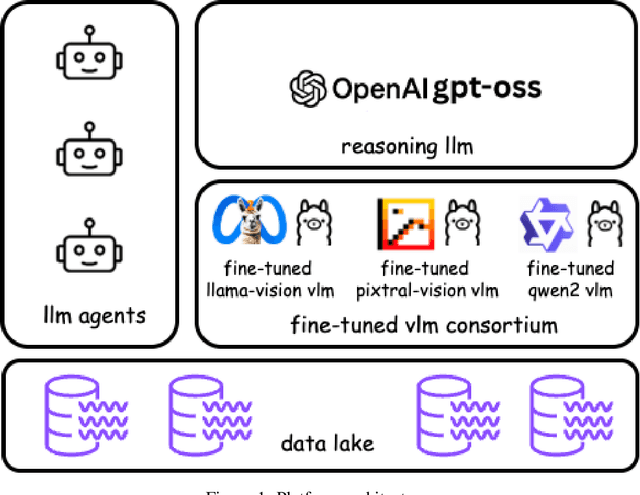

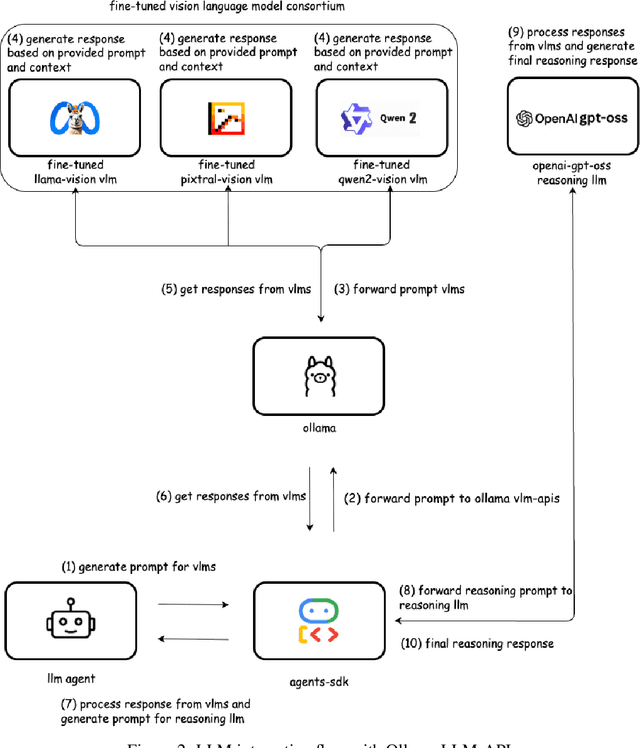
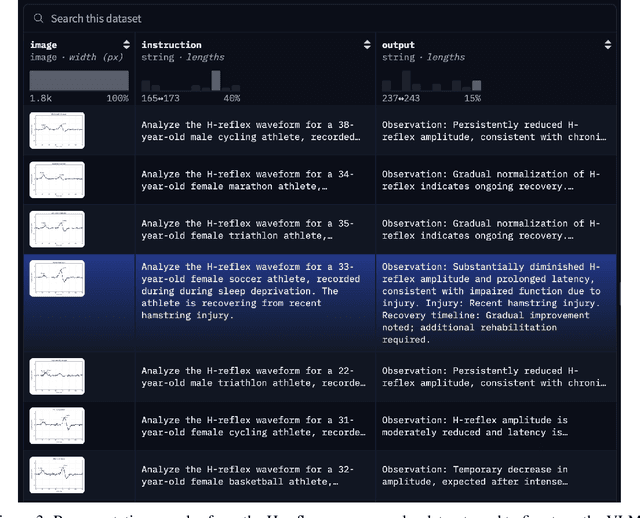
Accurate assessment of neuromuscular reflexes, such as the H-reflex, plays a critical role in sports science, rehabilitation, and clinical neurology. Traditional analysis of H-reflex EMG waveforms is subject to variability and interpretation bias among clinicians and researchers, limiting reliability and standardization. To address these challenges, we propose a Fine-Tuned Vision-Language Model (VLM) Consortium and a reasoning Large-Language Model (LLM)-enabled Decision Support System for automated H-reflex waveform interpretation and diagnosis. Our approach leverages multiple VLMs, each fine-tuned on curated datasets of H-reflex EMG waveform images annotated with clinical observations, recovery timelines, and athlete metadata. These models are capable of extracting key electrophysiological features and predicting neuromuscular states, including fatigue, injury, and recovery, directly from EMG images and contextual metadata. Diagnostic outputs from the VLM consortium are aggregated using a consensus-based method and refined by a specialized reasoning LLM, which ensures robust, transparent, and explainable decision support for clinicians and sports scientists. The end-to-end platform orchestrates seamless communication between the VLM ensemble and the reasoning LLM, integrating prompt engineering strategies and automated reasoning workflows using LLM Agents. Experimental results demonstrate that this hybrid system delivers highly accurate, consistent, and interpretable H-reflex assessments, significantly advancing the automation and standardization of neuromuscular diagnostics. To our knowledge, this work represents the first integration of a fine-tuned VLM consortium with a reasoning LLM for image-based H-reflex analysis, laying the foundation for next-generation AI-assisted neuromuscular assessment and athlete monitoring platforms.
Proof-of-TBI -- Fine-Tuned Vision Language Model Consortium and OpenAI-o3 Reasoning LLM-Based Medical Diagnosis Support System for Mild Traumatic Brain Injury (TBI) Prediction
Apr 25, 2025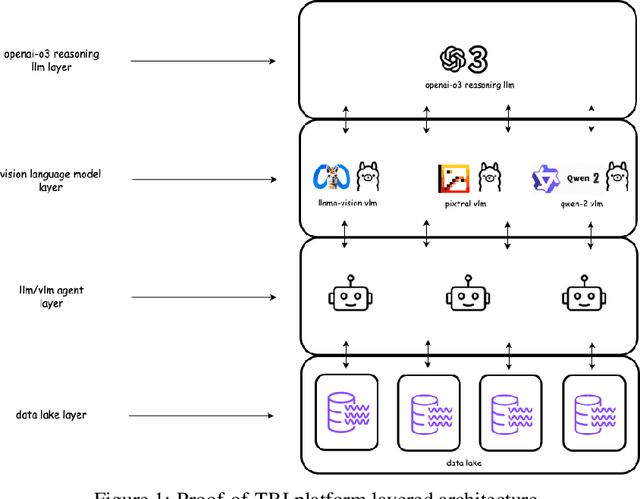
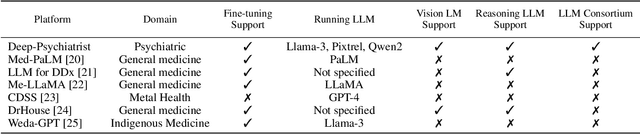
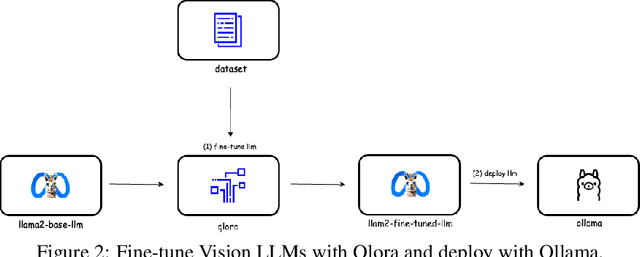
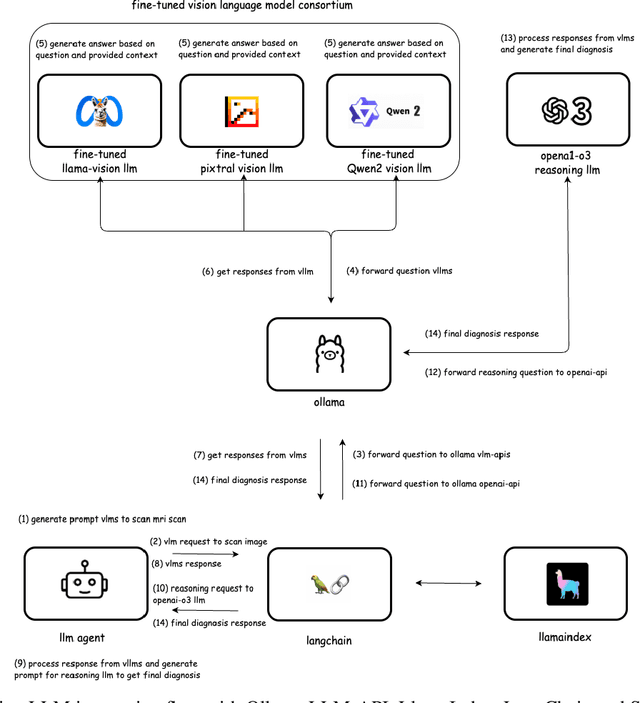
Mild Traumatic Brain Injury (TBI) detection presents significant challenges due to the subtle and often ambiguous presentation of symptoms in medical imaging, making accurate diagnosis a complex task. To address these challenges, we propose Proof-of-TBI, a medical diagnosis support system that integrates multiple fine-tuned vision-language models with the OpenAI-o3 reasoning large language model (LLM). Our approach fine-tunes multiple vision-language models using a labeled dataset of TBI MRI scans, training them to diagnose TBI symptoms effectively. The predictions from these models are aggregated through a consensus-based decision-making process. The system evaluates the predictions from all fine-tuned vision language models using the OpenAI-o3 reasoning LLM, a model that has demonstrated remarkable reasoning performance, to produce the most accurate final diagnosis. The LLM Agents orchestrates interactions between the vision-language models and the reasoning LLM, managing the final decision-making process with transparency, reliability, and automation. This end-to-end decision-making workflow combines the vision-language model consortium with the OpenAI-o3 reasoning LLM, enabled by custom prompt engineering by the LLM agents. The prototype for the proposed platform was developed in collaboration with the U.S. Army Medical Research team in Newport News, Virginia, incorporating five fine-tuned vision-language models. The results demonstrate the transformative potential of combining fine-tuned vision-language model inputs with the OpenAI-o3 reasoning LLM to create a robust, secure, and highly accurate diagnostic system for mild TBI prediction. To the best of our knowledge, this research represents the first application of fine-tuned vision-language models integrated with a reasoning LLM for TBI prediction tasks.