 Add to Chrome
 Add to Firefox
 Add to Edge
Hyrax: An Extensible Framework for Rapid ML Experimentation and Unsupervised Discovery in the Era of Rubin, Roman, and Euclid
May 18, 2026
The NSF-DOE Vera C. Rubin Observatory, Roman Space Telescope, Euclid, and other next-generation surveys will deliver imaging, spectroscopic, and time-domain data at scales that increasingly shift the bottleneck in astronomical machine learning (ML) projects from model design to infrastructure. We present Hyrax, an open-source, modular, GPU-enabled Python framework that supports the full ML lifecycle in astronomy: from data acquisition and training to inference and experiment comparison, with capabilities including multimodal dataset support, integrated vector databases for similarity search, and interactive two- and three-dimensional latent-space exploration for unsupervised discovery. We demonstrate Hyrax's versatility through five representative applications on real survey data: (i) unsupervised representation learning on $\sim 4\times10^5$ Rubin Legacy Survey of Space and Time (LSST) Data Preview 1 (DP1) galaxies, surfacing new merger and low-surface-brightness candidates missing from reference Euclid and Dark Energy Survey catalogs, while also isolating imaging artifacts -- all without labeled training data; (ii) hybrid density-based clustering for identifying cluster-scale gravitational lens candidates in DP1 data; (iii) multimodal early-time transient classification in the Zwicky Transient Facility leveraging light curves, spectra, images, and metadata; (iv) supervised false-positive filtering in shift-and-stack searches for distant solar system objects in the Dark Energy Camera Ecliptic Exploration Project survey; and (v) supervised detection of semi-resolved dwarf galaxies in Hyper Suprime-Cam and LSST-like imaging using synthetic source injection. Together, these results demonstrate that Hyrax provides astronomy-specific ML infrastructure that enables systematic discovery and rapid methodological iteration across next-generation astronomical surveys.

Pre-training vision models for the classification of alerts from wide-field time-domain surveys
Dec 12, 2025Modern wide-field time-domain surveys facilitate the study of transient, variable and moving phenomena by conducting image differencing and relaying alerts to their communities. Machine learning tools have been used on data from these surveys and their precursors for more than a decade, and convolutional neural networks (CNNs), which make predictions directly from input images, saw particularly broad adoption through the 2010s. Since then, continually rapid advances in computer vision have transformed the standard practices around using such models. It is now commonplace to use standardized architectures pre-trained on large corpora of everyday images (e.g., ImageNet). In contrast, time-domain astronomy studies still typically design custom CNN architectures and train them from scratch. Here, we explore the affects of adopting various pre-training regimens and standardized model architectures on the performance of alert classification. We find that the resulting models match or outperform a custom, specialized CNN like what is typically used for filtering alerts. Moreover, our results show that pre-training on galaxy images from Galaxy Zoo tends to yield better performance than pre-training on ImageNet or training from scratch. We observe that the design of standardized architectures are much better optimized than the custom CNN baseline, requiring significantly less time and memory for inference despite having more trainable parameters. On the eve of the Legacy Survey of Space and Time and other image-differencing surveys, these findings advocate for a paradigm shift in the creation of vision models for alerts, demonstrating that greater performance and efficiency, in time and in data, can be achieved by adopting the latest practices from the computer vision field.
Building Machine Learning Challenges for Anomaly Detection in Science
Mar 03, 2025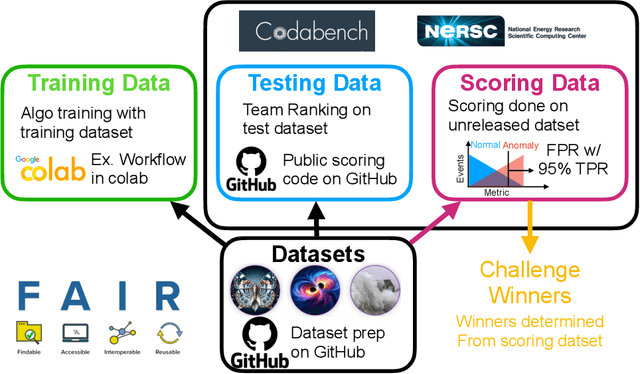
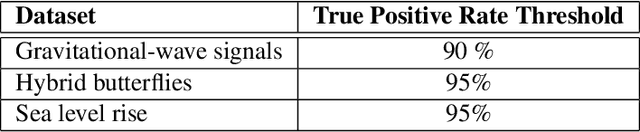
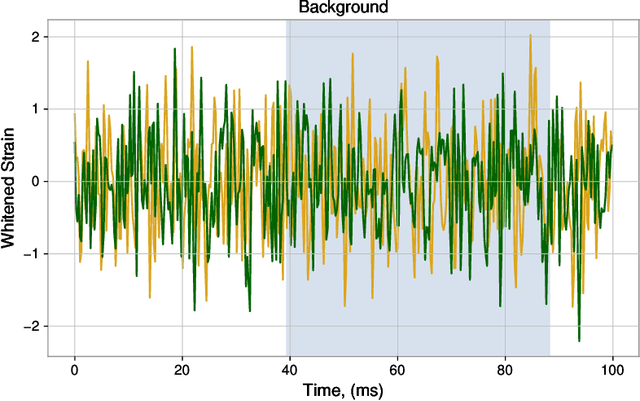
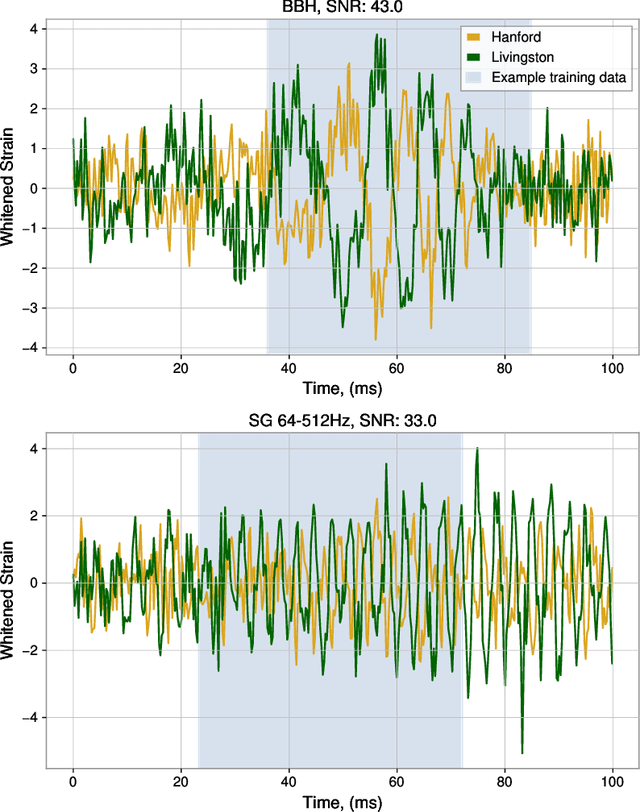
Scientific discoveries are often made by finding a pattern or object that was not predicted by the known rules of science. Oftentimes, these anomalous events or objects that do not conform to the norms are an indication that the rules of science governing the data are incomplete, and something new needs to be present to explain these unexpected outliers. The challenge of finding anomalies can be confounding since it requires codifying a complete knowledge of the known scientific behaviors and then projecting these known behaviors on the data to look for deviations. When utilizing machine learning, this presents a particular challenge since we require that the model not only understands scientific data perfectly but also recognizes when the data is inconsistent and out of the scope of its trained behavior. In this paper, we present three datasets aimed at developing machine learning-based anomaly detection for disparate scientific domains covering astrophysics, genomics, and polar science. We present the different datasets along with a scheme to make machine learning challenges around the three datasets findable, accessible, interoperable, and reusable (FAIR). Furthermore, we present an approach that generalizes to future machine learning challenges, enabling the possibility of large, more compute-intensive challenges that can ultimately lead to scientific discovery.