 Add to Chrome
 Add to Firefox
 Add to Edge
Diagnosis Support of Sickle Cell Anemia by Classifying Red Blood Cell Shape in Peripheral Blood Images
Jan 19, 2026
Red blood cell (RBC) deformation is the consequence of several diseases, including sickle cell anemia, which causes recurring episodes of pain and severe pronounced anemia. Monitoring patients with these diseases involves the observation of peripheral blood samples under a microscope, a time-consuming procedure. Moreover, a specialist is required to perform this technique, and owing to the subjective nature of the observation of isolated RBCs, the error rate is high. In this paper, we propose an automated method for differentially enumerating RBCs that uses peripheral blood smear image analysis. In this method, the objects of interest in the image are segmented using a Chan-Vese active contour model. An analysis is then performed to classify the RBCs, also called erythrocytes, as normal or elongated or having other deformations, using the basic shape analysis descriptors: circular shape factor (CSF) and elliptical shape factor (ESF). To analyze cells that become partially occluded in a cluster during sample preparation, an elliptical adjustment is performed to allow the analysis of erythrocytes with discoidal and elongated shapes. The images of patient blood samples used in the study were acquired by a clinical laboratory specialist in the Special Hematology Department of the ``Dr. Juan Bruno Zayas'' General Hospital in Santiago de Cuba. A comparison of the results obtained by the proposed method in our experiments with those obtained by some state-of-the-art methods showed that the proposed method is superior for the diagnosis of sickle cell anemia. This superiority is achieved for evidenced by the obtained F-measure value (0.97 for normal cells and 0.95 for elongated ones) and several overall multiclass performance measures. The results achieved by the proposed method are suitable for the purpose of clinical treatment and diagnostic support of sickle cell anemia.

Enhancing Generalization in Sickle Cell Disease Diagnosis through Ensemble Methods and Feature Importance Analysis
Jan 19, 2026This work presents a novel approach for selecting the optimal ensemble-based classification method and features with a primarly focus on achieving generalization, based on the state-of-the-art, to provide diagnostic support for Sickle Cell Disease using peripheral blood smear images of red blood cells. We pre-processed and segmented the microscopic images to ensure the extraction of high-quality features. To ensure the reliability of our proposed system, we conducted an in-depth analysis of interpretability. Leveraging techniques established in the literature, we extracted features from blood cells and employed ensemble machine learning methods to classify their morphology. Furthermore, we have devised a methodology to identify the most critical features for classification, aimed at reducing complexity and training time and enhancing interpretability in opaque models. Lastly, we validated our results using a new dataset, where our model overperformed state-of-the-art models in terms of generalization. The results of classifier ensembled of Random Forest and Extra Trees classifier achieved an harmonic mean of precision and recall (F1-score) of 90.71\% and a Sickle Cell Disease diagnosis support score (SDS-score) of 93.33\%. These results demonstrate notable enhancement from previous ones with Gradient Boosting classifier (F1-score 87.32\% and SDS-score 89.51\%). To foster scientific progress, we have made available the parameters for each model, the implemented code library, and the confusion matrices with the raw data.
An efficient heuristic for geometric analysis of cell deformations
Jan 19, 2026Sickle cell disease causes erythrocytes to become sickle-shaped, affecting their movement in the bloodstream and reducing oxygen delivery. It has a high global prevalence and places a significant burden on healthcare systems, especially in resource-limited regions. Automated classification of sickle cells in blood images is crucial, allowing the specialist to reduce the effort required and avoid errors when quantifying the deformed cells and assessing the severity of a crisis. Recent studies have proposed various erythrocyte representation and classification methods. Since classification depends solely on cell shape, a suitable approach models erythrocytes as closed planar curves in shape space. This approach employs elastic distances between shapes, which are invariant under rotations, translations, scaling, and reparameterizations, ensuring consistent distance measurements regardless of the curves' position, starting point, or traversal speed. While previous methods exploiting shape space distances had achieved high accuracy, we refined the model by considering the geometric characteristics of healthy and sickled erythrocytes. Our method proposes (1) to employ a fixed parameterization based on the major axis of each cell to compute distances and (2) to align each cell with two templates using this parameterization before computing distances. Aligning shapes to templates before distance computation, a concept successfully applied in areas such as molecular dynamics, and using a fixed parameterization, instead of minimizing distances across all possible parameterizations, simplifies calculations. This strategy achieves 96.03\% accuracy rate in both supervised classification and unsupervised clustering. Our method ensures efficient erythrocyte classification, maintaining or improving accuracy over shape space models while significantly reducing computational costs.
Towards an Evaluation Framework for Explainable Artificial Intelligence Systems for Health and Well-being
Apr 11, 2025The integration of Artificial Intelligence in the development of computer systems presents a new challenge: make intelligent systems explainable to humans. This is especially vital in the field of health and well-being, where transparency in decision support systems enables healthcare professionals to understand and trust automated decisions and predictions. To address this need, tools are required to guide the development of explainable AI systems. In this paper, we introduce an evaluation framework designed to support the development of explainable AI systems for health and well-being. Additionally, we present a case study that illustrates the application of the framework in practice. We believe that our framework can serve as a valuable tool not only for developing explainable AI systems in healthcare but also for any AI system that has a significant impact on individuals.
Crowdsourced human-based computational approach for tagging peripheral blood smear sample images from Sickle Cell Disease patients using non-expert users
Jan 13, 2025In this paper, we present a human-based computation approach for the analysis of peripheral blood smear (PBS) images images in patients with Sickle Cell Disease (SCD). We used the Mechanical Turk microtask market to crowdsource the labeling of PBS images. We then use the expert-tagged erythrocytesIDB dataset to assess the accuracy and reliability of our proposal. Our results showed that when a robust consensus is achieved among the Mechanical Turk workers, probability of error is very low, based on comparison with expert analysis. This suggests that our proposed approach can be used to annotate datasets of PBS images, which can then be used to train automated methods for the diagnosis of SCD. In future work, we plan to explore the potential integration of our findings with outcomes obtained through automated methodologies. This could lead to the development of more accurate and reliable methods for the diagnosis of SCD
Solving nonograms using Neural Networks
Jan 10, 2025Nonograms are logic puzzles in which cells in a grid must be colored or left blank according to the numbers that are located in its headers. In this study, we analyze different techniques to solve this type of logical problem using an Heuristic Algorithm, Genetic Algorithm, and Heuristic Algorithm with Neural Network. Furthermore, we generate a public dataset to train the neural networks. We published this dataset and the code of the algorithms. Combination of the heuristic algorithm with a neural network obtained the best results. From state of the art review, no previous works used neural network to solve nonograms, nor combined a network with other algorithms to accelerate the resolution process.
Geometric-Based Nail Segmentation for Clinical Measurements
Jan 10, 2025A robust segmentation method that can be used to perform measurements on toenails is presented. The proposed method is used as the first step in a clinical trial to objectively quantify the incidence of a particular pathology. For such an assessment, it is necessary to distinguish a nail, which locally appears to be similar to the skin. Many algorithms have been used, each of which leverages different aspects of toenail appearance. We used the Hough transform to locate the tip of the toe and estimate the nail location and size. Subsequently, we classified the super-pixels of the image based on their geometric and photometric information. Thereafter, the watershed transform delineated the border of the nail. The method was validated using a 348-image medical dataset, achieving an accuracy of 0.993 and an F-measure of 0.925. The proposed method is considerably robust across samples, with respect to factors such as nail shape, skin pigmentation, illumination conditions, and appearance of large regions affected by a medical condition
Meta-evaluating stability measures: MAX-Senstivity & AVG-Sensitivity
Dec 14, 2024The use of eXplainable Artificial Intelligence (XAI) systems has introduced a set of challenges that need resolution. The XAI robustness, or stability, has been one of the goals of the community from its beginning. Multiple authors have proposed evaluating this feature using objective evaluation measures. Nonetheless, many questions remain. With this work, we propose a novel approach to meta-evaluate these metrics, i.e. analyze the correctness of the evaluators. We propose two new tests that allowed us to evaluate two different stability measures: AVG-Sensitiviy and MAX-Senstivity. We tested their reliability in the presence of perfect and robust explanations, generated with a Decision Tree; as well as completely random explanations and prediction. The metrics results showed their incapacity of identify as erroneous the random explanations, highlighting their overall unreliability.
A comprehensive study on fidelity metrics for XAI
Jan 19, 2024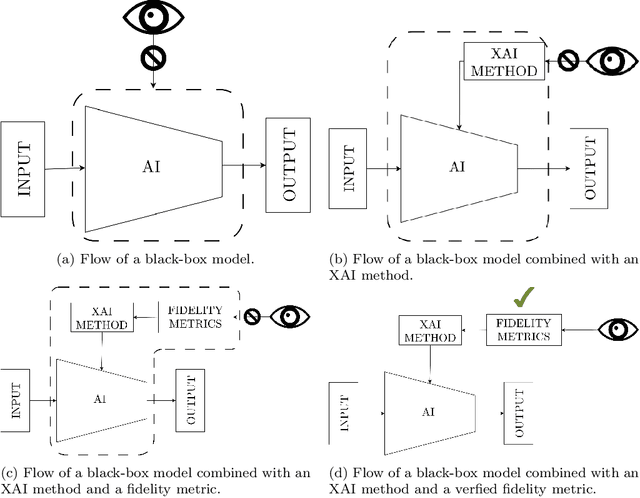
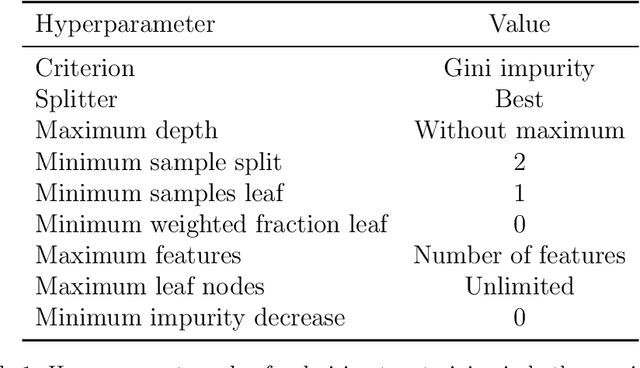
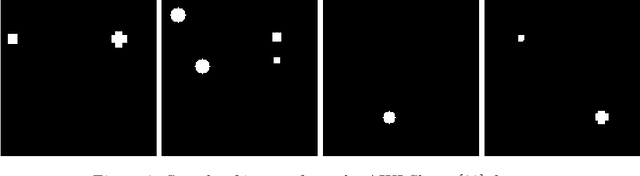
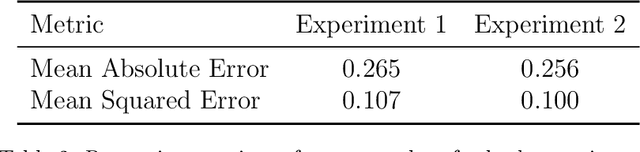
The use of eXplainable Artificial Intelligence (XAI) systems has introduced a set of challenges that need resolution. Herein, we focus on how to correctly select an XAI method, an open questions within the field. The inherent difficulty of this task is due to the lack of a ground truth. Several authors have proposed metrics to approximate the fidelity of different XAI methods. These metrics lack verification and have concerning disagreements. In this study, we proposed a novel methodology to verify fidelity metrics, using a well-known transparent model, namely a decision tree. This model allowed us to obtain explanations with perfect fidelity. Our proposal constitutes the first objective benchmark for these metrics, facilitating a comparison of existing proposals, and surpassing existing methods. We applied our benchmark to assess the existing fidelity metrics in two different experiments, each using public datasets comprising 52,000 images. The images from these datasets had a size a 128 by 128 pixels and were synthetic data that simplified the training process. All metric values, indicated a lack of fidelity, with the best one showing a 30 \% deviation from the expected values for perfect explanation. Our experimentation led us to conclude that the current fidelity metrics are not reliable enough to be used in real scenarios. From this finding, we deemed it necessary to development new metrics, to avoid the detected problems, and we recommend the usage of our proposal as a benchmark within the scientific community to address these limitations.
A novel approach to generate datasets with XAI ground truth to evaluate image models
Feb 11, 2023With the increased usage of artificial intelligence (AI), it is imperative to understand how these models work internally. These needs have led to the development of a new field called eXplainable artificial intelligence (XAI). This field consists of on a set of techniques that allows us to theoretically determine the cause of the AI decisions. One unsolved question about XAI is how to measure the quality of explanations. In this study, we propose a new method to generate datasets with ground truth (GT). These datasets allow us to measure how faithful is a method without ad hoc solutions. We conducted a set of experiments that compared our GT with real model explanations and obtained excellent results confirming that our proposed method is correct.