 Add to Chrome
 Add to Firefox
 Add to Edge
Prediction of Grade, Gender, and Academic Performance of Children and Teenagers from Handwriting Using the Sigma-Lognormal Model
Mar 12, 2026
Digital handwriting acquisition enables the capture of detailed temporal and kinematic signals reflecting the motor processes underlying writing behavior. While handwriting analysis has been extensively explored in clinical or adult populations, its potential for studying developmental and educational characteristics in children remains less investigated. In this work, we examine whether handwriting dynamics encode information related to student characteristics using a large-scale online dataset collected from Japanese students from elementary school to junior high school. We systematically compare three families of handwriting-derived features: basic statistical descriptors of kinematic signals, entropy-based measures of variability, and parameters obtained from the sigma-lognormal model. Although the dataset contains dense stroke-level recordings, features are aggregated at the student level to enable a controlled comparison between representations. These features are evaluated across three prediction tasks: grade prediction, gender classification, and academic performance classification, using Linear or Logistic Regression and Random Forest models under consistent experimental settings. The results show that handwriting dynamics contain measurable signals related to developmental stage and individual differences, especially for the grade prediction task. These findings highlight the potential of kinematic handwriting analysis and confirm that through their development, children's handwriting evolves toward a lognormal motor organization.

From Pen Strokes to Sleep States: Detecting Low-Recovery Days Using Sigma-Lognormal Handwriting Features
Mar 12, 2026While handwriting has traditionally been studied for character recognition and disease classification, its potential to reflect day-to-day physiological fluctuations in healthy individuals remains unexplored. This study examines whether daily variations in sleep-related recovery states can be inferred from online handwriting dynamics. % We propose a personalized binary classification framework that detects low-recovery days using features derived from the Sigma-Lognormal model, which captures the neuromotor generation process of pen strokes. In a 28-day in-the-wild study involving 13 university students, handwriting was recorded three times daily, and nocturnal cardiac indicators were measured using a wearable ring. For each participant, the lowest (or highest) quartile of four sleep-related metrics -- HRV, lowest heart rate, average heart rate, and total sleep duration -- defined the positive class. Leave-One-Day-Out cross-validation showed that PR-AUC significantly exceeded the baseline (0.25) for all four variables after FDR correction, with the strongest performance observed for cardiac-related variables. Importantly, classification performance did not differ significantly across task types or recording timings, indicating that recovery-related signals are embedded in general movement dynamics. These results demonstrate that subtle within-person autonomic recovery fluctuations can be detected from everyday handwriting, opening a new direction for non-invasive, device-independent health monitoring.
CTC Transcription Alignment of the Bullinger Letters: Automatic Improvement of Annotation Quality
Aug 11, 2025Handwritten text recognition for historical documents remains challenging due to handwriting variability, degraded sources, and limited layout-aware annotations. In this work, we address annotation errors - particularly hyphenation issues - in the Bullinger correspondence, a large 16th-century letter collection. We introduce a self-training method based on a CTC alignment algorithm that matches full transcriptions to text line images using dynamic programming and model output probabilities trained with the CTC loss. Our approach improves performance (e.g., by 1.1 percentage points CER with PyLaia) and increases alignment accuracy. Interestingly, we find that weaker models yield more accurate alignments, enabling an iterative training strategy. We release a new manually corrected subset of 100 pages from the Bullinger dataset, along with our code and benchmarks. Our approach can be applied iteratively to further improve the CER as well as the alignment quality for text recognition pipelines. Code and data are available via https://github.com/andreas-fischer-unifr/nntp.
Zero-Shot Prompting and Few-Shot Fine-Tuning: Revisiting Document Image Classification Using Large Language Models
Dec 18, 2024Classifying scanned documents is a challenging problem that involves image, layout, and text analysis for document understanding. Nevertheless, for certain benchmark datasets, notably RVL-CDIP, the state of the art is closing in to near-perfect performance when considering hundreds of thousands of training samples. With the advent of large language models (LLMs), which are excellent few-shot learners, the question arises to what extent the document classification problem can be addressed with only a few training samples, or even none at all. In this paper, we investigate this question in the context of zero-shot prompting and few-shot model fine-tuning, with the aim of reducing the need for human-annotated training samples as much as possible.
* ICPR 2024
Impact of Ground Truth Quality on Handwriting Recognition
Dec 14, 2023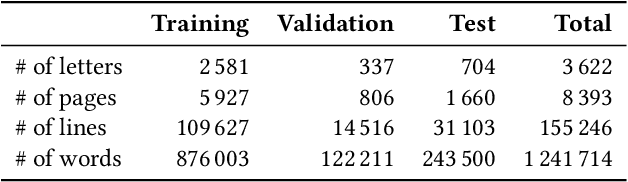

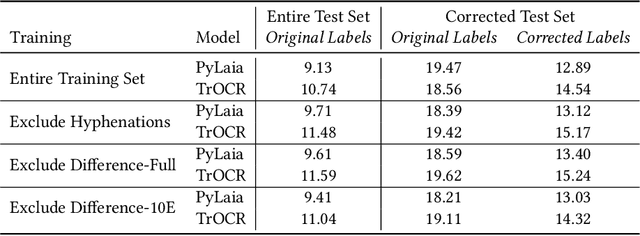
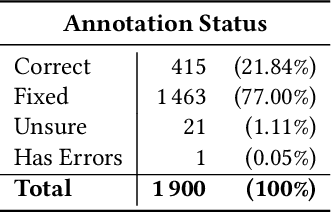
Handwriting recognition is a key technology for accessing the content of old manuscripts, helping to preserve cultural heritage. Deep learning shows an impressive performance in solving this task. However, to achieve its full potential, it requires a large amount of labeled data, which is difficult to obtain for ancient languages and scripts. Often, a trade-off has to be made between ground truth quantity and quality, as is the case for the recently introduced Bullinger database. It contains an impressive amount of over a hundred thousand labeled text line images of mostly premodern German and Latin texts that were obtained by automatically aligning existing page-level transcriptions with text line images. However, the alignment process introduces systematic errors, such as wrongly hyphenated words. In this paper, we investigate the impact of such errors on training and evaluation and suggest means to detect and correct typical alignment errors.
* SOICT 2023
The RPM3D project: 3D Kinematics for Remote Patient Monitoring
Dec 09, 2022This project explores the feasibility of remote patient monitoring based on the analysis of 3D movements captured with smartwatches. We base our analysis on the Kinematic Theory of Rapid Human Movement. We have validated our research in a real case scenario for stroke rehabilitation at the Guttmann Institute5 (neurorehabilitation hospital), showing promising results. Our work could have a great impact in remote healthcare applications, improving the medical efficiency and reducing the healthcare costs. Future steps include more clinical validation, developing multi-modal analysis architectures (analysing data from sensors, images, audio, etc.), and exploring the application of our technology to monitor other neurodegenerative diseases.