 Add to Chrome
 Add to Firefox
 Add to Edge
Global Pose Control for Generative View Synthesis in Normalized Object Coordinate Space
Jul 02, 2026
Novel View Synthesis (NVS) enables the generation of unseen views of a scene from a single or multiple images, allowing users to freely explore an object from any viewpoint. Despite the recent impressive qualitative improvements of generative models for this task, existing methods struggle to provide global and intuitive control of target viewpoints because they either use input-relative camera poses or are limited to generating sparse global views. This lack of global pose control severely limits the number of downstream tasks potentially enabled by NVS. To address this limitation, we propose a novel approach for precise camera control in a customizable Normalized Object Coordinate Space (NOCS), requiring single or few unposed images. Our method operates solely on the absolute camera pose of the target view in NOCS, eliminating the need for a relative world frame or camera poses of the input images. Unlike previous methods that treat NVS as a standalone generation task, we formulate it as an image editing problem and build upon state-of-the-art editing models to leverage their superior generalization capability. Camera information is injected as dedicated camera tokens via an in-context multi-modal conditioning strategy. To alleviate the inherent ambiguity of NOCS, we incorporate text descriptions that explicitly define the object's canonical coordinate frame, which also enhances generalization to unseen object categories. Furthermore, we curate a high-quality dataset with consistently aligned orientations and corresponding NOCS text definitions. Extensive experiments demonstrate that our method robustly generates novel views with accurate and consistent orientations from arbitrary unposed images across diverse categories, achieving state-of-the-art image quality and fidelity.

SHARD: Safe and Helpful Alignment via Self-Reframing Distillation
Jun 14, 2026Large language models often struggle with sensitive prompts. They may refuse outright, provide generic safety boilerplate, or fail to address the user's legitimate informational needs that can be answered safely. We introduce SHARD, a self-reframing distillation method to improve safe-helpfulness. It first rewrites sensitive prompts to surface benign intent using philosophical guidelines, then reframes its original responses into safe, more helpful ones, and finally fine-tunes the model on its self-reframed responses. Across DNA and the English subset of LINGUASAFE, SHARD improves helpfulness for most model families while preserving safety. It also remains competitive with distillation from a larger teacher model, suggesting that models can internalize safe and helpful behavior elicited from their own. Warning: This paper contains content that may be offensive or harmful.
Language, Caste, and Context: Demographic Disparities in AI-Generated Explanations Across Indian and American STEM Educational Systems
Jan 20, 2026The popularization of AI chatbot usage globally has created opportunities for research into their benefits and drawbacks, especially for students using AI assistants for coursework support. This paper asks: how do LLMs perceive the intellectual capabilities of student profiles from intersecting marginalized identities across different cultural contexts? We conduct one of the first large-scale intersectional analyses on LLM explanation quality for Indian and American undergraduate profiles preparing for engineering entrance examinations. By constructing profiles combining multiple demographic dimensions including caste, medium of instruction, and school boards in India, and race, HBCU attendance, and school type in America, alongside universal factors like income and college tier, we examine how quality varies across these factors. We observe biases providing lower-quality outputs to profiles with marginalized backgrounds in both contexts. LLMs such as Qwen2.5-32B-Instruct and GPT-4o demonstrate granular understandings of context-specific discrimination, systematically providing simpler explanations to Hindi/Regional-medium students in India and HBCU profiles in America, treating these as proxies for lower capability. Even when marginalized profiles attain social mobility by getting accepted into elite institutions, they still receive more simplistic explanations, showing how demographic information is inextricably linked to LLM biases. Different models (Qwen2.5-32B-Instruct, GPT-4o, GPT-4o-mini, GPT-OSS 20B) embed similar biases against historically marginalized populations in both contexts, preventing profiles from switching between AI assistants for better results. Our findings have strong implications for AI incorporation into global engineering education.
Generative Interventions for Causal Learning
Dec 22, 2020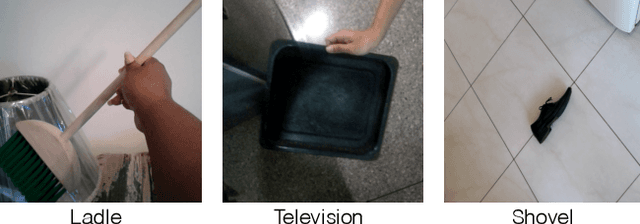
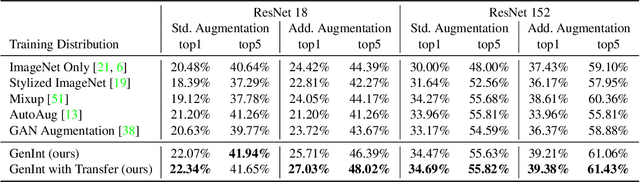
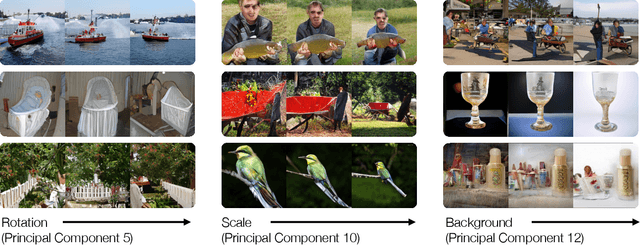
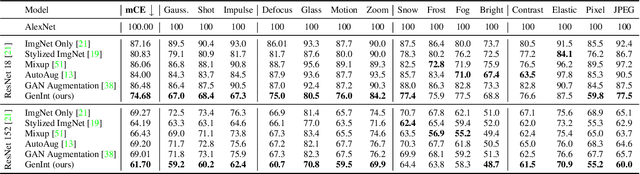
We introduce a framework for learning robust visual representations that generalize to new viewpoints, backgrounds, and scene contexts. Discriminative models often learn naturally occurring spurious correlations, which cause them to fail on images outside of the training distribution. In this paper, we show that we can steer generative models to manufacture interventions on features caused by confounding factors. Experiments, visualizations, and theoretical results show this method learns robust representations more consistent with the underlying causal relationships. Our approach improves performance on multiple datasets demanding out-of-distribution generalization, and we demonstrate state-of-the-art performance generalizing from ImageNet to ObjectNet dataset.
Multitask Learning Strengthens Adversarial Robustness
Jul 14, 2020

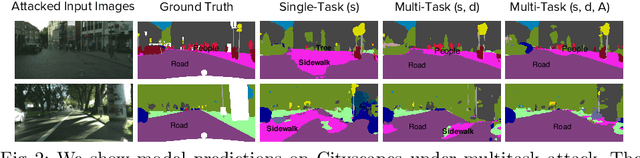
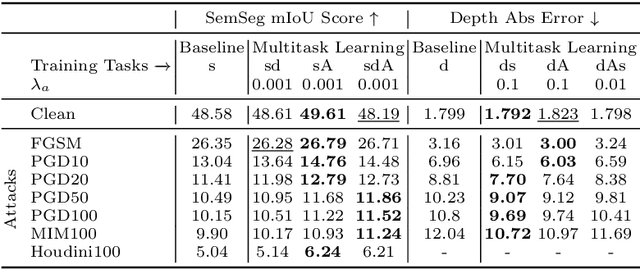
Although deep networks achieve strong accuracy on a range of computer vision benchmarks, they remain vulnerable to adversarial attacks, where imperceptible input perturbations fool the network. We present both theoretical and empirical analyses that connect the adversarial robustness of a model to the number of tasks that it is trained on. Experiments on two datasets show that attack difficulty increases as the number of target tasks increase. Moreover, our results suggest that when models are trained on multiple tasks at once, they become more robust to adversarial attacks on individual tasks. While adversarial defense remains an open challenge, our results suggest that deep networks are vulnerable partly because they are trained on too few tasks.