 Add to Chrome
 Add to Firefox
 Add to Edge
Multiple Instance Choquet Integral Classifier Fusion and Regression for Remote Sensing Applications
Mar 11, 2018
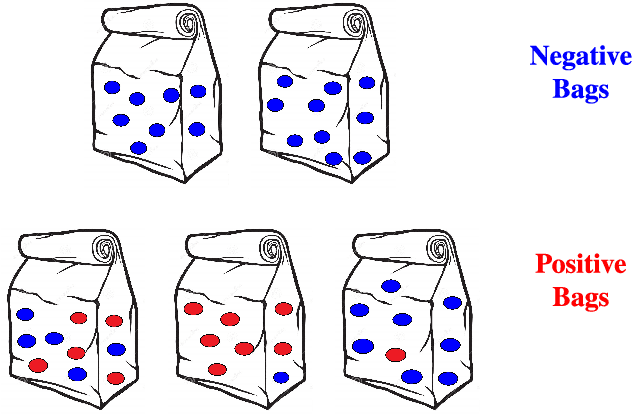
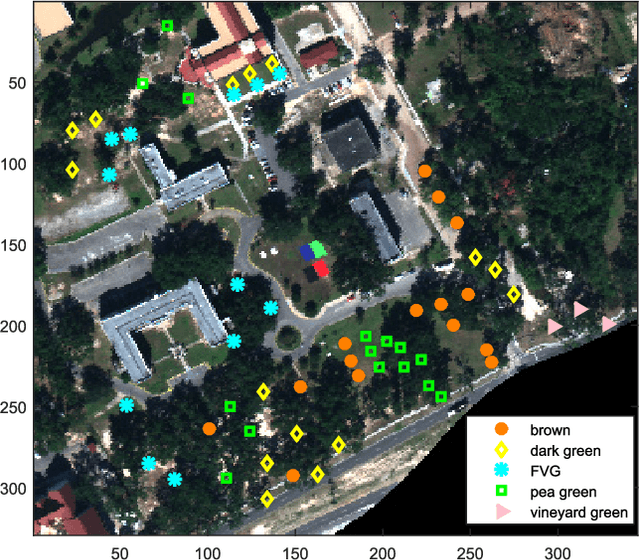
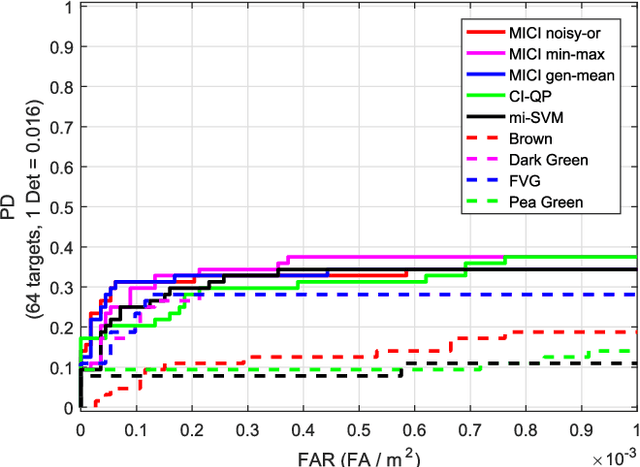
In classifier (or regression) fusion the aim is to combine the outputs of several algorithms to boost overall performance. Standard supervised fusion algorithms often require accurate and precise training labels. However, accurate labels may be difficult to obtain in many remote sensing applications. This paper proposes novel classification and regression fusion models that can be trained given ambiguosly and imprecisely labeled training data in which training labels are associated with sets of data points (i.e., "bags") instead of individual data points (i.e., "instances") following a multiple instance learning framework. Experiments were conducted based on the proposed algorithms on both synthetic data and applications such as target detection and crop yield prediction given remote sensing data. The proposed algorithms show effective classification and regression performance.

Multiple Instance Hybrid Estimator for Hyperspectral Target Characterization and Sub-pixel Target Detection
Oct 31, 2017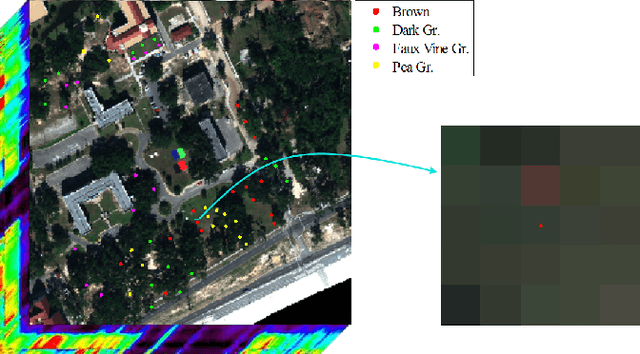
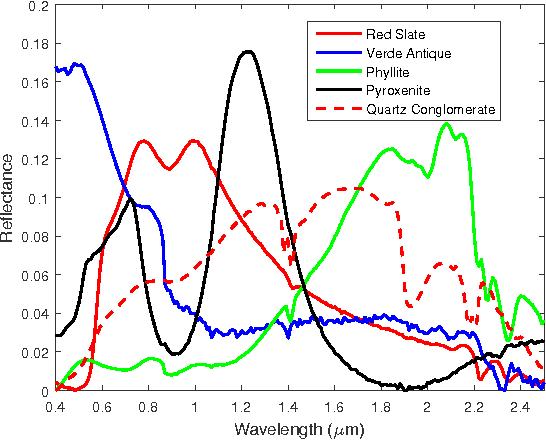
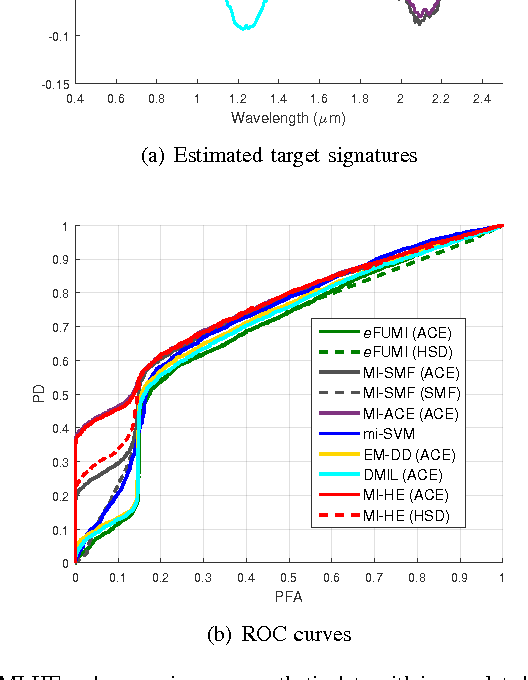
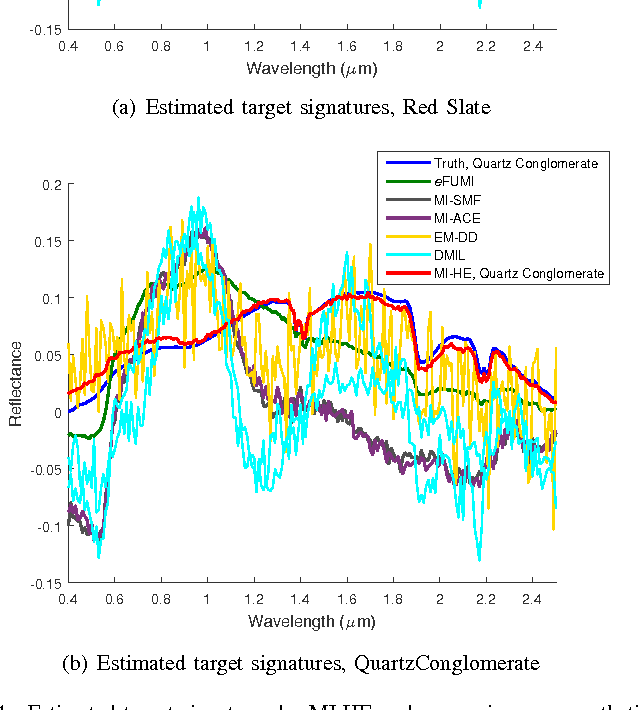
The Multiple Instance Hybrid Estimator for discriminative target characterization from imprecisely labeled hyperspectral data is presented. In many hyperspectral target detection problems, acquiring accurately labeled training data is difficult. Furthermore, each pixel containing target is likely to be a mixture of both target and non-target signatures (i.e., sub-pixel targets), making extracting a pure prototype signature for the target class from the data extremely difficult. The proposed approach addresses these problems by introducing a data mixing model and optimizing the response of the hybrid sub-pixel detector within a multiple instance learning framework. The proposed approach iterates between estimating a set of discriminative target and non-target signatures and solving a sparse unmixing problem. After learning target signatures, a signature based detector can then be applied on test data. Both simulated and real hyperspectral target detection experiments show the proposed algorithm is effective at learning discriminative target signatures and achieves superior performance over state-of-the-art comparison algorithms.
Possibilistic Fuzzy Local Information C-Means for Sonar Image Segmentation
Sep 28, 2017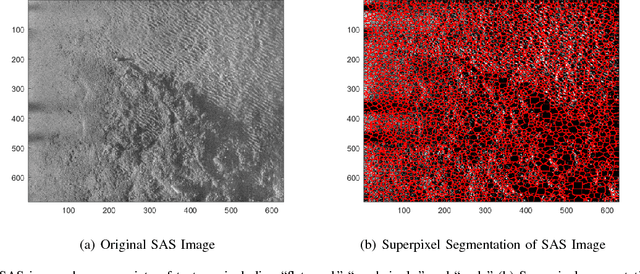
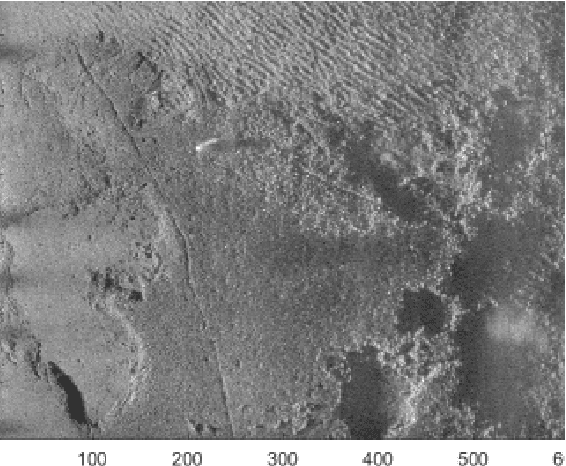
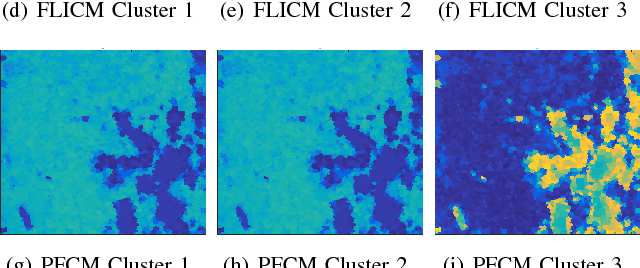
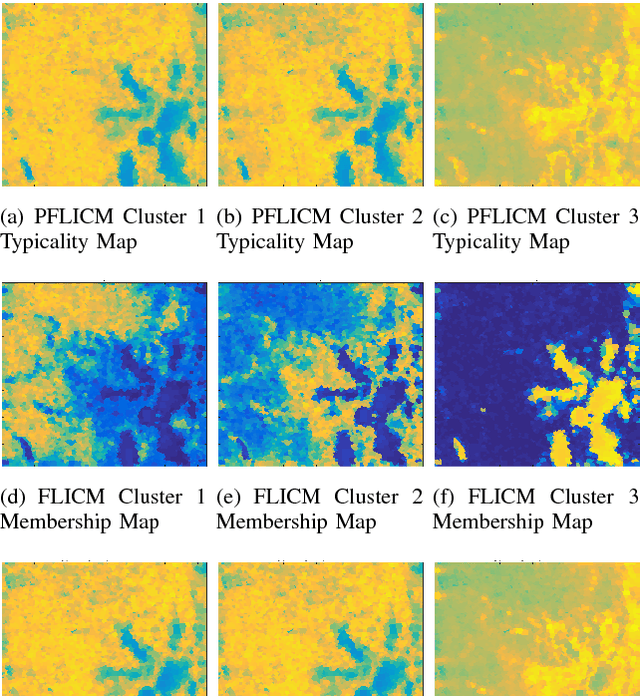
Side-look synthetic aperture sonar (SAS) can produce very high quality images of the sea-floor. When viewing this imagery, a human observer can often easily identify various sea-floor textures such as sand ripple, hard-packed sand, sea grass and rock. In this paper, we present the Possibilistic Fuzzy Local Information C-Means (PFLICM) approach to segment SAS imagery into sea-floor regions that exhibit these various natural textures. The proposed PFLICM method incorporates fuzzy and possibilistic clustering methods and leverages (local) spatial information to perform soft segmentation. Results are shown on several SAS scenes and compared to alternative segmentation approaches.
Multiple Instance Hyperspectral Target Characterization
Sep 13, 2017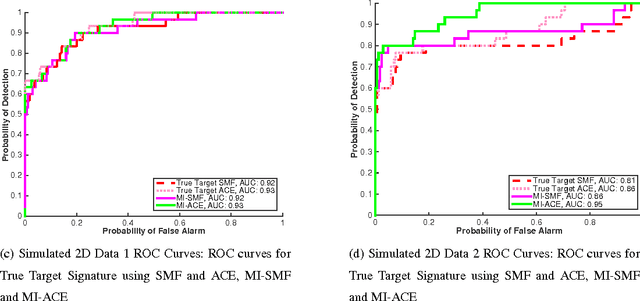
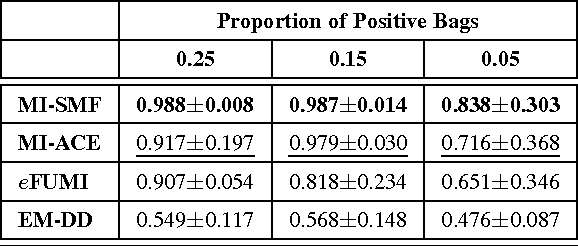
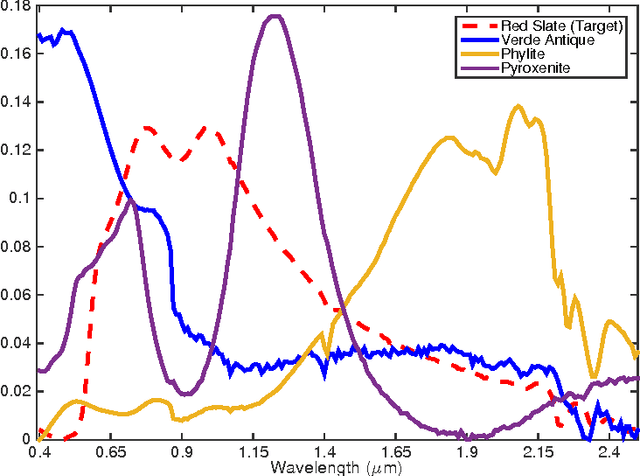
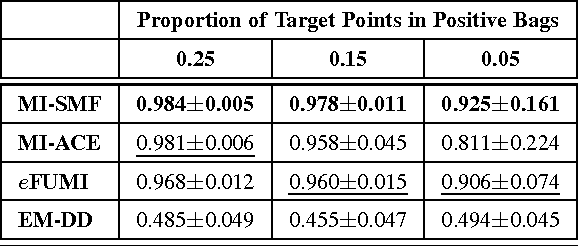
In this paper, two methods for multiple instance target characterization, MI-SMF and MI-ACE, are presented. MI-SMF and MI-ACE estimate a discriminative target signature from imprecisely-labeled and mixed training data. In many applications, such as sub-pixel target detection in remotely-sensed hyperspectral imagery, accurate pixel-level labels on training data is often unavailable and infeasible to obtain. Furthermore, since sub-pixel targets are smaller in size than the resolution of a single pixel, training data is comprised only of mixed data points (in which target training points are mixtures of responses from both target and non-target classes). Results show improved, consistent performance over existing multiple instance concept learning methods on several hyperspectral sub-pixel target detection problems.
Multiple Instance Dictionary Learning for Beat-to-Beat Heart Rate Monitoring from Ballistocardiograms
Jun 11, 2017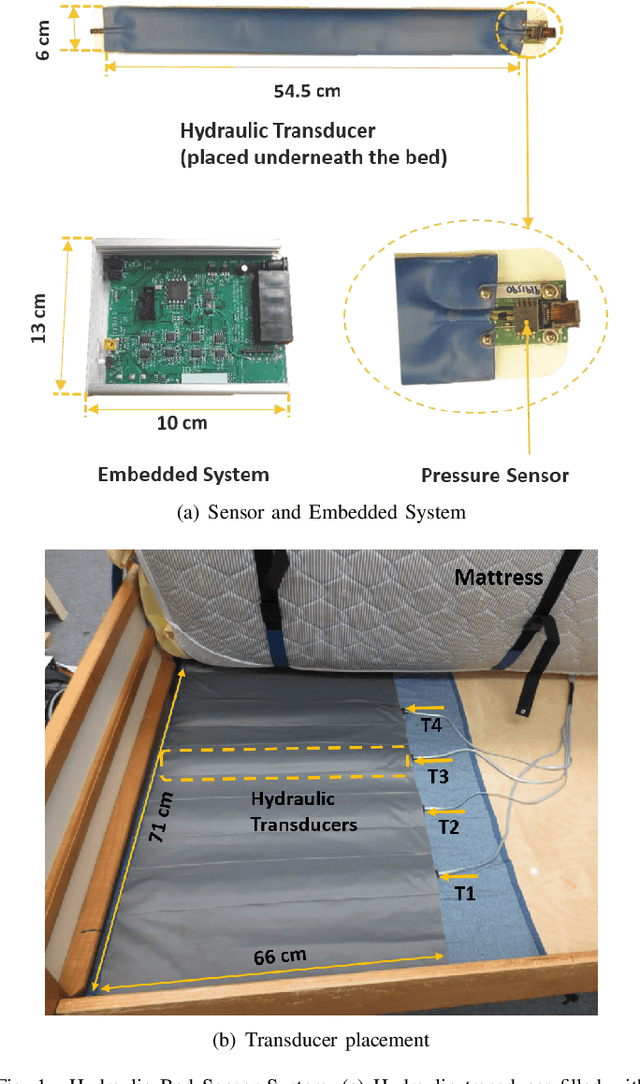
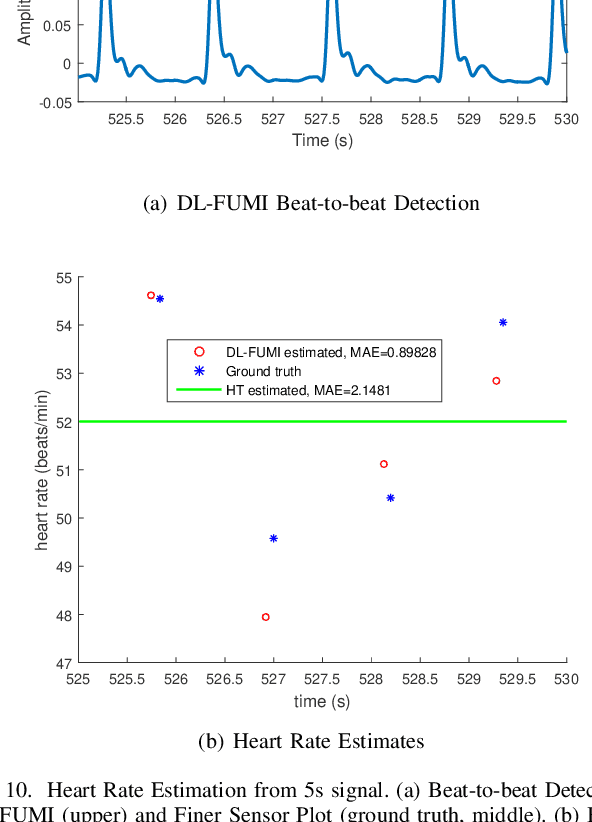
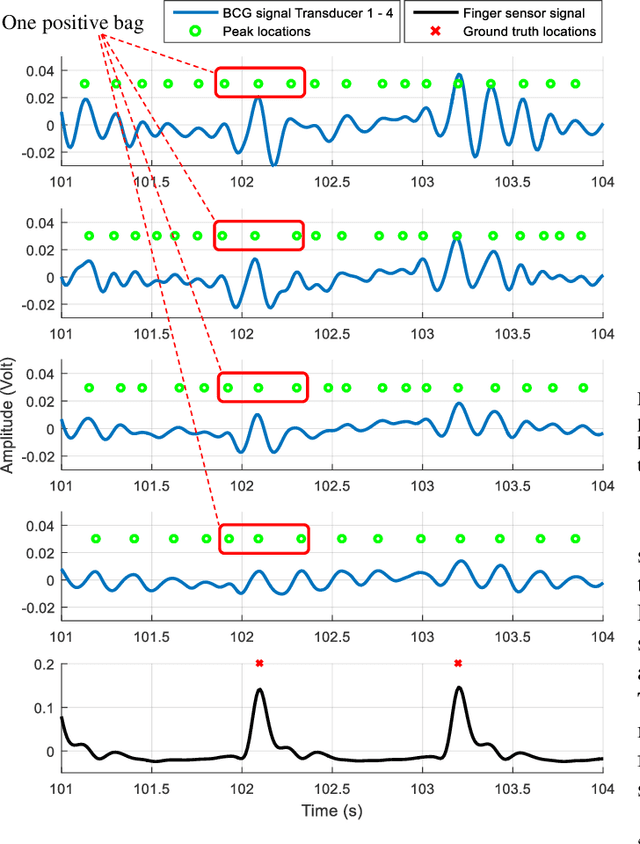
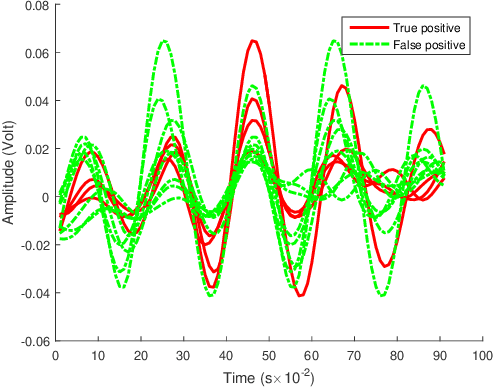
A multiple instance dictionary learning approach, Dictionary Learning using Functions of Multiple Instances (DL-FUMI), is used to perform beat-to-beat heart rate estimation and to characterize heartbeat signatures from ballistocardiogram (BCG) signals collected with a hydraulic bed sensor. DL-FUMI estimates a "heartbeat concept" that represents an individual's personal ballistocardiogram heartbeat pattern. DL-FUMI formulates heartbeat detection and heartbeat characterization as a multiple instance learning problem to address the uncertainty inherent in aligning BCG signals with ground truth during training. Experimental results show that the estimated heartbeat concept found by DL-FUMI is an effective heartbeat prototype and achieves superior performance over comparison algorithms.
Hyperspectral Unmixing with Endmember Variability using Semi-supervised Partial Membership Latent Dirichlet Allocation
Mar 17, 2017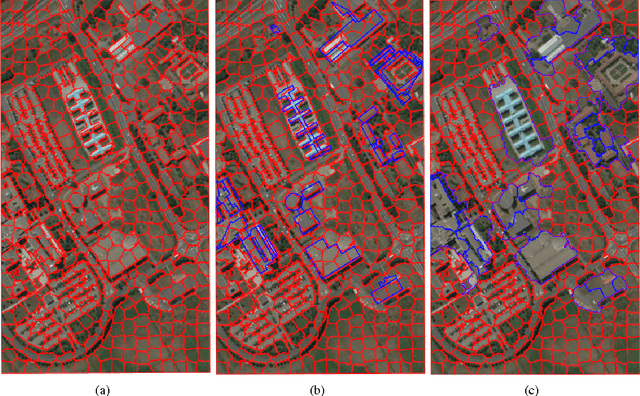
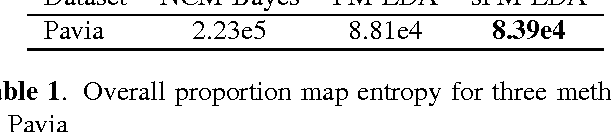
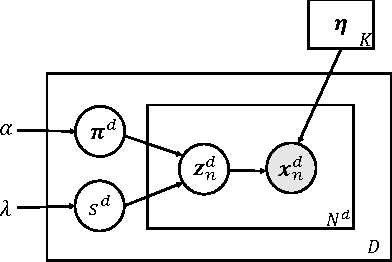

A semi-supervised Partial Membership Latent Dirichlet Allocation approach is developed for hyperspectral unmixing and endmember estimation while accounting for spectral variability and spatial information. Partial Membership Latent Dirichlet Allocation is an effective approach for spectral unmixing while representing spectral variability and leveraging spatial information. In this work, we extend Partial Membership Latent Dirichlet Allocation to incorporate any available (imprecise) label information to help guide unmixing. Experimental results on two hyperspectral datasets show that the proposed semi-supervised PM-LDA can yield improved hyperspectral unmixing and endmember estimation results.
Multiple Instance Hybrid Estimator for Learning Target Signatures
Jan 09, 2017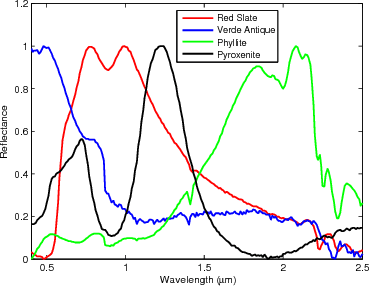
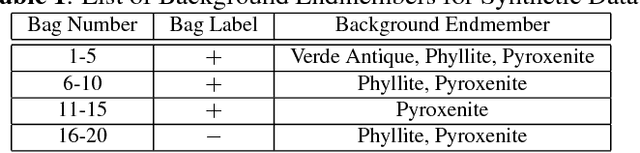
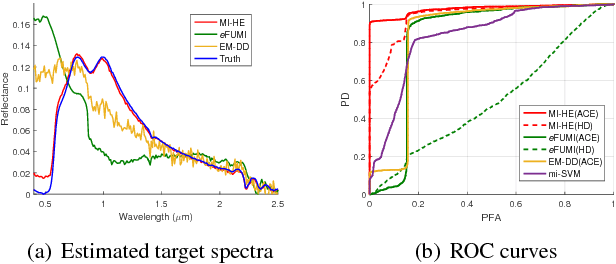
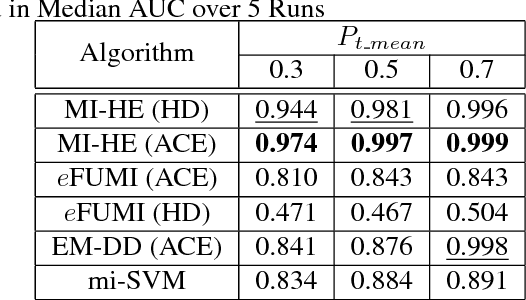
Signature-based detectors for hyperspectral target detection rely on knowing the specific target signature in advance. However, target signature are often difficult or impossible to obtain. Furthermore, common methods for obtaining target signatures, such as from laboratory measurements or manual selection from an image scene, usually do not capture the discriminative features of target class. In this paper, an approach for estimating a discriminative target signature from imprecise labels is presented. The proposed approach maximizes the response of the hybrid sub-pixel detector within a multiple instance learning framework and estimates a set of discriminative target signatures. After learning target signatures, any signature based detector can then be applied on test data. Both simulated and real hyperspectral target detection experiments are shown to illustrate the effectiveness of the method.
Map-guided Hyperspectral Image Superpixel Segmentation Using Proportion Maps
Jan 06, 2017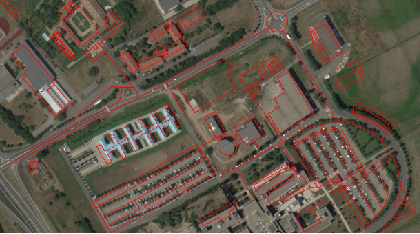
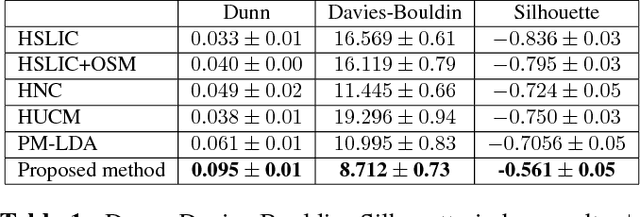
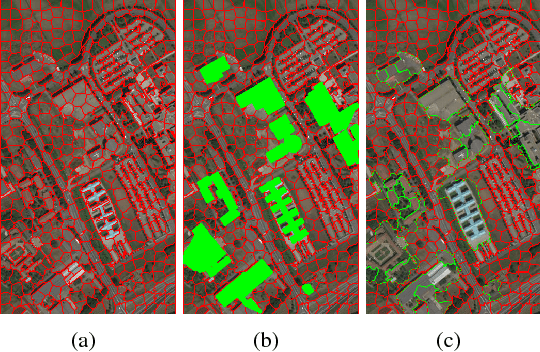
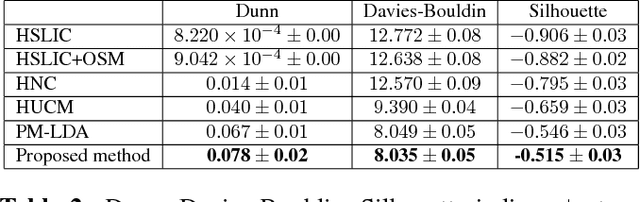
A map-guided superpixel segmentation method for hyperspectral imagery is developed and introduced. The proposed approach develops a hyperspectral-appropriate version of the SLIC superpixel segmentation algorithm, leverages map information to guide segmentation, and incorporates the semi-supervised Partial Membership Latent Dirichlet Allocation (sPM-LDA) to obtain a final superpixel segmentation. The proposed method is applied to two real hyperspectral data sets and quantitative cluster validity metrics indicate that the proposed approach outperforms existing hyperspectral superpixel segmentation methods.
Partial Membership Latent Dirichlet Allocation
Dec 28, 2016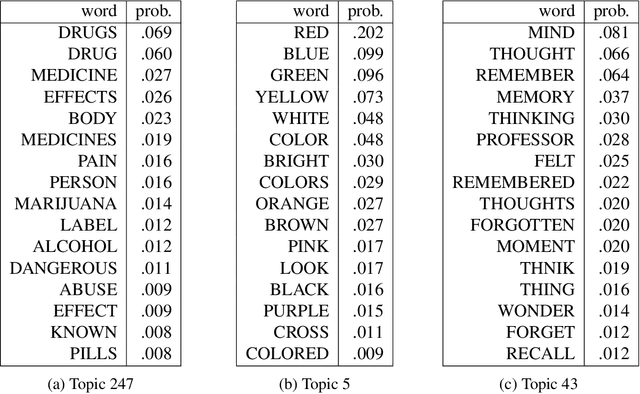
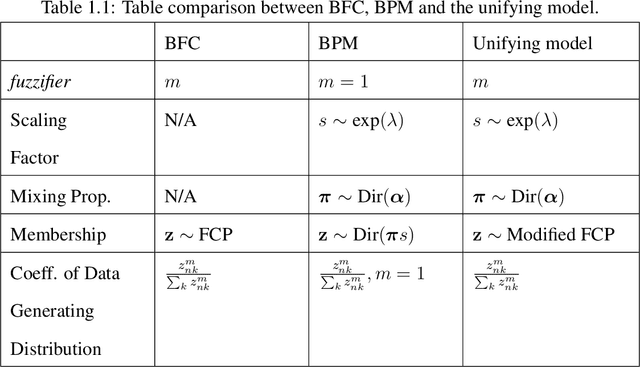
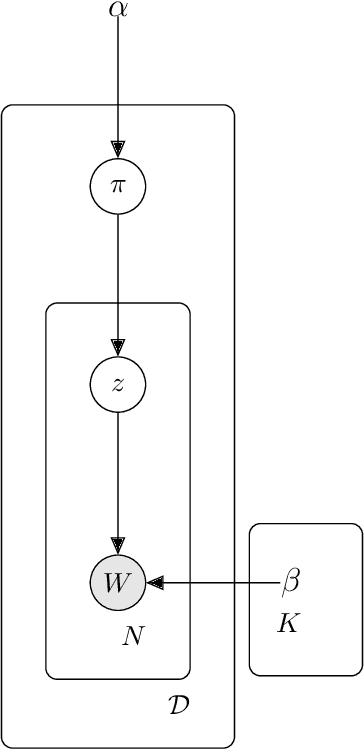
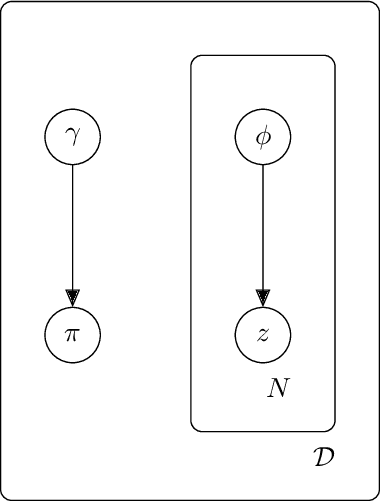
Topic models (e.g., pLSA, LDA, sLDA) have been widely used for segmenting imagery. However, these models are confined to crisp segmentation, forcing a visual word (i.e., an image patch) to belong to one and only one topic. Yet, there are many images in which some regions cannot be assigned a crisp categorical label (e.g., transition regions between a foggy sky and the ground or between sand and water at a beach). In these cases, a visual word is best represented with partial memberships across multiple topics. To address this, we present a partial membership latent Dirichlet allocation (PM-LDA) model and an associated parameter estimation algorithm. This model can be useful for imagery where a visual word may be a mixture of multiple topics. Experimental results on visual and sonar imagery show that PM-LDA can produce both crisp and soft semantic image segmentations; a capability previous topic modeling methods do not have.
Hyperspectral Unmixing with Endmember Variability using Partial Membership Latent Dirichlet Allocation
Sep 12, 2016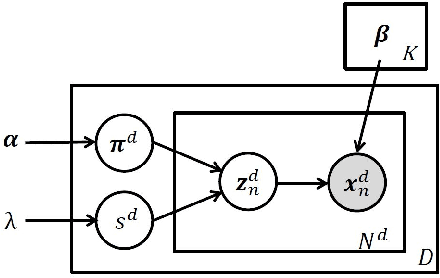
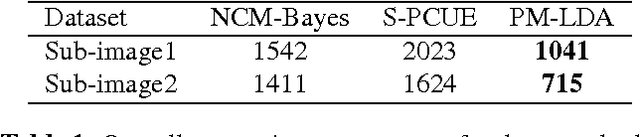
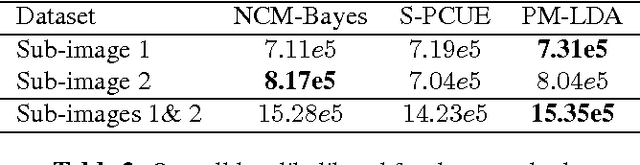
The application of Partial Membership Latent Dirichlet Allocation(PM-LDA) for hyperspectral endmember estimation and spectral unmixing is presented. PM-LDA provides a model for a hyperspectral image analysis that accounts for spectral variability and incorporates spatial information through the use of superpixel-based 'documents.' In our application of PM-LDA, we employ the Normal Compositional Model in which endmembers are represented as Normal distributions to account for spectral variability and proportion vectors are modeled as random variables governed by a Dirichlet distribution. The use of the Dirichlet distribution enforces positivity and sum-to-one constraints on the proportion values. Algorithm results on real hyperspectral data indicate that PM-LDA produces endmember distributions that represent the ground truth classes and their associated variability.