 Add to Chrome
 Add to Firefox
 Add to Edge
Towards Scaling Law Analysis For Spatiotemporal Weather Data
Apr 06, 2026
Compute-optimal scaling laws are relatively well studied for NLP and CV, where objectives are typically single-step and targets are comparatively homogeneous. Weather forecasting is harder to characterize in the same framework: autoregressive rollouts compound errors over long horizons, outputs couple many physical channels with disparate scales and predictability, and globally pooled test metrics can disagree sharply with per-channel, late-lead behavior implied by short-horizon training. We extend neural scaling analysis for autoregressive weather forecasting from single-step training loss to long rollouts and per-channel metrics. We quantify (1) how prediction error is distributed across channels and how its growth rate evolves with forecast horizon, (2) if power law scaling holds for test error, relative to rollout length when error is pooled globally, and (3) how that fit varies jointly with horizon and channel for parameter, data, and compute-based scaling axes. We find strong cross-channel and cross-horizon heterogeneity: pooled scaling can look favorable while many channels degrade at late leads. We discuss implications for weighted objectives, horizon-aware curricula, and resource allocation across outputs.

On Neural Scaling Laws for Weather Emulation through Continual Training
Mar 26, 2026Neural scaling laws, which in some domains can predict the performance of large neural networks as a function of model, data, and compute scale, are the cornerstone of building foundation models in Natural Language Processing and Computer Vision. We study neural scaling in Scientific Machine Learning, focusing on models for weather forecasting. To analyze scaling behavior in as simple a setting as possible, we adopt a minimal, scalable, general-purpose Swin Transformer architecture, and we use continual training with constant learning rates and periodic cooldowns as an efficient training strategy. We show that models trained in this minimalist way follow predictable scaling trends and even outperform standard cosine learning rate schedules. Cooldown phases can be re-purposed to improve downstream performance, e.g., enabling accurate multi-step rollouts over longer forecast horizons as well as sharper predictions through spectral loss adjustments. We also systematically explore a wide range of model and dataset sizes under various compute budgets to construct IsoFLOP curves, and we identify compute-optimal training regimes. Extrapolating these trends to larger scales highlights potential performance limits, demonstrating that neural scaling can serve as an important diagnostic for efficient resource allocation. We open-source our code for reproducibility.
Mic-hackathon 2024: Hackathon on Machine Learning for Electron and Scanning Probe Microscopy
Jun 10, 2025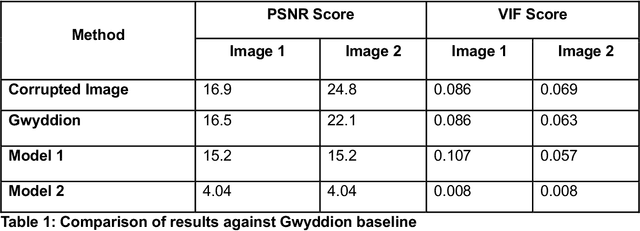

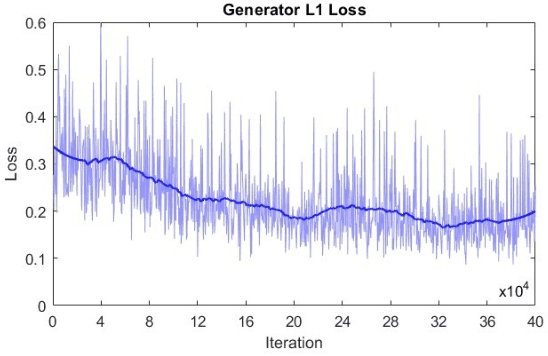
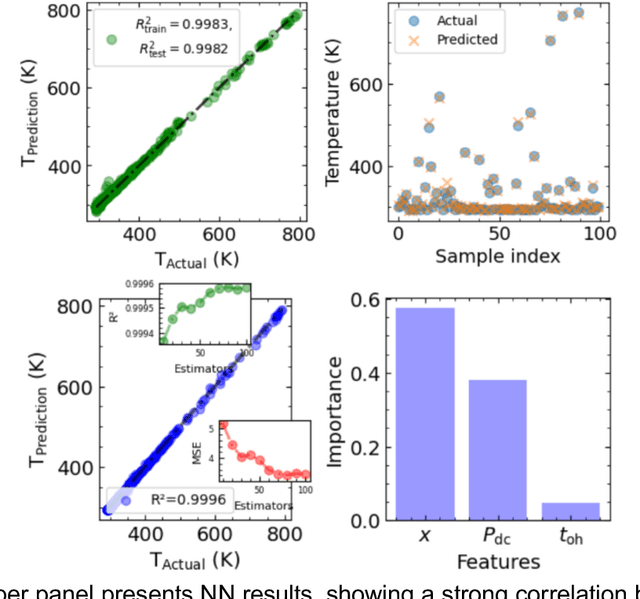
Microscopy is a primary source of information on materials structure and functionality at nanometer and atomic scales. The data generated is often well-structured, enriched with metadata and sample histories, though not always consistent in detail or format. The adoption of Data Management Plans (DMPs) by major funding agencies promotes preservation and access. However, deriving insights remains difficult due to the lack of standardized code ecosystems, benchmarks, and integration strategies. As a result, data usage is inefficient and analysis time is extensive. In addition to post-acquisition analysis, new APIs from major microscope manufacturers enable real-time, ML-based analytics for automated decision-making and ML-agent-controlled microscope operation. Yet, a gap remains between the ML and microscopy communities, limiting the impact of these methods on physics, materials discovery, and optimization. Hackathons help bridge this divide by fostering collaboration between ML researchers and microscopy experts. They encourage the development of novel solutions that apply ML to microscopy, while preparing a future workforce for instrumentation, materials science, and applied ML. This hackathon produced benchmark datasets and digital twins of microscopes to support community growth and standardized workflows. All related code is available at GitHub: https://github.com/KalininGroup/Mic-hackathon-2024-codes-publication/tree/1.0.0.1