 Add to Chrome
 Add to Firefox
 Add to Edge
Plenoptic imaging of particle interactions in scintillation detectors
Jul 01, 2026
Accurate 3D localization of radiation interactions in scintillation detectors is essential for nuclear and particle physics, safeguards, and medical imaging, but remains difficult in light-starved regimes with limited photon statistics. We present PRISM, a multifocal plenoptic imaging system designed for millimeter-scale 3D position reconstruction in a single-volume scintillator. PRISM uses a multifocal microlens array with diverse focal lengths and high effective numerical aperture to balance photon collection with spatial and depth encoding. A Cram'er--Rao lower bound analysis shows that the multifocal design improves axial sensitivity over conventional unifocal plenoptic systems under photon-limited conditions. We build a prototype system, calibrate its optical response with a tunable light source, and form photon-limited measurements with $\mathcal{O}(100)$ detected photons. For sparse single-vertex events, we reconstruct interaction locations using an Alternating Descent Conditional Gradient-inspired algorithm and demonstrate an average 3D localization error of approximately 1 mm. We also provide an initial evaluation of double-vertex events, showing that localization improves as the axial separation between interactions increases. These results demonstrate that multifocal plenoptic imaging can mitigate the traditional trade-off between light collection and spatial resolution, providing a photon-efficient approach to 3D reconstruction in scintillation detectors and a foundation for future multi-scattering event reconstruction.

Optimized Sampling for Non-Line-of-Sight Imaging Using Modified Fast Fourier Transforms
Jan 09, 2025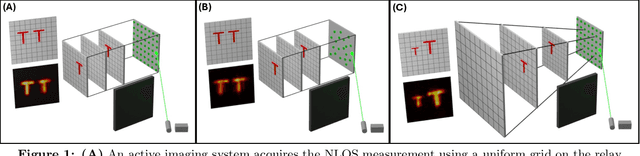
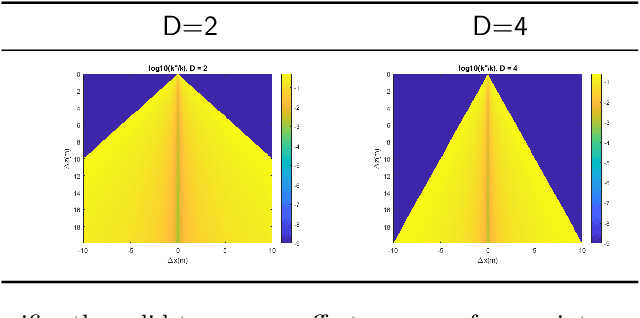
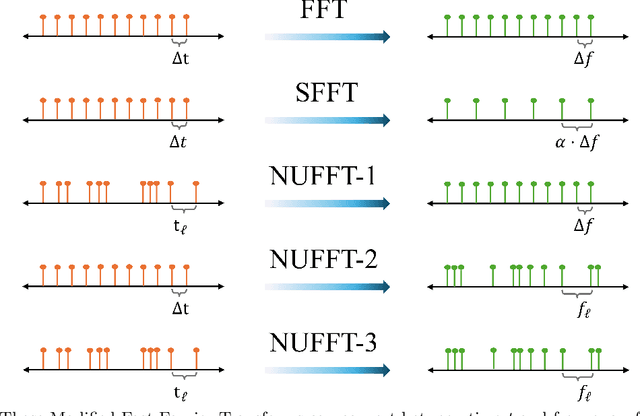
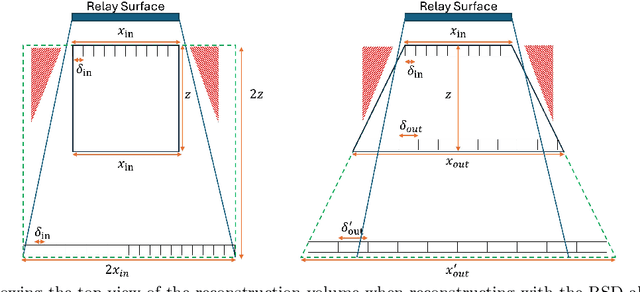
Non-line-of-Sight (NLOS) imaging systems collect light at a diffuse relay surface and input this measurement into computational algorithms that output a 3D volumetric reconstruction. These algorithms utilize the Fast Fourier Transform (FFT) to accelerate the reconstruction process but require both input and output to be sampled spatially with uniform grids. However, the geometry of NLOS imaging inherently results in non-uniform sampling on the relay surface when using multi-pixel detector arrays, even though such arrays significantly reduce acquisition times. Furthermore, using these arrays increases the data rate required for sensor readout, posing challenges for real-world deployment. In this work, we utilize the phasor field framework to demonstrate that existing NLOS imaging setups typically oversample the relay surface spatially, explaining why the measurement can be compressed without significantly sacrificing reconstruction quality. This enables us to utilize the Non-Uniform Fast Fourier Transform (NUFFT) to reconstruct from sparse measurements acquired from irregularly sampled relay surfaces of arbitrary shapes. Furthermore, we utilize the NUFFT to reconstruct at arbitrary locations in the hidden volume, ensuring flexible sampling schemes for both the input and output. Finally, we utilize the Scaled Fast Fourier Transform (SFFT) to reconstruct larger volumes without increasing the number of samples stored in memory. All algorithms introduced in this paper preserve the computational complexity of FFT-based methods, ensuring scalability for practical NLOS imaging applications.
Can multi-label classification networks know what they don't know?
Sep 29, 2021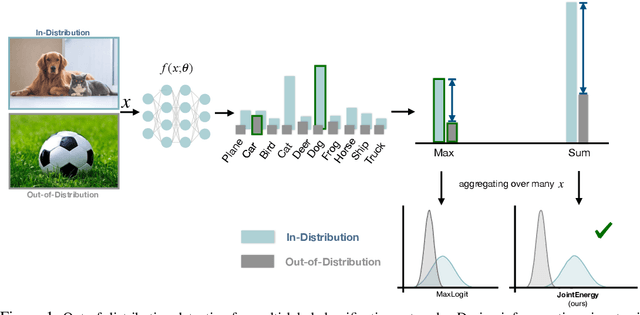
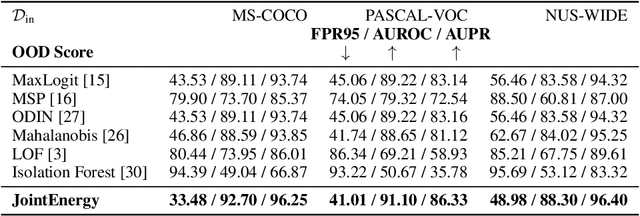
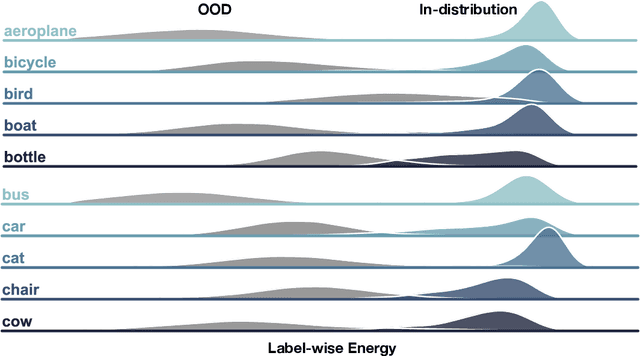
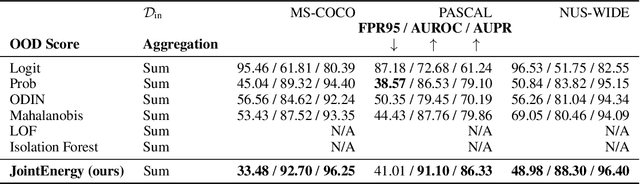
Estimating out-of-distribution (OOD) uncertainty is a central challenge for safely deploying machine learning models in the open-world environment. Improved methods for OOD detection in multi-class classification have emerged, while OOD detection methods for multi-label classification remain underexplored and use rudimentary techniques. We propose JointEnergy, a simple and effective method, which estimates the OOD indicator scores by aggregating energy scores from multiple labels. We show that JointEnergy can be mathematically interpreted from a joint likelihood perspective. Our results show consistent improvement over previous methods that are based on the maximum-valued scores, which fail to capture joint information from multiple labels. We demonstrate the effectiveness of our method on three common multi-label classification benchmarks, including MS-COCO, PASCAL-VOC, and NUS-WIDE. We show that JointEnergy can reduce the FPR95 by up to 10.05% compared to the previous best baseline, establishing state-of-the-art performance.