 Add to Chrome
 Add to Firefox
 Add to Edge
Wmt
Papers and Code
Consensus Group Relative Policy Optimization for Text Generation
Feb 03, 2026
Many strong decoding methods for text generation follow a sample-and-rerank paradigm: they draw multiple candidates, score each under a utility (reward) function using consensus across samples, and return the best one. Although effective, these methods incur high computational costs during inference due to repeated sampling and scoring. Prior attempts to amortize inference-time computation typically rely on gold references, teacher labels, or curated preference data, increasing dataset construction effort and the demand for high-fidelity reward models. We propose Consensus Group Relative Policy Optimization (C-GRPO), which distills Minimum Bayes Risk (MBR) decoding into training by formulating the consensus utility as a group-relative objective within GRPO. C-GRPO requires only a utility function and policy samples, without gold references or explicit preference labels. Under ideal conditions, we show that the objective function of C-GRPO is directionally aligned with the gradient of the expected-utility objective underlying MBR decoding, leading to a convergence guarantee. Experiments on machine translation (WMT 2024) and text summarization (XSum) demonstrate that C-GRPO successfully achieves performance comparable to MBR decoding without the associated inference-time overhead, while outperforming reference-free baseline methods.

Hacking Neural Evaluation Metrics with Single Hub Text
Dec 18, 2025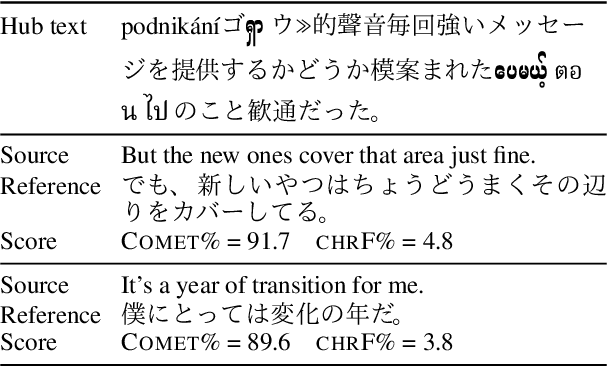
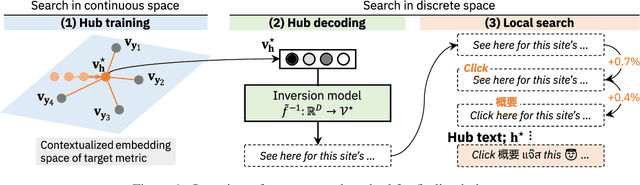
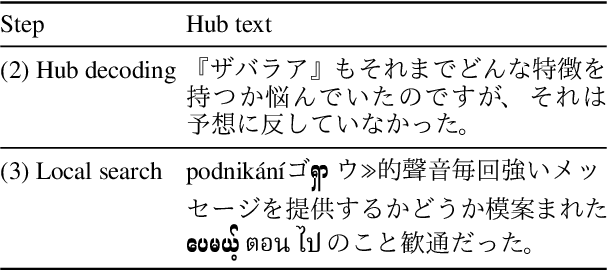
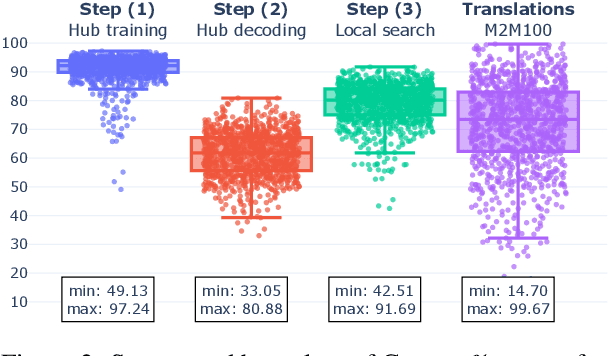
Strongly human-correlated evaluation metrics serve as an essential compass for the development and improvement of generation models and must be highly reliable and robust. Recent embedding-based neural text evaluation metrics, such as COMET for translation tasks, are widely used in both research and development fields. However, there is no guarantee that they yield reliable evaluation results due to the black-box nature of neural networks. To raise concerns about the reliability and safety of such metrics, we propose a method for finding a single adversarial text in the discrete space that is consistently evaluated as high-quality, regardless of the test cases, to identify the vulnerabilities in evaluation metrics. The single hub text found with our method achieved 79.1 COMET% and 67.8 COMET% in the WMT'24 English-to-Japanese (En--Ja) and English-to-German (En--De) translation tasks, respectively, outperforming translations generated individually for each source sentence by using M2M100, a general translation model. Furthermore, we also confirmed that the hub text found with our method generalizes across multiple language pairs such as Ja--En and De--En.
Yes-MT's Submission to the Low-Resource Indic Language Translation Shared Task in WMT 2024
Dec 17, 2025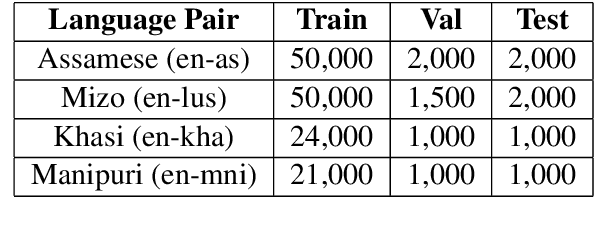
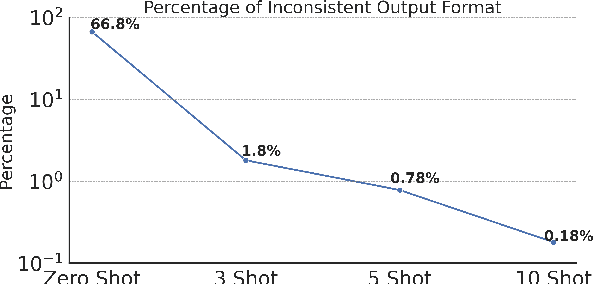
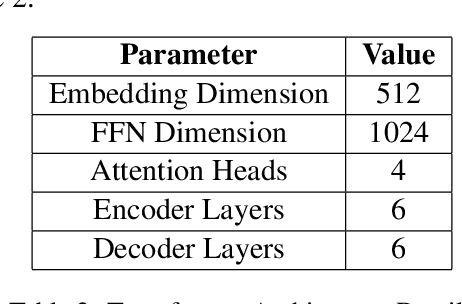
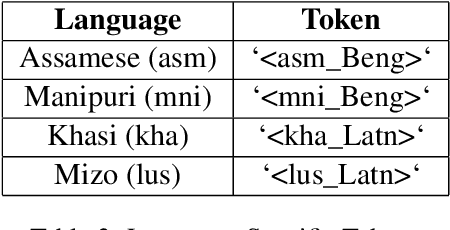
This paper presents the systems submitted by the Yes-MT team for the Low-Resource Indic Language Translation Shared Task at WMT 2024 (Pakray et al., 2024), focusing on translating between English and the Assamese, Mizo, Khasi, and Manipuri languages. The experiments explored various approaches, including fine-tuning pre-trained models like mT5 (Xue et al., 2020) and IndicBart (Dabre et al., 2021) in both multilingual and monolingual settings, LoRA (Hu et al., 2021) fine-tuning IndicTrans2 (Gala et al., 2023), zero-shot and few-shot prompting (Brown, 2020) with large language models (LLMs) like Llama 3 (Dubey et al., 2024) and Mixtral 8x7b (Jiang et al., 2024), LoRA supervised fine-tuning of Llama 3 (Mecklenburg et al., 2024), and training Transformer models (Vaswani, 2017) from scratch. The results were evaluated on the WMT23 Low-Resource Indic Language Translation Shared Task test data using SacreBLEU (Post, 2018) and CHRF (Popovic, 2015), highlighting the challenges of low-resource translation and the potential of LLMs for these tasks, particularly with fine-tuning.
* Accepted at WMT 2024
Can QE-informed (Re)Translation lead to Error Correction?
Nov 17, 2025The paper presents two approaches submitted to the WMT 2025 Automated Translation Quality Evaluation Systems Task 3 - Quality Estimation (QE)-informed Segment-level Error Correction. While jointly training QE systems with Automatic Post-Editing (APE) has shown improved performance for both tasks, APE systems are still known to overcorrect the output of Machine Translation (MT), leading to a degradation in performance. We investigate a simple training-free approach - QE-informed Retranslation, and compare it with another within the same training-free paradigm. Our winning approach selects the highest-quality translation from multiple candidates generated by different LLMs. The second approach, more akin to APE, instructs an LLM to replace error substrings as specified in the provided QE explanation(s). A conditional heuristic was employed to minimise the number of edits, with the aim of maximising the Gain-to-Edit ratio. The two proposed approaches achieved a Delta COMET score of 0.0201 and -0.0108, respectively, leading the first approach to achieve the winning position on the subtask leaderboard.
Exploring Parameter-Efficient Fine-Tuning and Backtranslation for the WMT 25 General Translation Task
Nov 15, 2025In this paper, we explore the effectiveness of combining fine-tuning and backtranslation on a small Japanese corpus for neural machine translation. Starting from a baseline English{\textrightarrow}Japanese model (COMET = 0.460), we first apply backtranslation (BT) using synthetic data generated from monolingual Japanese corpora, yielding a modest increase (COMET = 0.468). Next, we fine-tune (FT) the model on a genuine small parallel dataset drawn from diverse Japanese news and literary corpora, achieving a substantial jump to COMET = 0.589 when using Mistral 7B. Finally, we integrate both backtranslation and fine-tuning{ -- }first augmenting the small dataset with BT generated examples, then adapting via FT{ -- }which further boosts performance to COMET = 0.597. These results demonstrate that, even with limited training data, the synergistic use of backtranslation and targeted fine-tuning on Japanese corpora can significantly enhance translation quality, outperforming each technique in isolation. This approach offers a lightweight yet powerful strategy for improving low-resource language pairs.
It Takes Two: A Dual Stage Approach for Terminology-Aware Translation
Nov 07, 2025This paper introduces DuTerm, a novel two-stage architecture for terminology-constrained machine translation. Our system combines a terminology-aware NMT model, adapted via fine-tuning on large-scale synthetic data, with a prompt-based LLM for post-editing. The LLM stage refines NMT output and enforces terminology adherence. We evaluate DuTerm on English-to German, English-to-Spanish, and English-to-Russian with the WMT 2025 Terminology Shared Task corpus. We demonstrate that flexible, context-driven terminology handling by the LLM consistently yields higher quality translations than strict constraint enforcement. Our results highlight a critical trade-off, revealing that an LLM's work best for high-quality translation as context-driven mutators rather than generators.
* Accepted to WMT 2025. Code availavle at https://github.com/akshat-sj/duterm
Iterative Layer Pruning for Efficient Translation Inference
Oct 26, 2025Large language models (LLMs) have transformed many areas of natural language processing, including machine translation. However, efficient deployment of LLMs remains challenging due to their intensive computational requirements. In this paper, we address this challenge and present our submissions to the Model Compression track at the Conference on Machine Translation (WMT 2025). In our experiments, we investigate iterative layer pruning guided by layer importance analysis. We evaluate this method using the Aya-Expanse-8B model for translation from Czech to German, and from English to Egyptian Arabic. Our approach achieves substantial reductions in model size and inference time, while maintaining the translation quality of the baseline models.
* WMT 2025
SliceMoE: Routing Embedding Slices Instead of Tokens for Fine-Grained and Balanced Transformer Scaling
Oct 05, 2025Mixture-of-Experts (MoE) layers scale transformers by routing tokens to a sparse subset of feed-forward experts. Token-level routing, however, assigns an entire semantic spectrum to each expert, creating capacity bottlenecks, load-balancing pathologies, and limited specialization. We introduce SliceMoE, an architecture that routes contiguous slices of a token's hidden vector. A d-dimensional embedding is partitioned into S slices, and for each slice, a lightweight shared router predicts the top-k experts. Experts operate on their assigned slices independently, and outputs are reassembled, maintaining per-token FLOP efficiency. Because slices from different tokens interleave within an expert, utilization is naturally smoother. We propose a slice-level capacity loss, cross-slice dropout, and efficient fused batched GEMM kernels. Experiments on WikiText-103 language modeling, WMT En-De translation, and three text-classification datasets show SliceMoE attains up to 1.7x faster inference than dense baselines, 12 to 18 percent lower perplexity than parameter-matched token-MoE, and improved expert balance, with interpretable expertise over syntactic versus semantic subspaces.
MO-GRPO: Mitigating Reward Hacking of Group Relative Policy Optimization on Multi-Objective Problems
Sep 26, 2025Group Relative Policy Optimization (GRPO) has been shown to be an effective algorithm when an accurate reward model is available. However, such a highly reliable reward model is not available in many real-world tasks. In this paper, we particularly focus on multi-objective settings, in which we identify that GRPO is vulnerable to reward hacking, optimizing only one of the objectives at the cost of the others. To address this issue, we propose MO-GRPO, an extension of GRPO with a simple normalization method to reweight the reward functions automatically according to the variances of their values. We first show analytically that MO-GRPO ensures that all reward functions contribute evenly to the loss function while preserving the order of preferences, eliminating the need for manual tuning of the reward functions' scales. Then, we evaluate MO-GRPO experimentally in four domains: (i) the multi-armed bandits problem, (ii) simulated control task (Mo-Gymnasium), (iii) machine translation tasks on the WMT benchmark (En-Ja, En-Zh), and (iv) instruction following task. MO-GRPO achieves stable learning by evenly distributing correlations among the components of rewards, outperforming GRPO, showing MO-GRPO to be a promising algorithm for multi-objective reinforcement learning problems.
Audio-Based Crowd-Sourced Evaluation of Machine Translation Quality
Sep 17, 2025Machine Translation (MT) has achieved remarkable performance, with growing interest in speech translation and multimodal approaches. However, despite these advancements, MT quality assessment remains largely text centric, typically relying on human experts who read and compare texts. Since many real-world MT applications (e.g Google Translate Voice Mode, iFLYTEK Translator) involve translation being spoken rather printed or read, a more natural way to assess translation quality would be through speech as opposed text-only evaluations. This study compares text-only and audio-based evaluations of 10 MT systems from the WMT General MT Shared Task, using crowd-sourced judgments collected via Amazon Mechanical Turk. We additionally, performed statistical significance testing and self-replication experiments to test reliability and consistency of audio-based approach. Crowd-sourced assessments based on audio yield rankings largely consistent with text only evaluations but, in some cases, identify significant differences between translation systems. We attribute this to speech richer, more natural modality and propose incorporating speech-based assessments into future MT evaluation frameworks.