 Add to Chrome
 Add to Firefox
 Add to Edge
Omniglot
Papers and Code
Toward Architecture-Agnostic Local Control of Posterior Collapse in VAEs
Aug 17, 2025
Variational autoencoders (VAEs), one of the most widely used generative models, are known to suffer from posterior collapse, a phenomenon that reduces the diversity of generated samples. To avoid posterior collapse, many prior works have tried to control the influence of regularization loss. However, the trade-off between reconstruction and regularization is not satisfactory. For this reason, several methods have been proposed to guarantee latent identifiability, which is the key to avoiding posterior collapse. However, they require structural constraints on the network architecture. For further clarification, we define local posterior collapse to reflect the importance of individual sample points in the data space and to relax the network constraint. Then, we propose Latent Reconstruction(LR) loss, which is inspired by mathematical properties of injective and composite functions, to control posterior collapse without restriction to a specific architecture. We experimentally evaluate our approach, which controls posterior collapse on varied datasets such as MNIST, fashionMNIST, Omniglot, CelebA, and FFHQ.

Chameleon: A MatMul-Free Temporal Convolutional Network Accelerator for End-to-End Few-Shot and Continual Learning from Sequential Data
May 30, 2025On-device learning at the edge enables low-latency, private personalization with improved long-term robustness and reduced maintenance costs. Yet, achieving scalable, low-power end-to-end on-chip learning, especially from real-world sequential data with a limited number of examples, is an open challenge. Indeed, accelerators supporting error backpropagation optimize for learning performance at the expense of inference efficiency, while simplified learning algorithms often fail to reach acceptable accuracy targets. In this work, we present Chameleon, leveraging three key contributions to solve these challenges. (i) A unified learning and inference architecture supports few-shot learning (FSL), continual learning (CL) and inference at only 0.5% area overhead to the inference logic. (ii) Long temporal dependencies are efficiently captured with temporal convolutional networks (TCNs), enabling the first demonstration of end-to-end on-chip FSL and CL on sequential data and inference on 16-kHz raw audio. (iii) A dual-mode, matrix-multiplication-free compute array allows either matching the power consumption of state-of-the-art inference-only keyword spotting (KWS) accelerators or enabling $4.3\times$ higher peak GOPS. Fabricated in 40-nm CMOS, Chameleon sets new accuracy records on Omniglot for end-to-end on-chip FSL (96.8%, 5-way 1-shot, 98.8%, 5-way 5-shot) and CL (82.2% final accuracy for learning 250 classes with 10 shots), while maintaining an inference accuracy of 93.3% on the 12-class Google Speech Commands dataset at an extreme-edge power budget of 3.1 $\mu$W.
Self-cross Feature based Spiking Neural Networks for Efficient Few-shot Learning
May 15, 2025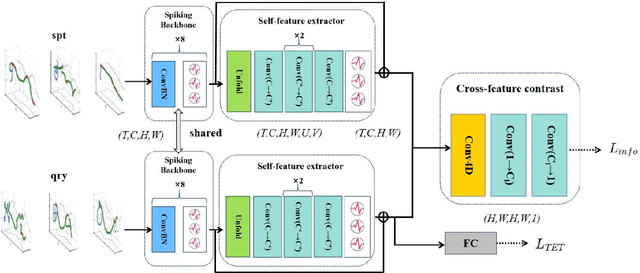
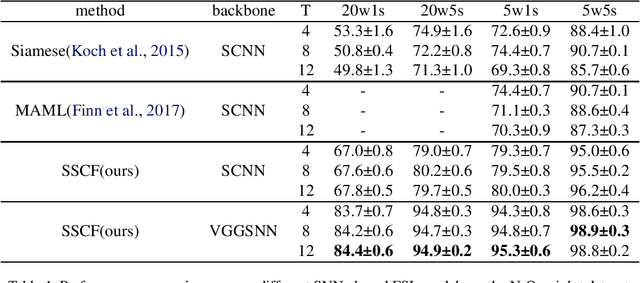
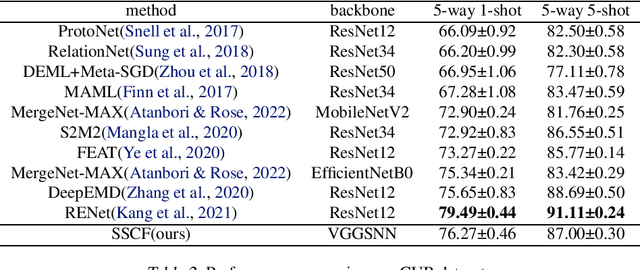
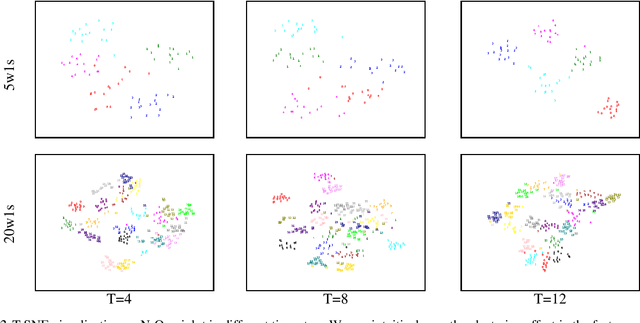
Deep neural networks (DNNs) excel in computer vision tasks, especially, few-shot learning (FSL), which is increasingly important for generalizing from limited examples. However, DNNs are computationally expensive with scalability issues in real world. Spiking Neural Networks (SNNs), with their event-driven nature and low energy consumption, are particularly efficient in processing sparse and dynamic data, though they still encounter difficulties in capturing complex spatiotemporal features and performing accurate cross-class comparisons. To further enhance the performance and efficiency of SNNs in few-shot learning, we propose a few-shot learning framework based on SNNs, which combines a self-feature extractor module and a cross-feature contrastive module to refine feature representation and reduce power consumption. We apply the combination of temporal efficient training loss and InfoNCE loss to optimize the temporal dynamics of spike trains and enhance the discriminative power. Experimental results show that the proposed FSL-SNN significantly improves the classification performance on the neuromorphic dataset N-Omniglot, and also achieves competitive performance to ANNs on static datasets such as CUB and miniImageNet with low power consumption.
Riemannian Geometric-based Meta Learning
Mar 14, 2025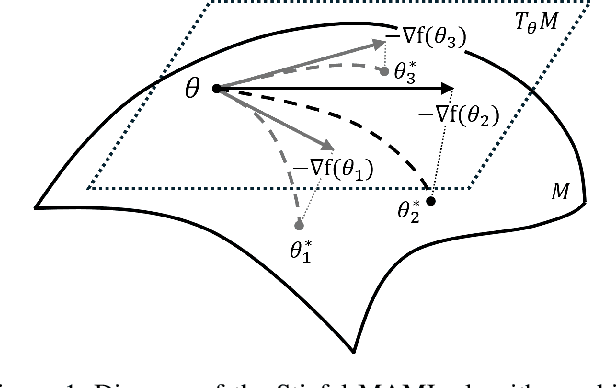
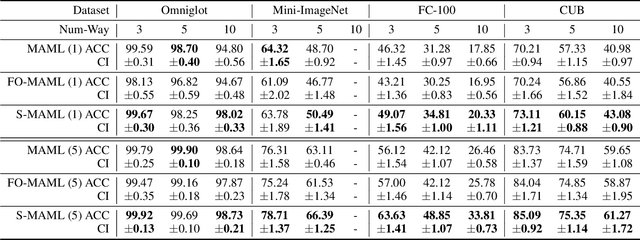
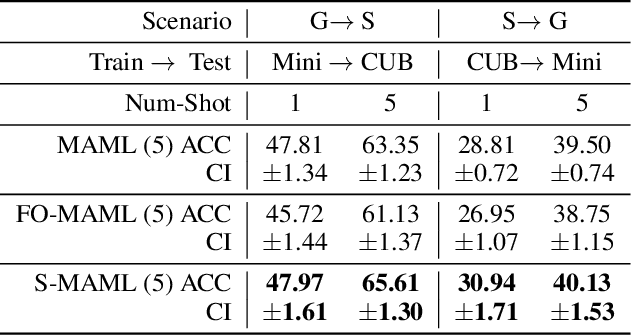
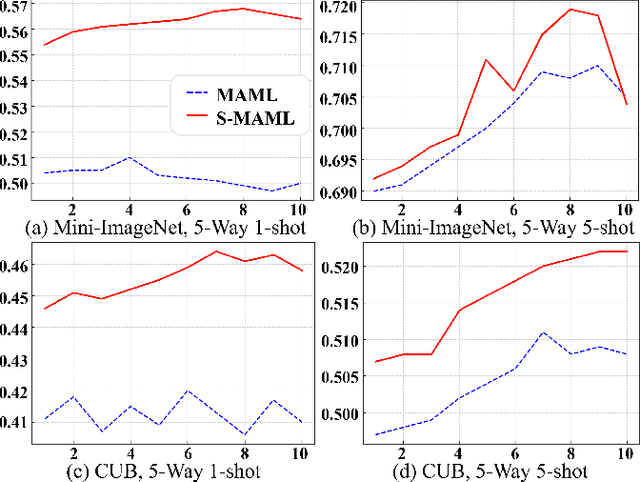
Meta-learning, or "learning to learn," aims to enable models to quickly adapt to new tasks with minimal data. While traditional methods like Model-Agnostic Meta-Learning (MAML) optimize parameters in Euclidean space, they often struggle to capture complex learning dynamics, particularly in few-shot learning scenarios. To address this limitation, we propose Stiefel-MAML, which integrates Riemannian geometry by optimizing within the Stiefel manifold, a space that naturally enforces orthogonality constraints. By leveraging the geometric structure of the Stiefel manifold, we improve parameter expressiveness and enable more efficient optimization through Riemannian gradient calculations and retraction operations. We also introduce a novel kernel-based loss function defined on the Stiefel manifold, further enhancing the model's ability to explore the parameter space. Experimental results on benchmark datasets--including Omniglot, Mini-ImageNet, FC-100, and CUB--demonstrate that Stiefel-MAML consistently outperforms traditional MAML, achieving superior performance across various few-shot learning tasks. Our findings highlight the potential of Riemannian geometry to enhance meta-learning, paving the way for future research on optimizing over different geometric structures.
One-bit Compressed Sensing using Generative Models
Feb 18, 2025This paper addresses the classical problem of one-bit compressed sensing using a deep learning-based reconstruction algorithm that leverages a trained generative model to enhance the signal reconstruction performance. The generator, a pre-trained neural network, learns to map from a low-dimensional latent space to a higher-dimensional set of sparse vectors. This generator is then used to reconstruct sparse vectors from their one-bit measurements by searching over its range. The presented algorithm provides an excellent reconstruction performance because the generative model can learn additional structural information about the signal beyond sparsity. Furthermore, we provide theoretical guarantees on the reconstruction accuracy and sample complexity of the algorithm. Through numerical experiments using three publicly available image datasets, MNIST, Fashion-MNIST, and Omniglot, we demonstrate the superior performance of the algorithm compared to other existing algorithms and show that our algorithm can recover both the amplitude and the direction of the signal from one-bit measurements.
Exploring the Efficacy of Meta-Learning: Unveiling Superior Data Diversity Utilization of MAML Over Pre-training
Jan 15, 2025Currently, data and model size dominate the narrative in the training of super-large, powerful models. However, there has been a lack of exploration on the effect of other attributes of the training dataset on model performance. We hypothesize that dataset diversity can impact the performance of vision models. Our study shows positive correlations between test set accuracy and data diversity, providing an argument for furthering the research of dataset attributes beyond size. We analyzed pre-training and model-agnostic meta-learning methods on twelve popular visual datasets (e.g., Omniglot, CIFAR-FS, Aircraft) and five model configurations, including MAML variants with different numbers of inner gradient steps and supervised learning. We show moderate to strong positive correlations (R-squared: 0.15-0.42) between accuracy and data diversity and weaker but significant correlations (R-squared: ~0.2) between loss and diversity. These findings support our hypothesis and demonstrate a promising way for a deeper exploration of how formal data diversity influences model performance. This initial study highlights the potential of (Task2Vec) data diversity as a valuable measure in the rapidly evolving field of large-scale learning and emphasizes that understanding the dataset is key to building more powerful and generalizable models.
Hierarchical VAE with a Diffusion-based VampPrior
Dec 02, 2024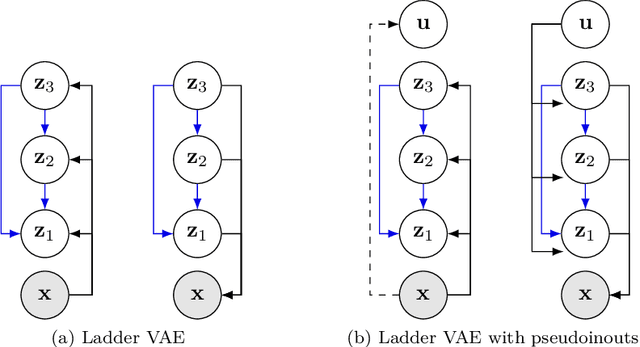


Deep hierarchical variational autoencoders (VAEs) are powerful latent variable generative models. In this paper, we introduce Hierarchical VAE with Diffusion-based Variational Mixture of the Posterior Prior (VampPrior). We apply amortization to scale the VampPrior to models with many stochastic layers. The proposed approach allows us to achieve better performance compared to the original VampPrior work and other deep hierarchical VAEs, while using fewer parameters. We empirically validate our method on standard benchmark datasets (MNIST, OMNIGLOT, CIFAR10) and demonstrate improved training stability and latent space utilization.
Abstracted Gaussian Prototypes for One-Shot Concept Learning
Aug 30, 2024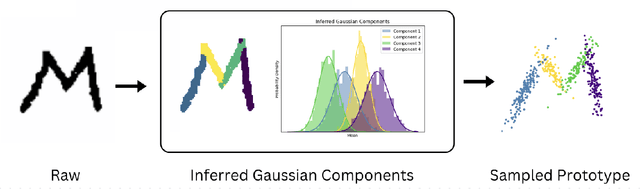
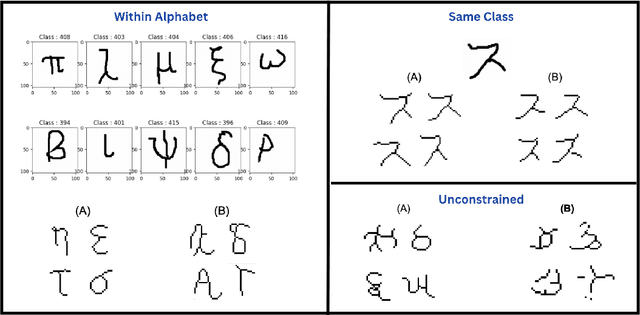
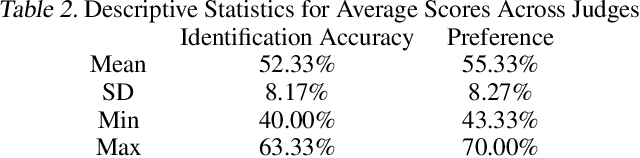
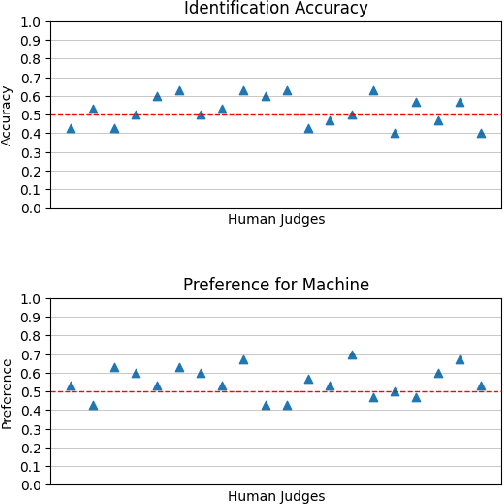
We introduce a cluster-based generative image segmentation framework to encode higher-level representations of visual concepts based on one-shot learning inspired by the Omniglot Challenge. The inferred parameters of each component of a Gaussian Mixture Model (GMM) represent a distinct topological subpart of a visual concept. Sampling new data from these parameters generates augmented subparts to build a more robust prototype for each concept, i.e., the Abstracted Gaussian Prototype (AGP). This framework addresses one-shot classification tasks using a cognitively-inspired similarity metric and addresses one-shot generative tasks through a novel AGP-VAE pipeline employing variational autoencoders (VAEs) to generate new class variants. Results from human judges reveal that the generative pipeline produces novel examples and classes of visual concepts that are broadly indistinguishable from those made by humans. The proposed framework leads to impressive but not state-of-the-art classification accuracy; thus, the contribution is two-fold: 1) the system is uniquely low in theoretical and computational complexity and operates in a completely standalone manner compared while existing approaches draw heavily on pre-training or knowledge engineering; and 2) in contrast with competing neural network models, the AGP approach addresses the importance of breadth of task capability emphasized in the Omniglot challenge (i.e., successful performance on generative tasks). These two points are critical as we advance toward an understanding of how learning/reasoning systems can produce viable, robust, and flexible concepts based on literally nothing more than a single example.
Learning to Infer Generative Template Programs for Visual Concepts
Mar 20, 2024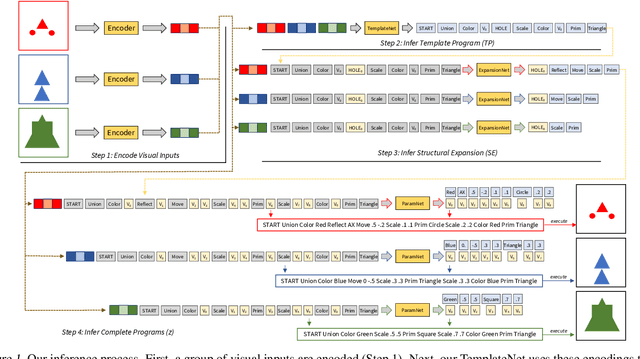
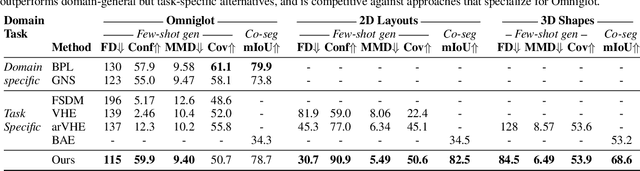
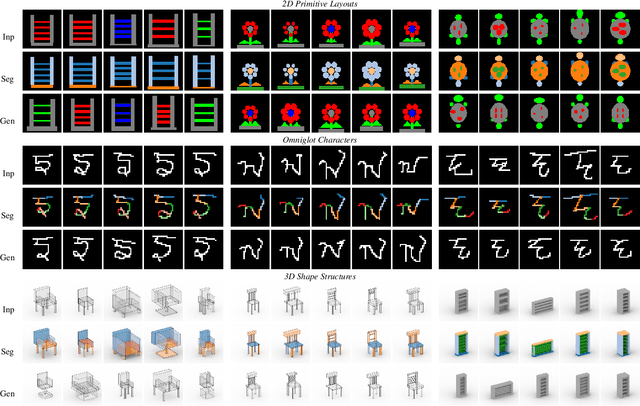
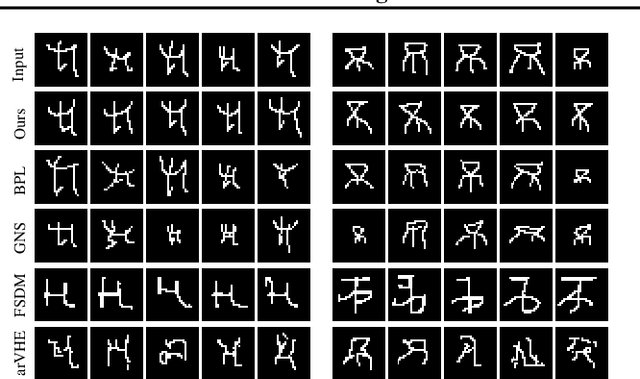
People grasp flexible visual concepts from a few examples. We explore a neurosymbolic system that learns how to infer programs that capture visual concepts in a domain-general fashion. We introduce Template Programs: programmatic expressions from a domain-specific language that specify structural and parametric patterns common to an input concept. Our framework supports multiple concept-related tasks, including few-shot generation and co-segmentation through parsing. We develop a learning paradigm that allows us to train networks that infer Template Programs directly from visual datasets that contain concept groupings. We run experiments across multiple visual domains: 2D layouts, Omniglot characters, and 3D shapes. We find that our method outperforms task-specific alternatives, and performs competitively against domain-specific approaches for the limited domains where they exist.
Unsupervised Representation Learning to Aid Semi-Supervised Meta Learning
Oct 19, 2023


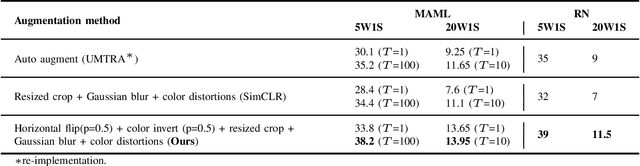
Few-shot learning or meta-learning leverages the data scarcity problem in machine learning. Traditionally, training data requires a multitude of samples and labeling for supervised learning. To address this issue, we propose a one-shot unsupervised meta-learning to learn the latent representation of the training samples. We use augmented samples as the query set during the training phase of the unsupervised meta-learning. A temperature-scaled cross-entropy loss is used in the inner loop of meta-learning to prevent overfitting during unsupervised learning. The learned parameters from this step are applied to the targeted supervised meta-learning in a transfer-learning fashion for initialization and fast adaptation with improved accuracy. The proposed method is model agnostic and can aid any meta-learning model to improve accuracy. We use model agnostic meta-learning (MAML) and relation network (RN) on Omniglot and mini-Imagenet datasets to demonstrate the performance of the proposed method. Furthermore, a meta-learning model with the proposed initialization can achieve satisfactory accuracy with significantly fewer training samples.