 Add to Chrome
 Add to Firefox
 Add to Edge
Ims Bearing Dataset
Papers and Code
Global and Local Topology-Aware Attention with Persistent Homology and Euler Biases for Time-Series Forecasting
May 04, 2026
Scientific time series often encode predictive geometric structure, including connectivity, cycles, shell-like geometry, directional changes, and nonlinear neighborhoods, that standard dot-product attention does not explicitly represent. We introduce a topology-aware attention framework that adds such structure to attention logits using persistent homology (H0-H2), anchored Euler characteristic transforms, and kernel-Hilbert channels. A validation-gated local residual captures local topological signals, including a Zeng-style local H0 component, only when held-out validation data support the correction. Exact Vietoris-Rips computations and smooth topological surrogates are evaluated under a no-leakage protocol with train-only calibration, validation-only selection, and test-only reporting. We evaluate guarded topology-aware variants across three architecture families: lightweight attention/Ridge, PatchTSTForRegression, and TimeSeriesTransformerForPrediction. Experiments include synthetic benchmarks isolating higher-order topology and real datasets covering CO2, S&P 500 return-window geometry, and NASA IMS bearing degradation. The audit uses matched paired comparisons across seven dataset units, three random seeds, and three chronological splits, giving 63 paired units per architecture and 189 paired units overall. Topology-aware models show positive paired effects when geometry is predictive, with heterogeneous magnitude across datasets and architectures. Lightweight attention/Ridge improves in 46 of 63 units, with mean relative RMSE reduction of 12.5% and paired randomization p=7.2e-4; PatchTST improves in 33 units and retains the baseline in 20 units, with 23.5% reduction and p=3.5e-5; and TimeSeriesTransformer improves in 47 units, with 47.8% reduction and p<1e-4. The results support topology as a validation-selected, architecture-compatible inductive bias.

Zero-Shot Detection of Elastic Transient Morphology Across Physical Systems
Jan 16, 2026We test whether a representation learned from interferometric strain transients in gravitational-wave observatories can act as a frozen morphology-sensitive operator for unseen sensors, provided the target signals preserve coherent elastic transient structure. Using a neural encoder trained exclusively on non-Gaussian instrumental glitches, we perform strict zero-shot anomaly analysis on rolling-element bearings without retraining, fine-tuning, or target-domain labels. On the IMS-NASA run-to-failure dataset, the operator yields a monotonic health index HI(t) = s0.99(t)/tau normalized to an early-life reference distribution, enabling fixed false-alarm monitoring at 1-q = 1e-3 with tau = Q0.999(P0). In discrete fault regimes (CWRU), it achieves strong window-level discrimination (AUC_win about 0.90) and file-level separability approaching unity (AUC_file about 0.99). Electrically dominated vibration signals (VSB) show weak, non-selective behavior, delineating a physical boundary for transfer. Under a matched IMS controlled-split protocol, a generic EfficientNet-B0 encoder pretrained on ImageNet collapses in the intermittent regime (Lambda_tail about 2), while the interferometric operator retains strong extreme-event selectivity (Lambda_tail about 860), indicating that the effect is not a generic property of CNN features. Controlled morphology-destruction transformations selectively degrade performance despite per-window normalization, consistent with sensitivity to coherent time-frequency organization rather than marginal amplitude statistics.
An Improved Fault Diagnosis Strategy for Induction Motors Using Weighted Probability Ensemble Deep Learning
Dec 24, 2024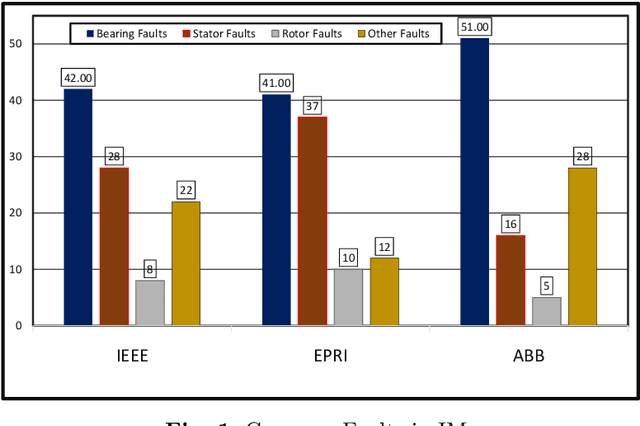
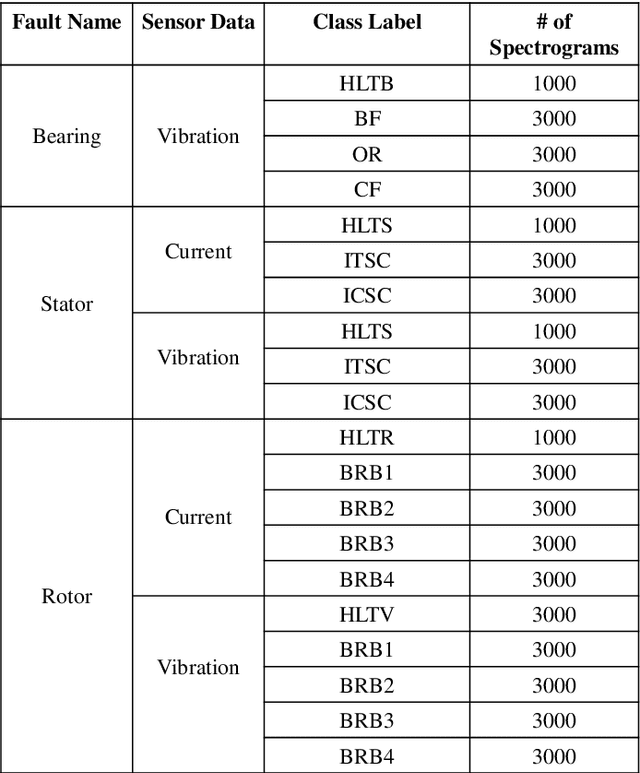
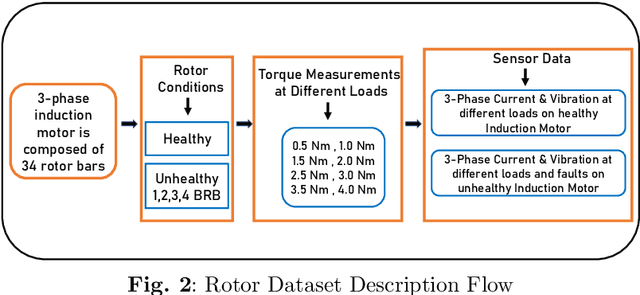
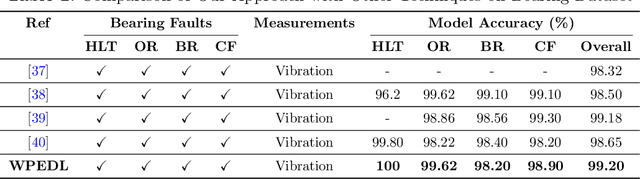
Early detection of faults in induction motors is crucial for ensuring uninterrupted operations in industrial settings. Among the various fault types encountered in induction motors, bearing, rotor, and stator faults are the most prevalent. This paper introduces a Weighted Probability Ensemble Deep Learning (WPEDL) methodology, tailored for effectively diagnosing induction motor faults using high-dimensional data extracted from vibration and current features. The Short-Time Fourier Transform (STFT) is employed to extract features from both vibration and current signals. The performance of the WPEDL fault diagnosis method is compared against conventional deep learning models, demonstrating the superior efficacy of the proposed system. The multi-class fault diagnosis system based on WPEDL achieves high accuracies across different fault types: 99.05% for bearing (vibrational signal), 99.10%, and 99.50% for rotor (current and vibration signal), and 99.60%, and 99.52% for stator faults (current and vibration signal) respectively. To evaluate the robustness of our multi-class classification decisions, tests have been conducted on a combined dataset of 52,000 STFT images encompassing all three faults. Our proposed model outperforms other models, achieving an accuracy of 98.89%. The findings underscore the effectiveness and reliability of the WPEDL approach for early-stage fault diagnosis in IMs, offering promising insights for enhancing industrial operational efficiency and reliability.
Condition Monitoring with Incomplete Data: An Integrated Variational Autoencoder and Distance Metric Framework
Apr 08, 2024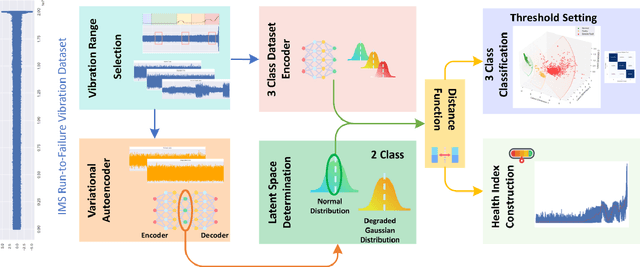
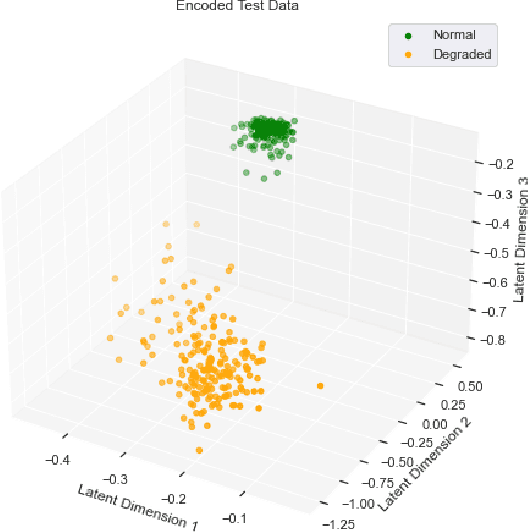
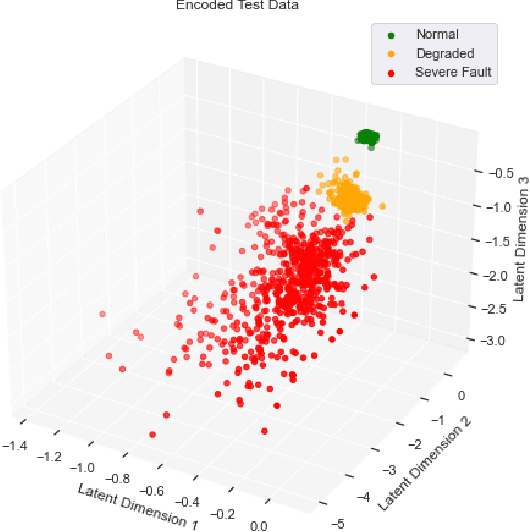
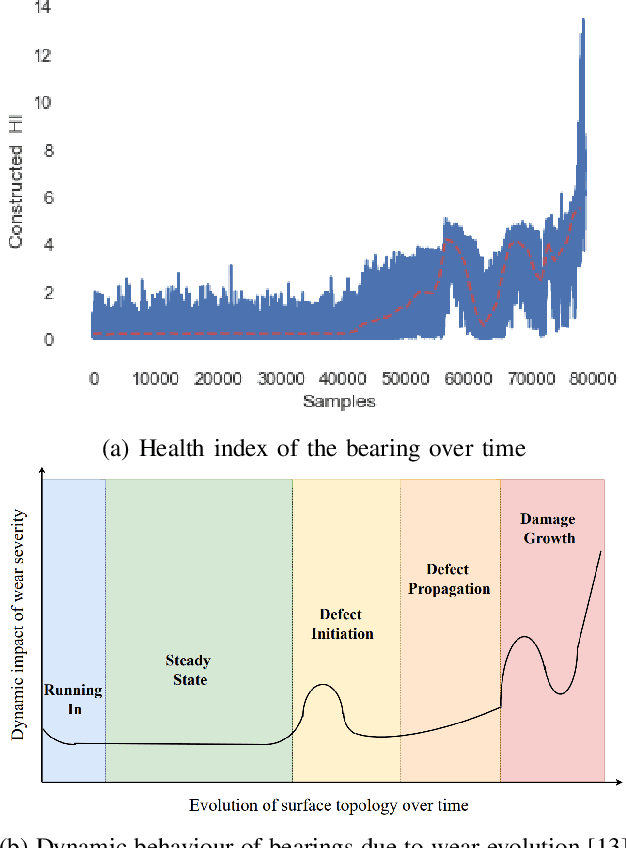
Condition monitoring of industrial systems is crucial for ensuring safety and maintenance planning, yet notable challenges arise in real-world settings due to the limited or non-existent availability of fault samples. This paper introduces an innovative solution to this problem by proposing a new method for fault detection and condition monitoring for unseen data. Adopting an approach inspired by zero-shot learning, our method can identify faults and assign a relative health index to various operational conditions. Typically, we have plenty of data on normal operations, some data on compromised conditions, and very few (if any) samples of severe faults. We use a variational autoencoder to capture the probabilistic distribution of previously seen and new unseen conditions. The health status is determined by comparing each sample's deviation from a normal operation reference distribution in the latent space. Faults are detected by establishing a threshold for the health indexes, allowing the model to identify severe, unseen faults with high accuracy, even amidst noise. We validate our approach using the run-to-failure IMS-bearing dataset and compare it with other methods. The health indexes generated by our model closely match the established descriptive model of bearing wear, attesting to the robustness and reliability of our method. These findings highlight the potential of our methodology in augmenting fault detection capabilities within industrial domains, thereby contributing to heightened safety protocols and optimized maintenance practices.
Causal Disentanglement Hidden Markov Model for Fault Diagnosis
Aug 06, 2023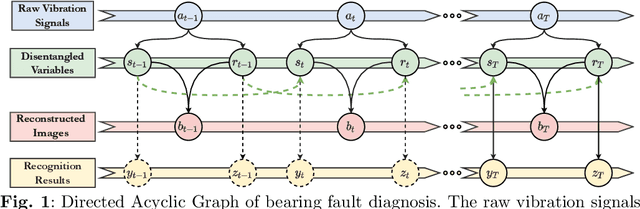
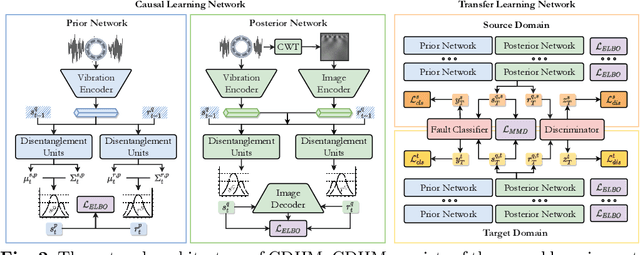
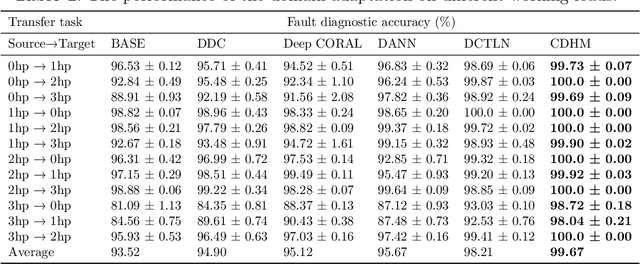
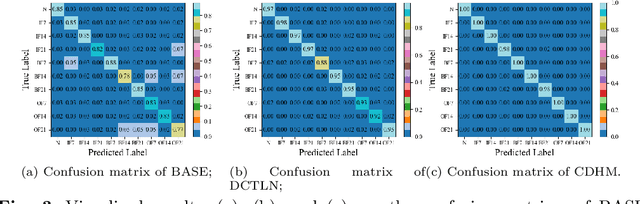
In modern industries, fault diagnosis has been widely applied with the goal of realizing predictive maintenance. The key issue for the fault diagnosis system is to extract representative characteristics of the fault signal and then accurately predict the fault type. In this paper, we propose a Causal Disentanglement Hidden Markov model (CDHM) to learn the causality in the bearing fault mechanism and thus, capture their characteristics to achieve a more robust representation. Specifically, we make full use of the time-series data and progressively disentangle the vibration signal into fault-relevant and fault-irrelevant factors. The ELBO is reformulated to optimize the learning of the causal disentanglement Markov model. Moreover, to expand the scope of the application, we adopt unsupervised domain adaptation to transfer the learned disentangled representations to other working environments. Experiments were conducted on the CWRU dataset and IMS dataset. Relevant results validate the superiority of the proposed method.
Quick Learning Mechanism with Cross-Domain Adaptation for Intelligent Fault Diagnosis
Mar 16, 2021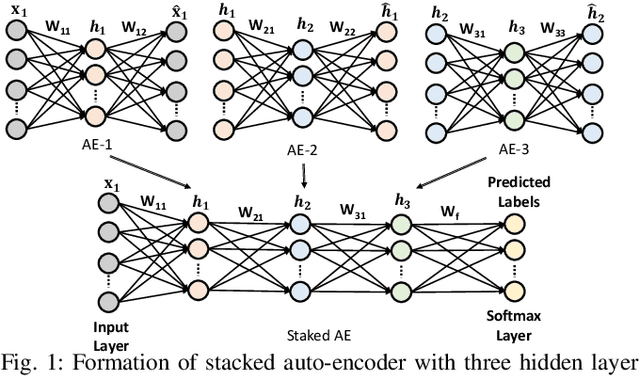
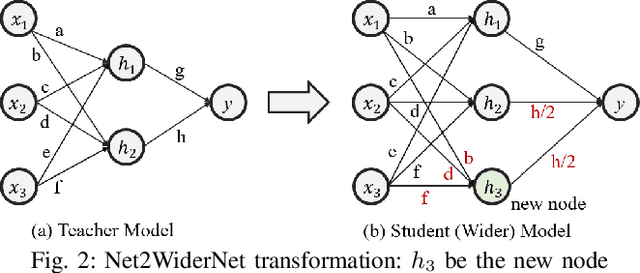
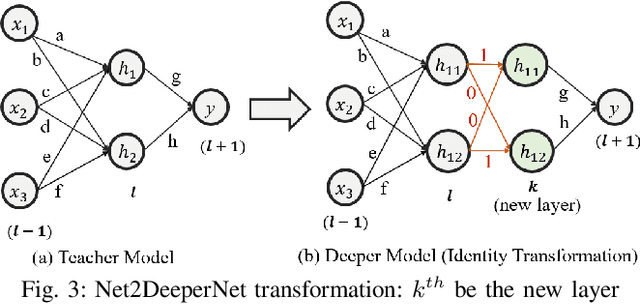
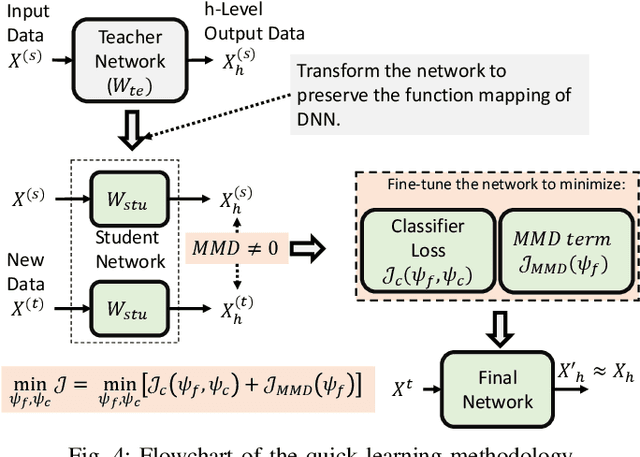
This paper presents a quick learning mechanism for intelligent fault diagnosis of rotating machines operating under changeable working conditions. Since real case machines in industries run under different operating conditions, the deep learning model trained for a laboratory case machine fails to perform well for the fault diagnosis using recorded data from real case machines. It poses the need of training a new diagnostic model for the fault diagnosis of the real case machine under every new working condition. Therefore, there is a need for a mechanism that can quickly transform the existing diagnostic model for machines operating under different conditions. we propose a quick learning method with Net2Net transformation followed by a fine-tuning method to cancel/minimize the maximum mean discrepancy of the new data to the previous one. This transformation enables us to create a new network with any architecture almost ready to be used for the new dataset. The effectiveness of the proposed fault diagnosis method has been demonstrated on the CWRU dataset, IMS bearing dataset, and Paderborn university dataset. We have shown that the diagnostic model trained for CWRU data at zero load can be used to quickly train another diagnostic model for the CWRU data at different loads and also for the IMS dataset. Using the dataset provided by Paderborn university, it has been validated that the diagnostic model trained on artificially damaged fault dataset can be used for quickly training another model for real damage dataset.
Tracking and Visualizing Signs of Degradation for an Early Failure Prediction of a Rolling Bearing
Nov 18, 2020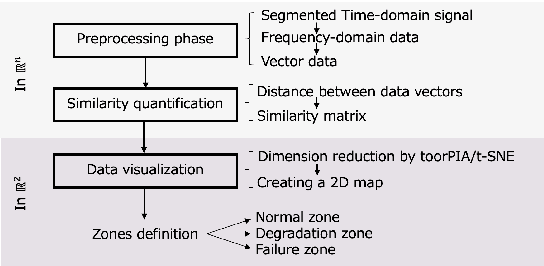
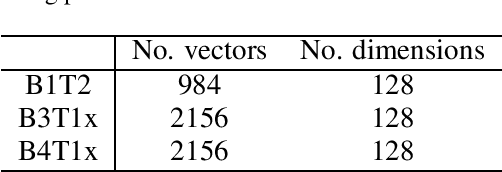
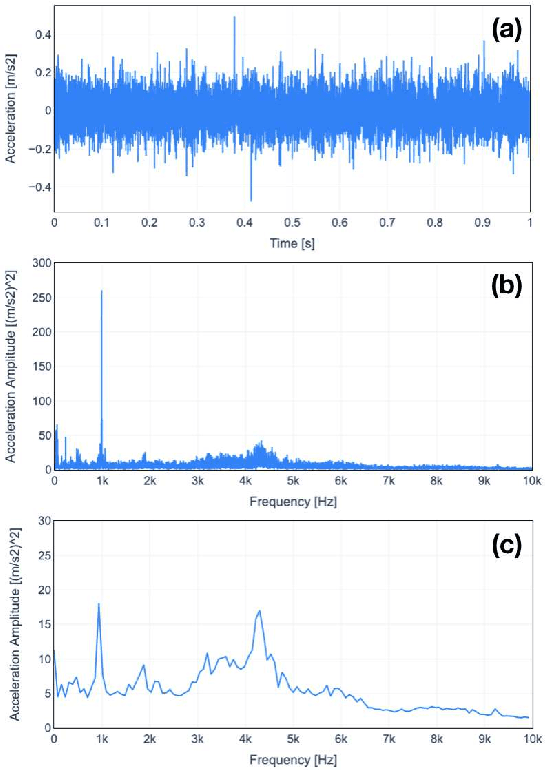
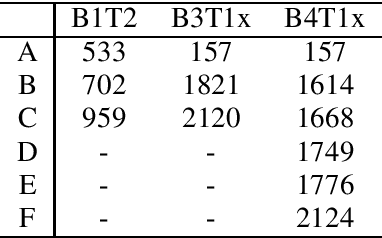
Predictive maintenance, i.e. predicting failure to be few steps ahead of the fault, is one of the pillars of Industry 4.0. An effective method for that is to track early signs of degradation before a failure happens. This paper presents an innovative failure predictive scheme for machines. The proposed scheme combines the use of full spectrum of the vibration data caused by the machines and data visualization technologies. This scheme is featured by no training data required and by quick start after installation. First, we propose to use full spectrum (as high-dimensional data vector) with no cropping and no complex feature extraction and to visualize data behavior by mapping the high dimensional vectors into a 2D map. We then can ensure the simplicity of process and less possibility of overlooking of important information as well as providing a human-friendly and human-understandable output. Second, we propose Real-Time Data Tracker (RTDT) which predicts the failure at an appropriate time with sufficient time for maintenance by plotting real-time frequency spectrum data of the target machine on the 2D map composed from normal data. Third, we show the test results of our proposal using vibration data of bearings from real-world test-to-failure measurements provided by the public dataset, the IMS dataset.
mRMR-DNN with Transfer Learning for IntelligentFault Diagnosis of Rotating Machines
Dec 25, 2019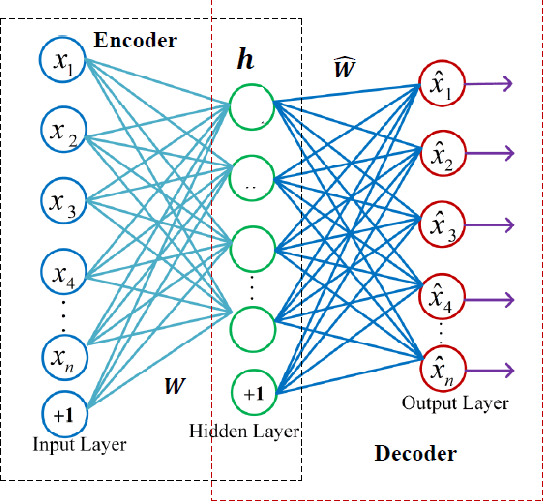
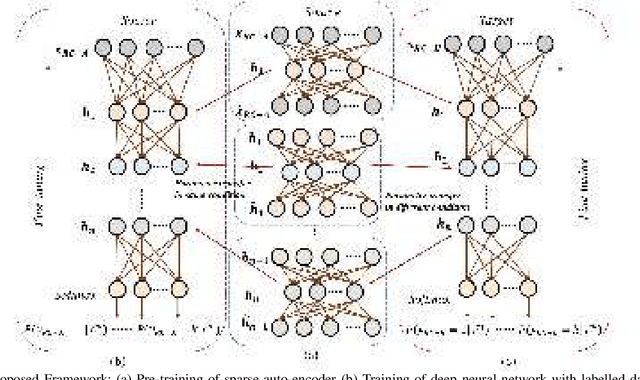
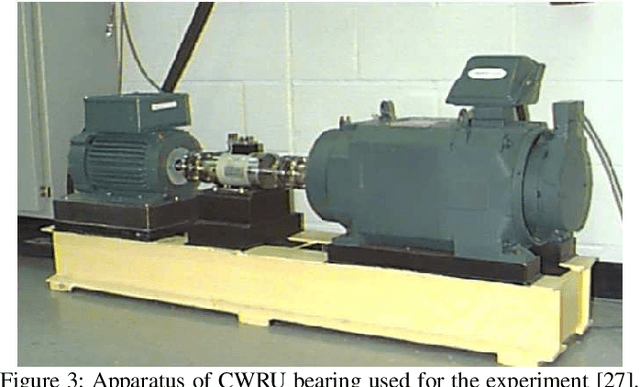
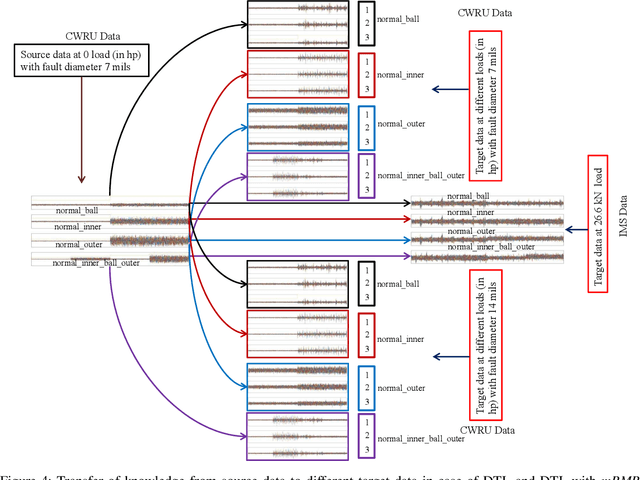
In recent years, intelligent condition-based monitoring of rotary machinery systems has become a major research focus of machine fault diagnosis. In condition-based monitoring, it is challenging to form a large-scale well-annotated dataset due to the expense of data acquisition and costly annotation. Along with that, the generated data have a large number of redundant features which degraded the performance of the machine learning models. To overcome this, we have utilized the advantages of minimum redundancy maximum relevance (mRMR) and transfer learning with deep learning model. In this work, mRMR is combined with deep learning and deep transfer learning framework to improve the fault diagnostics performance in term of accuracy and computational complexity. The mRMR reduces the redundant information from data and increases the deep learning performance, whereas transfer learning, reduces a large amount of data dependency for training the model. In the proposed work, two frameworks, i.e., mRMR with deep learning and mRMR with deep transfer learning, have explored and validated on CWRU and IMS rolling element bearings datasets. The analysis shows that the proposed frameworks are able to obtain better diagnostic accuracy in comparison of existing methods and also able to handle the data with a large number of features more quickly.
Semi-Supervised Learning of Bearing Anomaly Detection via Deep Variational Autoencoders
Dec 09, 2019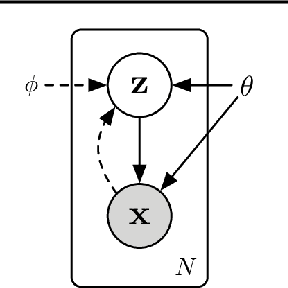
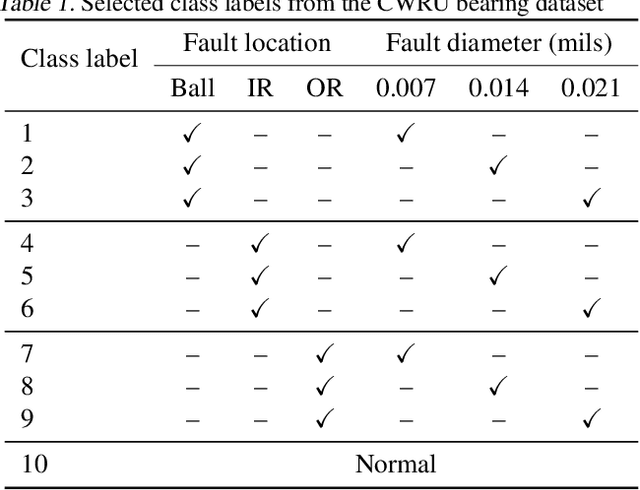
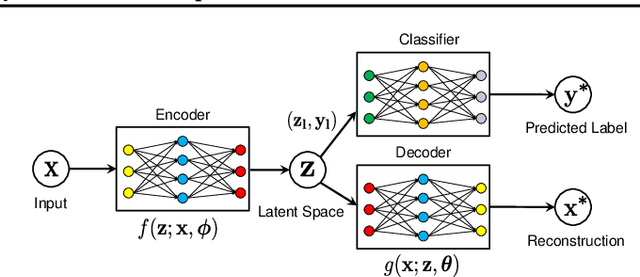
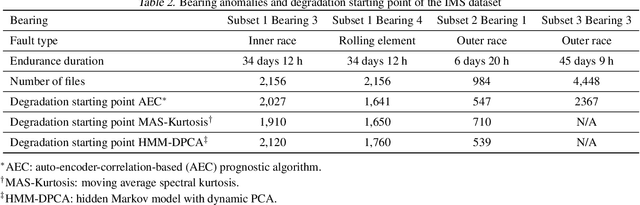
Most of the data-driven approaches applied to bearing fault diagnosis up to date are established in the supervised learning paradigm, which usually requires a large set of labeled data collected a priori. In practical applications, however, obtaining accurate labels based on real-time bearing conditions can be far more challenging than simply collecting a huge amount of unlabeled data using various sensors. In this paper, we thus propose a semi-supervised learning approach for bearing anomaly detection using variational autoencoder (VAE) based deep generative models, which allows for effective utilization of dataset when only a small subset of data have labels. Finally, a series of experiments is performed using both the Case Western Reserve University (CWRU) bearing dataset and the University of Cincinnati's Center for Intelligent Maintenance Systems (IMS) dataset. The experimental results demonstrate that the proposed semi-supervised learning scheme greatly outperforms two mainstream semi-supervised learning approaches and a baseline supervised convolutional neural network approach, with the overall accuracy improvement ranging between 3% to 30% using different proportions of labeled samples.
Vibration Analysis in Bearings for Failure Prevention using CNN
May 06, 2020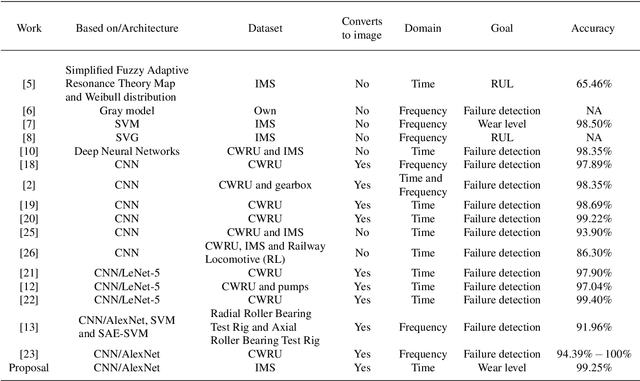
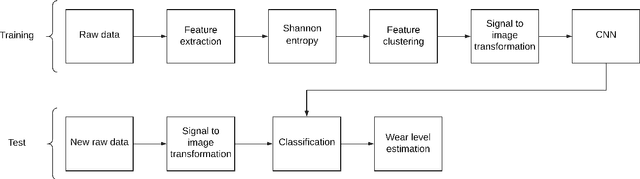
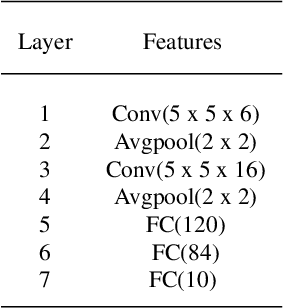
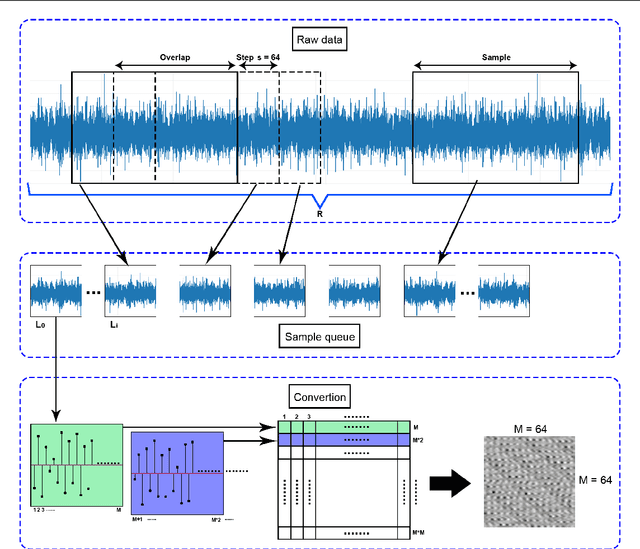
Timely failure detection for bearings is of great importance to prevent economic loses in the industry. In this article we propose a method based on Convolutional Neural Networks (CNN) to estimate the level of wear in bearings. First of all, an automatic labeling of the raw vibration data is performed to obtain different levels of bearing wear, by means of the Root Mean Square features along with the Shannon's entropy to extract features from the raw data, which is then grouped in seven different classes using the K-means algorithm to obtain the labels. Then, the raw vibration data is converted into small square images, each sample of the data representing one pixel of the image. Following this, we propose a CNN model based on the AlexNet architecture to classify the wear level and diagnose the rotatory system. To train the network and validate our proposal, we use a dataset from the center of Intelligent Maintenance Systems (IMS), and extensively compare it with other methods reported in the literature. The effectiveness of the proposed strategy proved to be excellent, outperforming other approaches in the state-of-the-art.