 Add to Chrome
 Add to Firefox
 Add to Edge
SAGE: Stochastic Prompt Optimization via Agent-Guided Exploration
Jun 17, 2026
Context engineering has emerged as a primary lever for improving AI systems without parameter updates. Recent work showing that textual gradients do not function as real gradients motivates treating automatic prompt optimization (APO) as black-box search. We introduce SPO (Stochastic Prompt Optimization), a framework for stochastic search over prompt space, and compare three strategies of increasing sophistication: error-informed random search, a genetic algorithm with evolutionary operators, and SAGE (SPO via Agent-Guided Exploration), a multi-agent pipeline with diagnostic code execution. Across three benchmarks, no single strategy dominates; effectiveness depends on the interaction of landscape structure with error type. We further deploy SAGE on a mental-health chatbot under a continuous optimization paradigm, where it compounds eight cycles of individually-noisy A/B tests into a statistically robust gain in next-day retention. We argue that coupling qualitative diagnosis with quantitative validation is what makes agentic optimization effective for open-ended task-oriented dialogue.

Fine-tuning LLMs for Passive Depression Severity Estimation from AI Mental Health Dialogue
Jun 16, 2026Depression is the leading cause of disability worldwide, and early detection of symptom change is essential for timely intervention. Validated instruments such as the Patient Health Questionnaire-9 (PHQ-9) support symptom monitoring at scale, but real-world completion rates are low, introducing response bias and systematic missingness. Passive approaches that infer severity from routinely generated data could close this gap. We address this by predicting PHQ-9 total scores directly from transcripts of conversations between users and an AI mental health application, requiring only conversation text and no additional clinical data. We fine-tune a Qwen3.5-27B backbone with a regression head, augment 3,111 ground-truth labels with pseudolabels generated by a reasoning model (Claude Opus) and iteratively trained intermediate models, for a combined dataset of 6,283 users. On a held-out test set of 842 users, our best model achieves MAE = 2.6, RMSE = 4.0, Pearson r = 0.80, and AUC = 0.91 at the PHQ-9 >= 10 clinical threshold. We also find AUC > 0.87 at every severity threshold from PHQ-9 >= 3 to PHQ-9 >= 24, demonstrating that the model captures depression severity across the full clinical spectrum. This work opens the door to passive, continuous symptom monitoring in AI mental health platforms, without requiring users to complete self-report measures.
CyclicJudge: Mitigating Judge Bias Efficiently in LLM-based Evaluation
Mar 02, 2026LLM-as-judge evaluation has become standard practice for open-ended model assessment; however, judges exhibit systematic biases that cannot be eliminated by increasing the number of scenarios or generations. These biases are often similar in magnitude to the model differences that benchmarks are designed to detect, resulting in unreliable rankings when single-judge evaluations are used. This work introduces a variance decomposition that partitions benchmark score variance into scenario, generation, judge, and residual components. Based on this analysis, CyclicJudge, a round-robin assignment of judges, is demonstrated to be the optimal allocation strategy. It eliminates bias precisely while requiring each judge only once per cycle, maintaining the cost of single-judge evaluation. Empirical validation on MT-Bench supports all theoretical predictions.
Adversarial Training for Failure-Sensitive User Simulation in Mental Health Dialogue Optimization
Dec 23, 2025Realistic user simulation is crucial for training and evaluating task-oriented dialogue (TOD) systems, yet creating simulators that accurately replicate human behavior remains challenging. A key property of effective simulators is their ability to expose failure modes of the systems they evaluate. We present an adversarial training framework that iteratively improves user simulator realism through a competitive dynamic between a generator (user simulator) and a discriminator. Applied to mental health support chatbots, our approach demonstrates that fine-tuned simulators dramatically outperform zero-shot base models at surfacing system issues, and adversarial training further enhances diversity, distributional alignment, and predictive validity. The resulting simulator achieves a strong correlation between simulated and real failure occurrence rates across diverse chatbot configurations while maintaining low distributional divergence of failure modes. Discriminator accuracy decreases drastically after three adversarial iterations, suggesting improved realism. These results provide evidence that adversarial training is a promising approach for creating realistic user simulators in mental health support TOD domains, enabling rapid, reliable, and cost-effective system evaluation before deployment.
Research on Disease Prediction Model Construction Based on Computer AI deep Learning Technology
Jun 23, 2024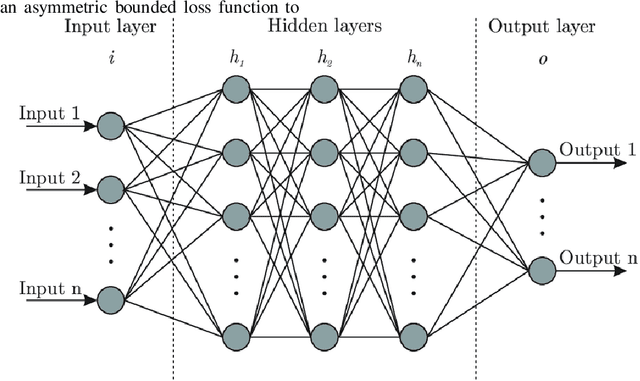

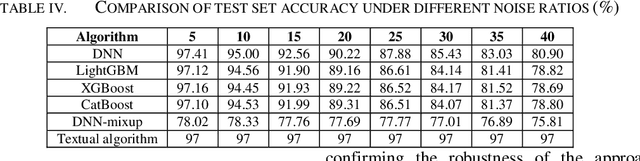
The prediction of disease risk factors can screen vulnerable groups for effective prevention and treatment, so as to reduce their morbidity and mortality. Machine learning has a great demand for high-quality labeling information, and labeling noise in medical big data poses a great challenge to efficient disease risk warning methods. Therefore, this project intends to study the robust learning algorithm and apply it to the early warning of infectious disease risk. A dynamic truncated loss model is proposed, which combines the traditional mutual entropy implicit weight feature with the mean variation feature. It is robust to label noise. A lower bound on training loss is constructed, and a method based on sampling rate is proposed to reduce the gradient of suspected samples to reduce the influence of noise on training results. The effectiveness of this method under different types of noise was verified by using a stroke screening data set as an example. This method enables robust learning of data containing label noise.
Exploration of Attention Mechanism-Enhanced Deep Learning Models in the Mining of Medical Textual Data
May 23, 2024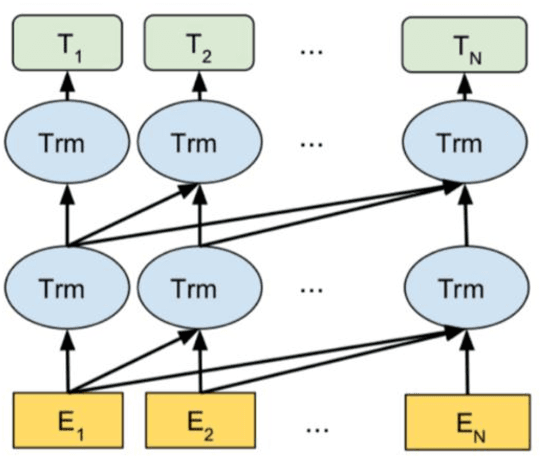
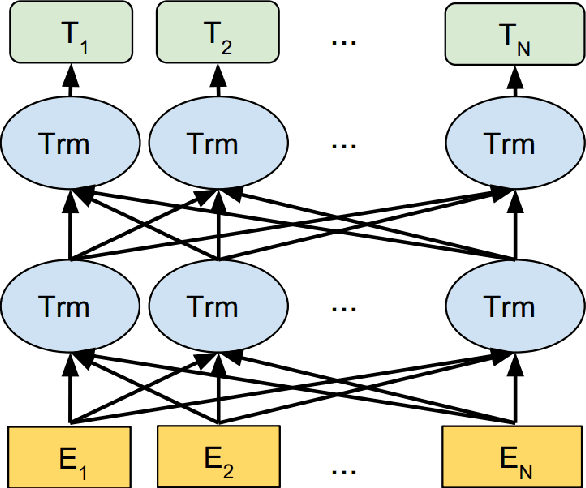
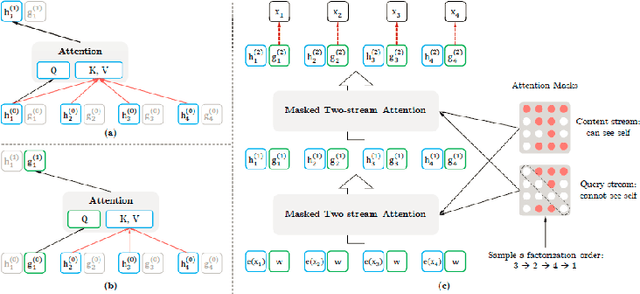
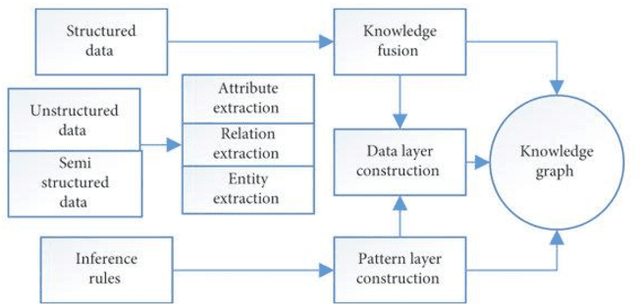
The research explores the utilization of a deep learning model employing an attention mechanism in medical text mining. It targets the challenge of analyzing unstructured text information within medical data. This research seeks to enhance the model's capability to identify essential medical information by incorporating deep learning and attention mechanisms. This paper reviews the basic principles and typical model architecture of attention mechanisms and shows the effectiveness of their application in the tasks of disease prediction, drug side effect monitoring, and entity relationship extraction. Aiming at the particularity of medical texts, an adaptive attention model integrating domain knowledge is proposed, and its ability to understand medical terms and process complex contexts is optimized. The experiment verifies the model's effectiveness in improving task accuracy and robustness, especially when dealing with long text. The future research path of enhancing model interpretation, realizing cross-domain knowledge transfer, and adapting to low-resource scenarios is discussed in the research outlook, which provides a new perspective and method support for intelligent medical information processing and clinical decision assistance. Finally, cross-domain knowledge transfer and adaptation strategies for low-resource scenarios, providing theoretical basis and technical reference for promoting the development of intelligent medical information processing and clinical decision support systems.