 Add to Chrome
 Add to Firefox
 Add to Edge
SongSong: A Time Phonograph for Chinese SongCi Music from Thousand of Years Away
Feb 27, 2026
Recently, there have been significant advancements in music generation. However, existing models primarily focus on creating modern pop songs, making it challenging to produce ancient music with distinct rhythms and styles, such as ancient Chinese SongCi. In this paper, we introduce SongSong, the first music generation model capable of restoring Chinese SongCi to our knowledge. Our model first predicts the melody from the input SongCi, then separately generates the singing voice and accompaniment based on that melody, and finally combines all elements to create the final piece of music. Additionally, to address the lack of ancient music datasets, we create OpenSongSong, a comprehensive dataset of ancient Chinese SongCi music, featuring 29.9 hours of compositions by various renowned SongCi music masters. To assess SongSong's proficiency in performing SongCi, we randomly select 85 SongCi sentences that were not part of the training set for evaluation against SongSong and music generation platforms such as Suno and SkyMusic. The subjective and objective outcomes indicate that our proposed model achieves leading performance in generating high-quality SongCi music.

Zero-resource Hallucination Detection for Text Generation via Graph-based Contextual Knowledge Triples Modeling
Sep 18, 2024

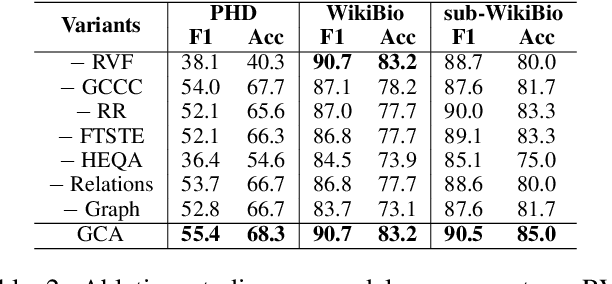
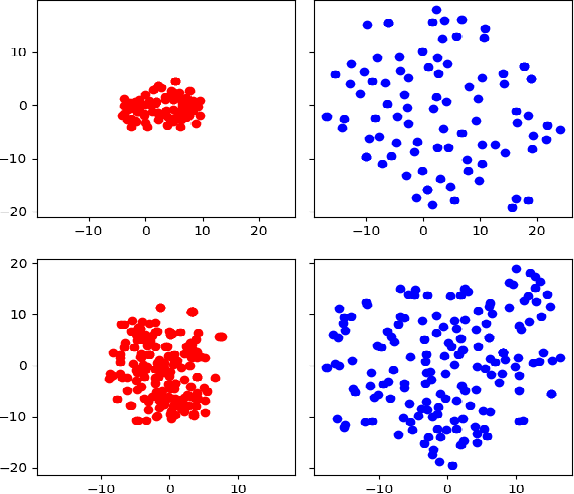
LLMs obtain remarkable performance but suffer from hallucinations. Most research on detecting hallucination focuses on the questions with short and concrete correct answers that are easy to check the faithfulness. Hallucination detections for text generation with open-ended answers are more challenging. Some researchers use external knowledge to detect hallucinations in generated texts, but external resources for specific scenarios are hard to access. Recent studies on detecting hallucinations in long text without external resources conduct consistency comparison among multiple sampled outputs. To handle long texts, researchers split long texts into multiple facts and individually compare the consistency of each pairs of facts. However, these methods (1) hardly achieve alignment among multiple facts; (2) overlook dependencies between multiple contextual facts. In this paper, we propose a graph-based context-aware (GCA) hallucination detection for text generations, which aligns knowledge facts and considers the dependencies between contextual knowledge triples in consistency comparison. Particularly, to align multiple facts, we conduct a triple-oriented response segmentation to extract multiple knowledge triples. To model dependencies among contextual knowledge triple (facts), we construct contextual triple into a graph and enhance triples' interactions via message passing and aggregating via RGCN. To avoid the omission of knowledge triples in long text, we conduct a LLM-based reverse verification via reconstructing the knowledge triples. Experiments show that our model enhances hallucination detection and excels all baselines.