 Add to Chrome
 Add to Firefox
 Add to Edge
On the Computational Complexity of Structural Generalization
Jul 21, 2026
Structural generalization has been measured repeatedly by several benchmarks, yet it has never been formally defined. We give a definition that translates the two premises (compositional structure and unbounded generalization) into mathematical language. The definition itself is neutral: a compiler that hard-codes the rules satisfies it just as well. But structural generalization becomes a scientific question only insofar as the capacity can autonomously emerge from finite data. This question pits the computational lower bound $\mathrm{NC}^1$ against the learnable ceiling $\mathrm{TC}^0$ of pure Transformers. Under a Montagovian instantiation, each compositional rule splits into two projections: a syntactic face ($F_γ$) and a semantic face ($G_γ$). Tree evaluation on the $G_γ$ side is an instantiation of BFVP, which is $\mathrm{NC}^1$-complete (Buss, 1987). A pure Transformer must learn both faces at once, but Kraus et al. (2026) prove that its learnable class $\subseteq \mathrm{TC}^0$. Under the standard assumption $\mathrm{TC}^0 \neq \mathrm{NC}^1$, a pure Transformer cannot learn structural generalization. Neuro-symbolic systems achieve the best benchmark scores precisely because they inject $G_γ$, sidestepping the genuinely hard half. Benchmark scores cannot distinguish "learned" from "given." This is what this paper sets out to make clear.

On the Role of Directionality in Structural Generalization
Jul 02, 2026Several SLOG test categories explicitly involve directional distinctions (modifier position shifts, argument extraction positions), yet AM-Parser, the previous SOTA, uses an AM algebra whose operations do not encode direction. We redesign the symbolic backend around CCG directed types (deterministic CKY + single linear decoder, 30K learnable parameters). Under the same BERT-base encoder, the system achieves 75.9$\pm$6.4% LF exact match, surpassing AM-Parser (70.8$\pm$4.3%). Per SLOG's own category groupings, gains are highly directional: the CCG system outperforms AM-Parser on all 5 position-shift categories (+29.9pp), while AM-Parser outperforms on all 6 recursive-depth categories. Replacing the encoder with DeBERTa-v3-large yields 90.7$\pm$4.9%, with the largest encoder gains in recursive-depth categories, complementary to directionality's gains. Directional representations shift the bottleneck from the symbolic layer (AM-Parser's 0% category ceiling) to the neural layer, which improves with encoder upgrades.
On the Emergence of Syntax by Means of Local Interaction
Apr 21, 2026Can syntactic processing emerge spontaneously from purely local interaction? We present a concrete instance on a minimal system: an 18,658-parameter two-dimensional neural cellular automaton (NCA), supervised by nothing more than a 1-bit boundary signal, is trained on the membership problem of an arithmetic-expression grammar. After training, its internal $L \times L$ grid spontaneously self-organizes into an ordered, spatially extended representation that we name Proto-CKY. This representation satisfies three operational criteria for syntactic processing: expressive power beyond the regular languages, structural generalization beyond the training distribution, and an internal organization quantitatively aligned with grammatical structure (Pearson $r \approx 0.71$). It emerges independently on four context-free grammars and regenerates spontaneously after perturbation. Proto-CKY is functionally aligned with the CKY algorithm but formally distinct from it: it is a physical prototype, a concrete instantiation of a mathematical ideal on a physical substrate, and the systematic distance between the two carries information about the substrate itself.
On the Mirage of Long-Range Dependency, with an Application to Integer Multiplication
Mar 30, 2026Integer multiplication has long been considered a hard problem for neural networks, with the difficulty widely attributed to the O(n) long-range dependency induced by carry chains. We argue that this diagnosis is wrong: long-range dependency is not an intrinsic property of multiplication, but a mirage produced by the choice of computational spacetime. We formalize the notion of mirage and provide a constructive proof: when two n-bit binary integers are laid out as a 2D outer-product grid, every step of long multiplication collapses into a $3 \times 3$ local neighborhood operation. Under this representation, a neural cellular automaton with only 321 learnable parameters achieves perfect length generalization up to $683\times$ the training range. Five alternative architectures -- including Transformer (6,625 params), Transformer+RoPE, and Mamba -- all fail under the same representation. We further analyze how partial successes locked the community into an incorrect diagnosis, and argue that any task diagnosed as requiring long-range dependency should first be examined for whether the dependency is intrinsic to the task or induced by the computational spacetime.
On the Spatiotemporal Dynamics of Generalization in Neural Networks
Feb 02, 2026Why do neural networks fail to generalize addition from 16-digit to 32-digit numbers, while a child who learns the rule can apply it to arbitrarily long sequences? We argue that this failure is not an engineering problem but a violation of physical postulates. Drawing inspiration from physics, we identify three constraints that any generalizing system must satisfy: (1) Locality -- information propagates at finite speed; (2) Symmetry -- the laws of computation are invariant across space and time; (3) Stability -- the system converges to discrete attractors that resist noise accumulation. From these postulates, we derive -- rather than design -- the Spatiotemporal Evolution with Attractor Dynamics (SEAD) architecture: a neural cellular automaton where local convolutional rules are iterated until convergence. Experiments on three tasks validate our theory: (1) Parity -- demonstrating perfect length generalization via light-cone propagation; (2) Addition -- achieving scale-invariant inference from L=16 to L=1 million with 100% accuracy, exhibiting input-adaptive computation; (3) Rule 110 -- learning a Turing-complete cellular automaton without trajectory divergence. Our results suggest that the gap between statistical learning and logical reasoning can be bridged -- not by scaling parameters, but by respecting the physics of computation.
Autoregressive, Yet Revisable: In Decoding Revision for Secure Code Generation
Feb 01, 2026Large Language Model (LLM) based code generation is predominantly formulated as a strictly monotonic process, appending tokens linearly to an immutable prefix. This formulation contrasts to the cognitive process of programming, which is inherently interleaved with forward generation and on-the-fly revision. While prior works attempt to introduce revision via post-hoc agents or external static tools, they either suffer from high latency or fail to leverage the model's intrinsic semantic reasoning. In this paper, we propose Stream of Revision, a paradigm shift that elevates code generation from a monotonic stream to a dynamic, self-correcting trajectory by leveraging model's intrinsic capabilities. We introduce specific action tokens that enable the model to seamlessly backtrack and edit its own history within a single forward pass. By internalizing the revision loop, our framework Stream of Revision allows the model to activate its latent capabilities just-in-time without external dependencies. Empirical results on secure code generation show that Stream of Revision significantly reduces vulnerabilities with minimal inference overhead.
Using eye tracking to investigate what native Chinese speakers notice about linguistic landscape images
Dec 16, 2023
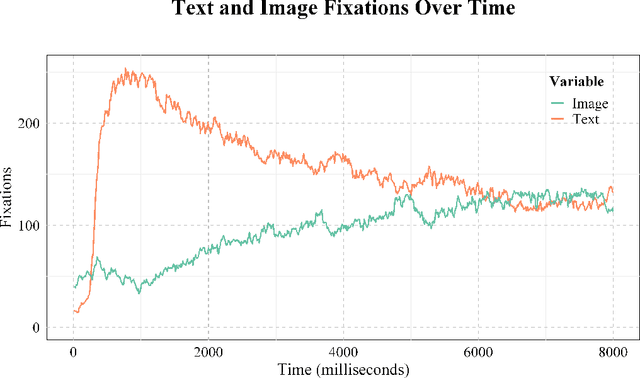
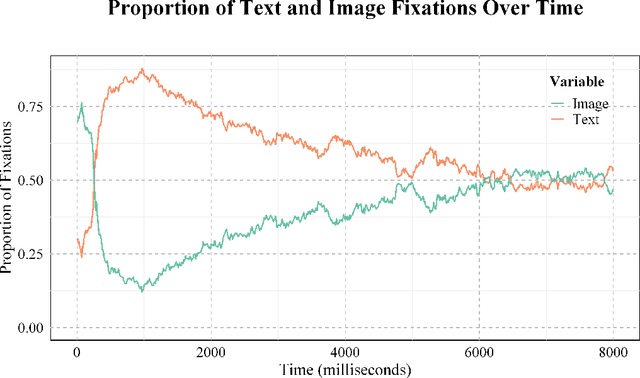
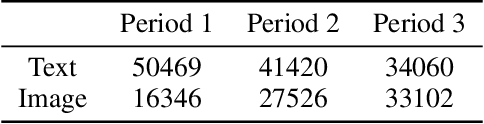
Linguistic landscape is an important field in sociolinguistic research. Eye tracking technology is a common technology in psychological research. There are few cases of using eye movement to study linguistic landscape. This paper uses eye tracking technology to study the actual fixation of the linguistic landscape and finds that in the two dimensions of fixation time and fixation times, the fixation of native Chinese speakers to the linguistic landscape is higher than that of the general landscape. This paper argues that this phenomenon is due to the higher information density of linguistic landscapes. At the same time, the article also discusses other possible reasons for this phenomenon.
An Extensive Study on Adversarial Attack against Pre-trained Models of Code
Nov 23, 2023


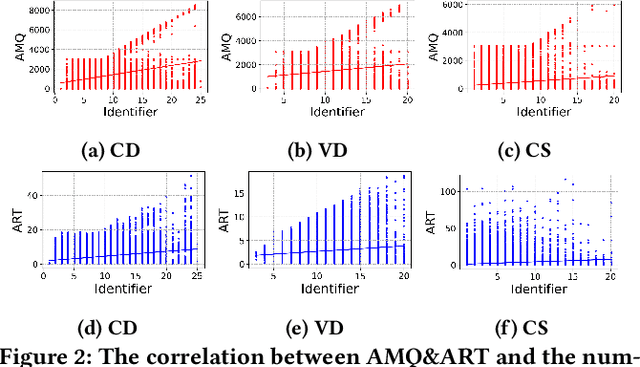
Transformer-based pre-trained models of code (PTMC) have been widely utilized and have achieved state-of-the-art performance in many mission-critical applications. However, they can be vulnerable to adversarial attacks through identifier substitution or coding style transformation, which can significantly degrade accuracy and may further incur security concerns. Although several approaches have been proposed to generate adversarial examples for PTMC, the effectiveness and efficiency of such approaches, especially on different code intelligence tasks, has not been well understood. To bridge this gap, this study systematically analyzes five state-of-the-art adversarial attack approaches from three perspectives: effectiveness, efficiency, and the quality of generated examples. The results show that none of the five approaches balances all these perspectives. Particularly, approaches with a high attack success rate tend to be time-consuming; the adversarial code they generate often lack naturalness, and vice versa. To address this limitation, we explore the impact of perturbing identifiers under different contexts and find that identifier substitution within for and if statements is the most effective. Based on these findings, we propose a new approach that prioritizes different types of statements for various tasks and further utilizes beam search to generate adversarial examples. Evaluation results show that it outperforms the state-of-the-art ALERT in terms of both effectiveness and efficiency while preserving the naturalness of the generated adversarial examples.