 Add to Chrome
 Add to Firefox
 Add to Edge
Bernini: Latent Semantic Planning for Video Diffusion
May 21, 2026
Multimodal large language models (MLLMs) and diffusion models have each reached remarkable maturity: MLLMs excel at reasoning over heterogeneous multimodal inputs with strong semantic grounding, while diffusion models synthesize images and videos with photorealistic fidelity. We argue that these two families can be unified through a simple division of labor: MLLMs perform semantic planning, while diffusion models render pixels from high-level semantic guidance and low-level visual features. Building on this idea, we propose Bernini, a unified framework for video generation and editing. An MLLM-based planner predicts the target semantic representation directly in the ViT embedding space, and a DiT-based renderer synthesizes pixels conditioned on this plan, augmented by text features and, for editing, source VAE features for detail preservation. Because semantics serve as the interface, the planner and renderer can be trained separately and only lightly co-trained, preserving the pretrained strengths of both components while keeping training efficient. To better handle multiple visual inputs, we introduce Segment-Aware 3D Rotary Positional Embedding (SA-3D RoPE), and further incorporate chain-of-thought reasoning in the planner to better transfer understanding into generation. Bernini achieves state-of-the-art performance across a wide range of video generation and editing benchmarks, with the MLLM's pretrained understanding translating into strong generalization on challenging editing tasks.

Time Series Modeling for Heart Rate Prediction: From ARIMA to Transformers
Jun 18, 2024Cardiovascular disease (CVD) is a leading cause of death globally, necessitating precise forecasting models for monitoring vital signs like heart rate, blood pressure, and ECG. Traditional models, such as ARIMA and Prophet, are limited by their need for manual parameter tuning and challenges in handling noisy, sparse, and highly variable medical data. This study investigates advanced deep learning models, including LSTM, and transformer-based architectures, for predicting heart rate time series from the MIT-BIH Database. Results demonstrate that deep learning models, particularly PatchTST, significantly outperform traditional models across multiple metrics, capturing complex patterns and dependencies more effectively. This research underscores the potential of deep learning to enhance patient monitoring and CVD management, suggesting substantial clinical benefits. Future work should extend these findings to larger, more diverse datasets and real-world clinical applications to further validate and optimize model performance.
AD-Aligning: Emulating Human-like Generalization for Cognitive Domain Adaptation in Deep Learning
May 15, 2024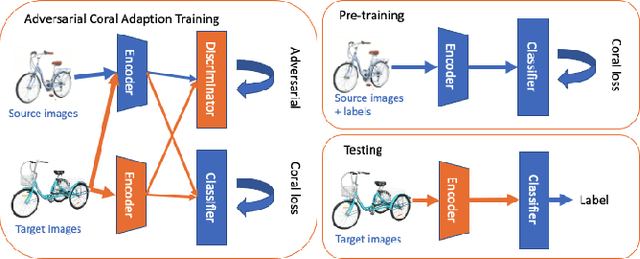
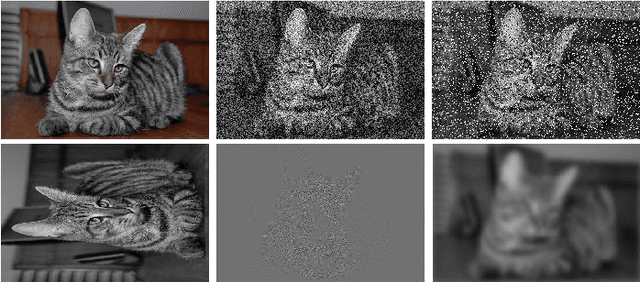
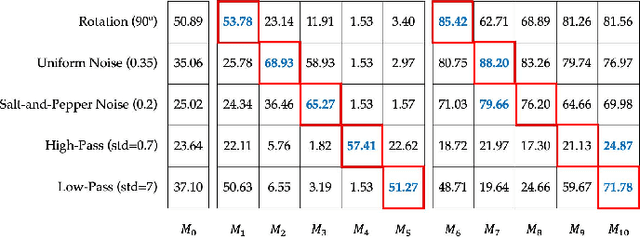
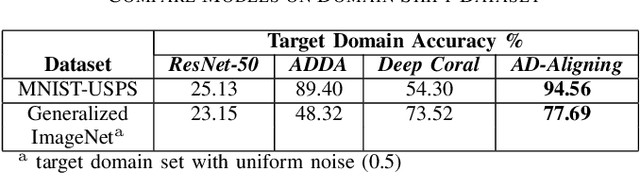
Domain adaptation is pivotal for enabling deep learning models to generalize across diverse domains, a task complicated by variations in presentation and cognitive nuances. In this paper, we introduce AD-Aligning, a novel approach that combines adversarial training with source-target domain alignment to enhance generalization capabilities. By pretraining with Coral loss and standard loss, AD-Aligning aligns target domain statistics with those of the pretrained encoder, preserving robustness while accommodating domain shifts. Through extensive experiments on diverse datasets and domain shift scenarios, including noise-induced shifts and cognitive domain adaptation tasks, we demonstrate AD-Aligning's superior performance compared to existing methods such as Deep Coral and ADDA. Our findings highlight AD-Aligning's ability to emulate the nuanced cognitive processes inherent in human perception, making it a promising solution for real-world applications requiring adaptable and robust domain adaptation strategies.