 Add to Chrome
 Add to Firefox
 Add to Edge
MasDrift: Benchmarking Authorization Preservation Across Multi-Agent Architectures
Aug 11, 2026
Multi-agent systems (MAS) decompose long-horizon tasks across supervisors and subagents, but delegated goals do not necessarily carry their original authorization boundaries. Existing safety benchmarks mainly study adversarial compromise, while work on constraint drift lacks controlled architecture-level evaluation. We introduce MasDrift, a benchmark of 600 benign productivity tasks across eight domains. Each task pairs required work with reserved actions. MasDrift compares single-agent, centralized, and decentralized coordination while varying hierarchy depth and peer width, measuring task completion and authorization preservation. Across generic multi-agent conditions, centralized hierarchies achieve 93.9--98.6% task completion versus 85.7--87.0% for peer networks, while unauthorized actions occur in 2.7--19.8% of tasks versus 0.6--0.8%, a gap that widens with hierarchy depth. We further compare two defenses that differ in where authorization evidence resides. One re-anchors every pending call to the original user request. The other carries an attenuated policy along the delegation chain. Re-anchoring reduces unauthorized actions in every model configuration we evaluate, at a cost of 1.6 points of pooled completion. Chain propagation blocks required work instead, forfeiting up to 36.3 points. A heterogeneous case study confirms that the failure follows from coordination rather than model strength. MasDrift exposes a centralization tradeoff and makes authorization preservation a measurable property of MAS design.

Multimodal Agricultural Agent Architecture (MA3): A New Paradigm for Intelligent Agricultural Decision-Making
Apr 07, 2025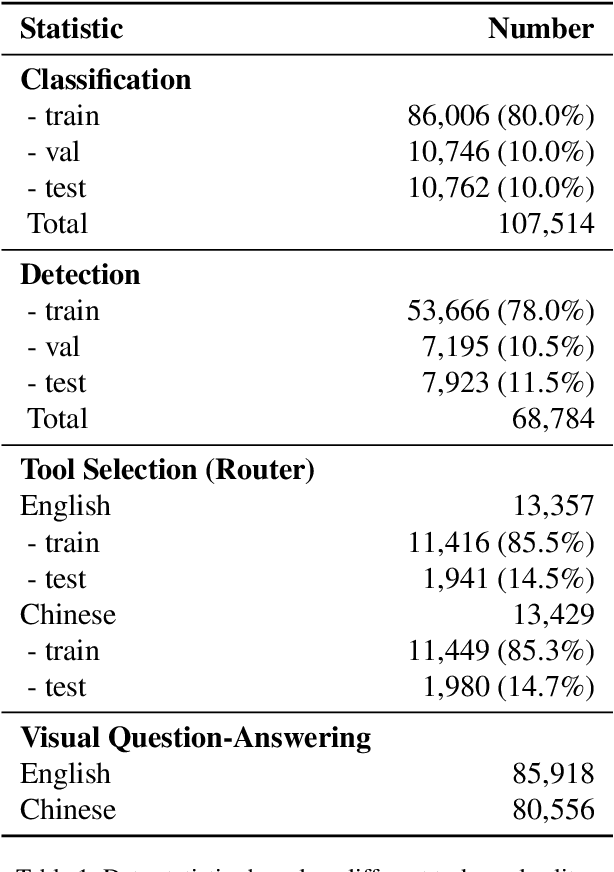
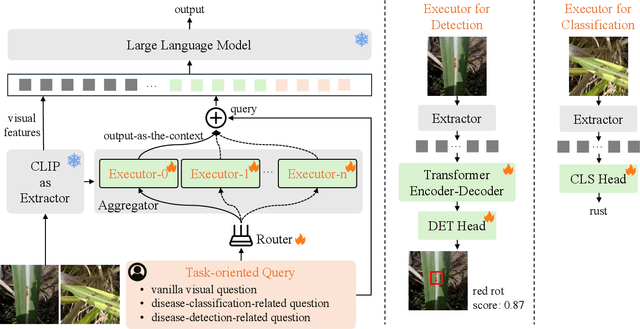

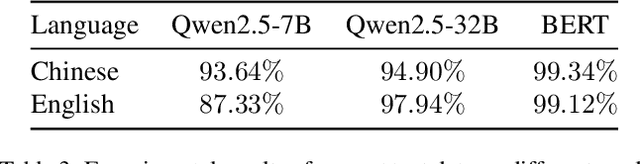
As a strategic pillar industry for human survival and development, modern agriculture faces dual challenges: optimizing production efficiency and achieving sustainable development. Against the backdrop of intensified climate change leading to frequent extreme weather events, the uncertainty risks in agricultural production systems are increasing exponentially. To address these challenges, this study proposes an innovative \textbf{M}ultimodal \textbf{A}gricultural \textbf{A}gent \textbf{A}rchitecture (\textbf{MA3}), which leverages cross-modal information fusion and task collaboration mechanisms to achieve intelligent agricultural decision-making. This study constructs a multimodal agricultural agent dataset encompassing five major tasks: classification, detection, Visual Question Answering (VQA), tool selection, and agent evaluation. We propose a unified backbone for sugarcane disease classification and detection tools, as well as a sugarcane disease expert model. By integrating an innovative tool selection module, we develop a multimodal agricultural agent capable of effectively performing tasks in classification, detection, and VQA. Furthermore, we introduce a multi-dimensional quantitative evaluation framework and conduct a comprehensive assessment of the entire architecture over our evaluation dataset, thereby verifying the practicality and robustness of MA3 in agricultural scenarios. This study provides new insights and methodologies for the development of agricultural agents, holding significant theoretical and practical implications. Our source code and dataset will be made publicly available upon acceptance.