 Add to Chrome
 Add to Firefox
 Add to Edge
Interference-Aware K-Step Reachable Communication in Multi-Agent Reinforcement Learning
Mar 16, 2026
Effective communication is pivotal for addressing complex collaborative tasks in multi-agent reinforcement learning (MARL). Yet, limited communication bandwidth and dynamic, intricate environmental topologies present significant challenges in identifying high-value communication partners. Agents must consequently select collaborators under uncertainty, lacking a priori knowledge of which partners can deliver task-critical information. To this end, we propose Interference-Aware K-Step Reachable Communication (IA-KRC), a novel framework that enhances cooperation via two core components: (1) a K-Step reachability protocol that confines message passing to physically accessible neighbors, and (2) an interference-prediction module that optimizes partner choice by minimizing interference while maximizing utility. Compared to existing methods, IA-KRC enables substantially more persistent and efficient cooperation despite environmental interference. Comprehensive evaluations confirm that IA-KRC achieves superior performance compared to state-of-the-art baselines, while demonstrating enhanced robustness and scalability in complex topological and highly dynamic multi-agent scenarios.

Semi-distributed Cross-modal Air-Ground Relative Localization
Nov 10, 2025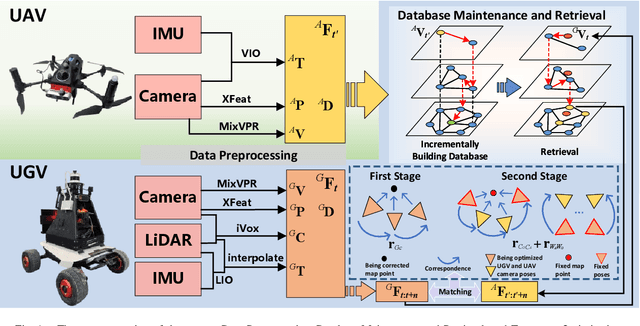
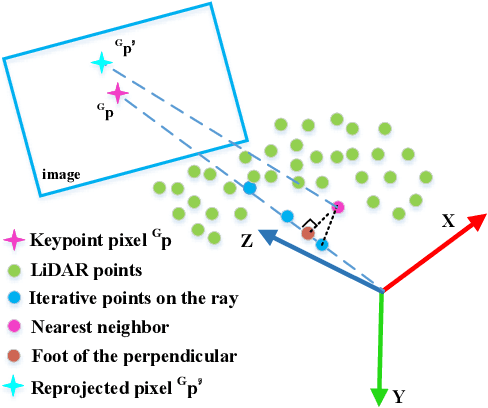
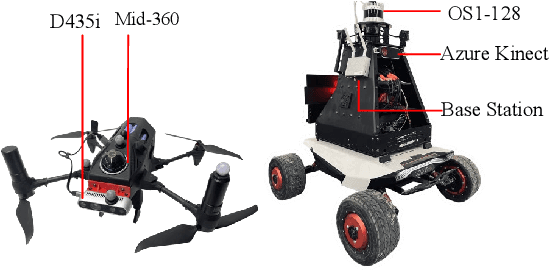
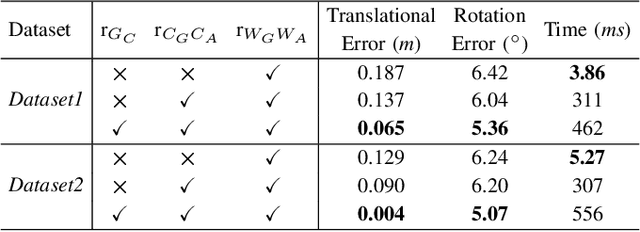
Efficient, accurate, and flexible relative localization is crucial in air-ground collaborative tasks. However, current approaches for robot relative localization are primarily realized in the form of distributed multi-robot SLAM systems with the same sensor configuration, which are tightly coupled with the state estimation of all robots, limiting both flexibility and accuracy. To this end, we fully leverage the high capacity of Unmanned Ground Vehicle (UGV) to integrate multiple sensors, enabling a semi-distributed cross-modal air-ground relative localization framework. In this work, both the UGV and the Unmanned Aerial Vehicle (UAV) independently perform SLAM while extracting deep learning-based keypoints and global descriptors, which decouples the relative localization from the state estimation of all agents. The UGV employs a local Bundle Adjustment (BA) with LiDAR, camera, and an IMU to rapidly obtain accurate relative pose estimates. The BA process adopts sparse keypoint optimization and is divided into two stages: First, optimizing camera poses interpolated from LiDAR-Inertial Odometry (LIO), followed by estimating the relative camera poses between the UGV and UAV. Additionally, we implement an incremental loop closure detection algorithm using deep learning-based descriptors to maintain and retrieve keyframes efficiently. Experimental results demonstrate that our method achieves outstanding performance in both accuracy and efficiency. Unlike traditional multi-robot SLAM approaches that transmit images or point clouds, our method only transmits keypoint pixels and their descriptors, effectively constraining the communication bandwidth under 0.3 Mbps. Codes and data will be publicly available on https://github.com/Ascbpiac/cross-model-relative-localization.git.