 Add to Chrome
 Add to Firefox
 Add to Edge
SIMAX: A Scalable and Interpretable Framework for Multi-Fidelity and Annotated Clinician-Patient Dialogue Simulation
Jun 29, 2026
Background. The widespread deployment of ambient digital scribes is driving large-scale capture of clinician-patient dialogues. Human coding of clinical communication data remains costly, inconsistent, and difficult to scale, motivating AI-driven communication coding systems. However, evaluating these systems requires real-world dialogues and human-coded labels, both hard to obtain at scale. Methods. We developed SIMAX (Scalable and Interpretable Framework for Multi-Fidelity and Annotated Clinician-Patient Dialogue Simulation), a framework for generating controlled clinical dialogue data with reference behavioral annotations. SIMAX generates clinician-patient dialogues from predefined clinical scenarios, personas and voice conditions, and target communication behaviors. Behaviors are controlled using two codebooks: the Global Codebook for overall communication quality and the WISER Codebook for specific countable behaviors. We evaluated SIMAX using automated and human quality assessments and an example communication coding system. Results. SIMAX generated 3,388 simulated dialogues across three specialties, multiple visit stages, persona characteristics, and accent conditions. Automated assessment showed mean UTMOS and WV-MOS scores of 3.03 and 2.61, WER and CER of 0.07 and 0.05, and CLAP cosine similarity of 0.41, suggesting reasonable speech naturalness, high transcription fidelity, and positive text-audio correspondence. Human evaluation showed a median MOS of 4.67 and a median clinical realism score of 3.00. Downstream evaluation suggests that SIMAX can assess how a communication coding system responds to behavioral targets and reveal insufficient sensitivity in some dimensions. Conclusions. SIMAX generates controlled and reproducible simulated clinician-patient dialogues, providing a data foundation for developing, validating, and refining communication coding systems.

Disagreement as Signals: Dual-view Calibration for Sequential Recommendation Denoising
Apr 27, 2026Sequential recommendation seeks to model the evolution of user interests by capturing temporal user intent and item-level transition patterns. Transformer-based recommenders demonstrate a strong capacity for learning long-range and interpretable dependencies, yet remain vulnerable to behavioral noise that is misaligned with users' true preferences. Recent large language model (LLM)-based approaches attempt to denoise interaction histories through static semantic editing. Such methods neglect the learning dynamics of recommendation models and fail to account for the evolving nature of user interests. To address this limitation, we propose a Dual-view Calibration framework for Sequential Recommendation denoising (DC4SR). Specifically, we introduce a semantic prior, derived from an LLM fine-tuned via labeled historical interactions, to estimate the noise distribution from a semantic perspective. From the learning perspective, we further employ a model-side posterior that infers the noise distribution based on the model's learning dynamics. The disagreement between the two distributions is then leveraged to jointly refine semantic understanding and learning-aware model-side representations. Through iterative updates, dynamic dual-view calibration is achieved for both the global semantic prior and the model-side posterior, enabling consistent alignment with evolving user interests. Extensive experiments demonstrate that DC4SR consistently outperforms strong Transformer-based recommenders and LLM-based denoising methods, exhibiting enhanced robustness across training stages and noise conditions.
DisenReason: Behavior Disentanglement and Latent Reasoning for Shared-Account Sequential Recommendation
Mar 04, 2026Shared-account usage is common on streaming and e-commerce platforms, where multiple users share one account. Existing shared-account sequential recommendation (SSR) methods often assume a fixed number of latent users per account, limiting their ability to adapt to diverse sharing patterns and reducing recommendation accuracy. Recent latent reasoning technique applied in sequential recommendation (SR) generate intermediate embeddings from the user embedding (e.g, last item embedding) to uncover users' potential interests, which inspires us to treat the problem of inferring the number of latent users as generating a series of intermediate embeddings, shifting from inferring preferences behind user to inferring the users behind account. However, the last item cannot be directly used for reasoning in SSR, as it can only represent the behavior of the most recent latent user, rather than the collective behavior of the entire account. To address this, we propose DisenReason, a two-stage reasoning method tailored to SSR. DisenReason combines behavior disentanglement stage from frequency-domain perspective to create a collective and unified account behavior representation, which serves as a pivot for latent user reasoning stage to infer the number of users behind the account. Experiments on four benchmark datasets show that DisenReason consistently outperforms all state-of-the-art baselines across four benchmark datasets, achieving relative improvements of up to 12.56\% in MRR@5 and 6.06\% in Recall@20.
Ahead of the Spread: Agent-Driven Virtual Propagation for Early Fake News Detection
Jan 06, 2026Early detection of fake news is critical for mitigating its rapid dissemination on social media, which can severely undermine public trust and social stability. Recent advancements show that incorporating propagation dynamics can significantly enhance detection performance compared to previous content-only approaches. However, this remains challenging at early stages due to the absence of observable propagation signals. To address this limitation, we propose AVOID, an \underline{a}gent-driven \underline{v}irtual pr\underline{o}pagat\underline{i}on for early fake news \underline{d}etection. AVOID reformulates early detection as a new paradigm of evidence generation, where propagation signals are actively simulated rather than passively observed. Leveraging LLM-powered agents with differentiated roles and data-driven personas, AVOID realistically constructs early-stage diffusion behaviors without requiring real propagation data. The resulting virtual trajectories provide complementary social evidence that enriches content-based detection, while a denoising-guided fusion strategy aligns simulated propagation with content semantics. Extensive experiments on benchmark datasets demonstrate that AVOID consistently outperforms state-of-the-art baselines, highlighting the effectiveness and practical value of virtual propagation augmentation for early fake news detection. The code and data are available at https://github.com/Ironychen/AVOID.
Energy-based Periodicity Mining with Deep Features for Action Repetition Counting in Unconstrained Videos
Mar 15, 2020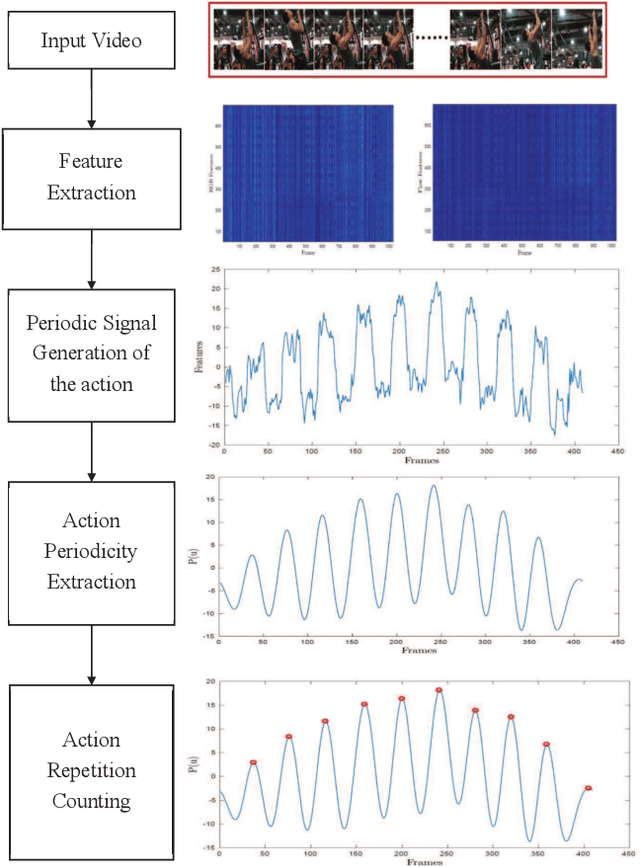
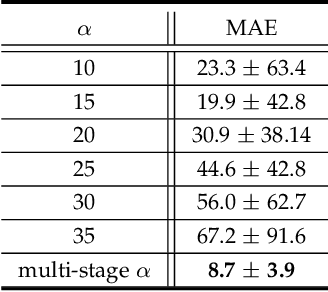
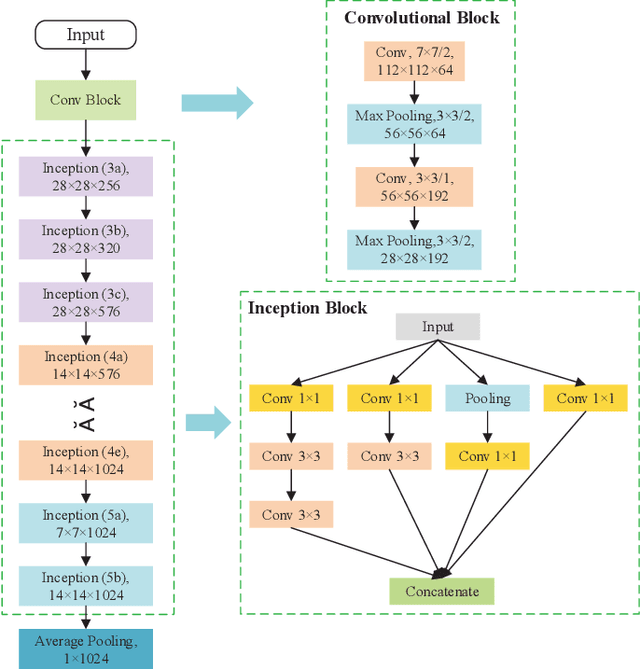

Action repetition counting is to estimate the occurrence times of the repetitive motion in one action, which is a relatively new, important but challenging measurement problem. To solve this problem, we propose a new method superior to the traditional ways in two aspects, without preprocessing and applicable for arbitrary periodicity actions. Without preprocessing, the proposed model makes our method convenient for real applications; processing the arbitrary periodicity action makes our model more suitable for the actual circumstance. In terms of methodology, firstly, we analyze the movement patterns of the repetitive actions based on the spatial and temporal features of actions extracted by deep ConvNets; Secondly, the Principal Component Analysis algorithm is used to generate the intuitive periodic information from the chaotic high-dimensional deep features; Thirdly, the periodicity is mined based on the high-energy rule using Fourier transform; Finally, the inverse Fourier transform with a multi-stage threshold filter is proposed to improve the quality of the mined periodicity, and peak detection is introduced to finish the repetition counting. Our work features two-fold: 1) An important insight that deep features extracted for action recognition can well model the self-similarity periodicity of the repetitive action is presented. 2) A high-energy based periodicity mining rule using deep features is presented, which can process arbitrary actions without preprocessing. Experimental results show that our method achieves comparable results on the public datasets YT Segments and QUVA.