 Add to Chrome
 Add to Firefox
 Add to Edge
How Do Latent Reasoning Methods Perform Under Weak and Strong Supervision?
Feb 25, 2026
Latent reasoning has been recently proposed as a reasoning paradigm and performs multi-step reasoning through generating steps in the latent space instead of the textual space. This paradigm enables reasoning beyond discrete language tokens by performing multi-step computation in continuous latent spaces. Although there have been numerous studies focusing on improving the performance of latent reasoning, its internal mechanisms remain not fully investigated. In this work, we conduct a comprehensive analysis of latent reasoning methods to better understand the role and behavior of latent representation in the process. We identify two key issues across latent reasoning methods with different levels of supervision. First, we observe pervasive shortcut behavior, where they achieve high accuracy without relying on latent reasoning. Second, we examine the hypothesis that latent reasoning supports BFS-like exploration in latent space, and find that while latent representations can encode multiple possibilities, the reasoning process does not faithfully implement structured search, but instead exhibits implicit pruning and compression. Finally, our findings reveal a trade-off associated with supervision strength: stronger supervision mitigates shortcut behavior but restricts the ability of latent representations to maintain diverse hypotheses, whereas weaker supervision allows richer latent representations at the cost of increased shortcut behavior.

OBIFormer: A Fast Attentive Denoising Framework for Oracle Bone Inscriptions
Apr 18, 2025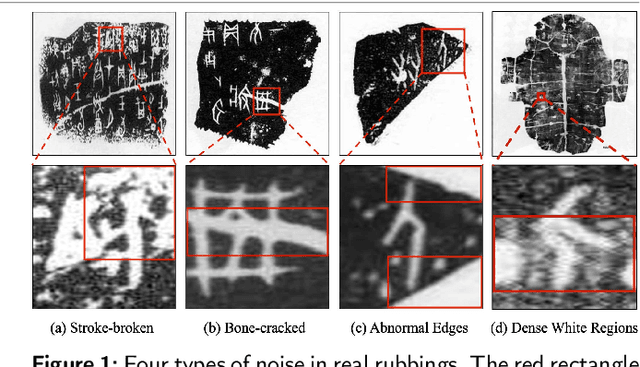
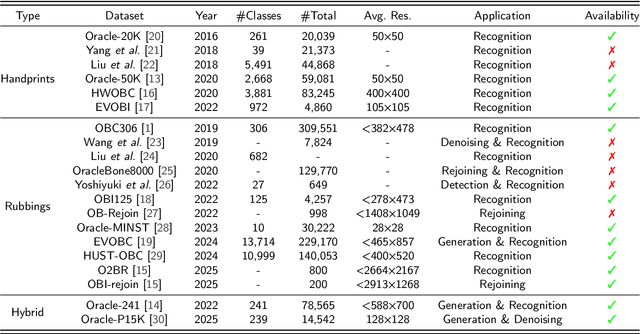
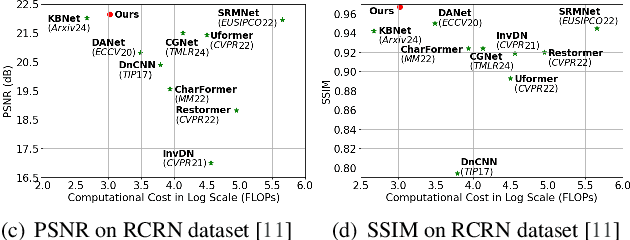
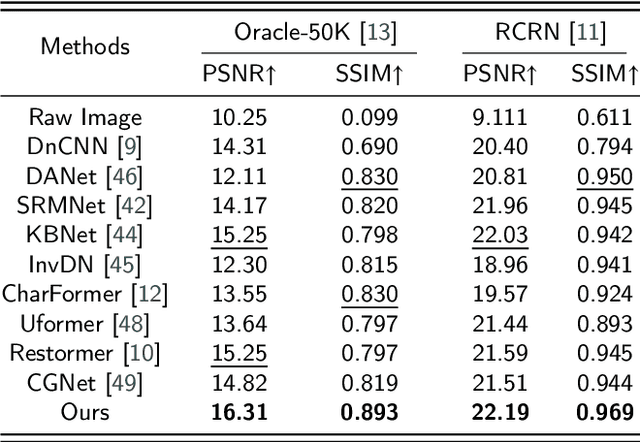
Oracle bone inscriptions (OBIs) are the earliest known form of Chinese characters and serve as a valuable resource for research in anthropology and archaeology. However, most excavated fragments are severely degraded due to thousands of years of natural weathering, corrosion, and man-made destruction, making automatic OBI recognition extremely challenging. Previous methods either focus on pixel-level information or utilize vanilla transformers for glyph-based OBI denoising, which leads to tremendous computational overhead. Therefore, this paper proposes a fast attentive denoising framework for oracle bone inscriptions, i.e., OBIFormer. It leverages channel-wise self-attention, glyph extraction, and selective kernel feature fusion to reconstruct denoised images precisely while being computationally efficient. Our OBIFormer achieves state-of-the-art denoising performance for PSNR and SSIM metrics on synthetic and original OBI datasets. Furthermore, comprehensive experiments on a real oracle dataset demonstrate the great potential of our OBIFormer in assisting automatic OBI recognition. The code will be made available at https://github.com/LJHolyGround/OBIFormer.