 Add to Chrome
 Add to Firefox
 Add to Edge
WCog-VLA: A Dual-Level World-Cognitive Vision-Language-Action Model for End-to-End Autonomous Driving
Jul 09, 2026
Vision-Language-Action (VLA) models have advanced end-to-end autonomous driving. However, existing methods either lack comprehensive world cognition or suffer from fragmented world foresight, inherently confining these models to reactive driving. To address this limitation, we propose WCog-VLA, a novel dual-level World-Cognitive VLA framework that successfully bridges semantic world forecasting with generative world evolution to achieve proactive autonomous driving. At the semantic level, WCog-VLA unifies world cognition and reasoning by incorporating 3D spatial perception and injecting agent tokens to capture the world dynamics, while concurrently enabling Game-theoretic Chain-of-Thought (Game-CoT) reasoning. At the generative level, we introduce the Aligned Decoupled Diffusion Transformer (ADDT) as a powerful generative world model that synthesizes physically-plausible joint multi-agent trajectories. Through scene representation alignment, ADDT reduces the number of denoising steps required and thus significantly accelerates inference. To facilitate strategic reasoning, we further construct a large-scale dataset featuring 85k Game-CoT annotations. Extensive experiments on the NAVSIM benchmark demonstrate that WCog-VLA achieves a State-Of-The-Art (SOTA) PDMS score of 92.9.

Fine-tuning is Not Enough: A Parallel Framework for Collaborative Imitation and Reinforcement Learning in End-to-end Autonomous Driving
Mar 14, 2026End-to-end autonomous driving is typically built upon imitation learning (IL), yet its performance is constrained by the quality of human demonstrations. To overcome this limitation, recent methods incorporate reinforcement learning (RL) through sequential fine-tuning. However, such a paradigm remains suboptimal: sequential RL fine-tuning can introduce policy drift and often leads to a performance ceiling due to its dependence on the pretrained IL policy. To address these issues, we propose PaIR-Drive, a general Parallel framework for collaborative Imitation and Reinforcement learning in end-to-end autonomous driving. During training, PaIR-Drive separates IL and RL into two parallel branches with conflict-free training objectives, enabling fully collaborative optimization. This design eliminates the need to retrain RL when applying a new IL policy. During inference, RL leverages the IL policy to further optimize the final plan, allowing performance beyond prior knowledge of IL. Furthermore, we introduce a tree-structured trajectory neural sampler to group relative policy optimization (GRPO) in the RL branch, which enhances exploration capability. Extensive analysis on NAVSIMv1 and v2 benchmark demonstrates that PaIR-Drive achieves Competitive performance of 91.2 PDMS and 87.9 EPDMS, building upon Transfuser and DiffusionDrive IL baselines. PaIR-Drive consistently outperforms existing RL fine-tuning methods, and could even correct human experts' suboptimal behaviors. Qualitative results further confirm that PaIR-Drive can effectively explore and generate high-quality trajectories.
Anti-bullying Adaptive Cruise Control: A proactive right-of-way protection approach
Dec 14, 2024
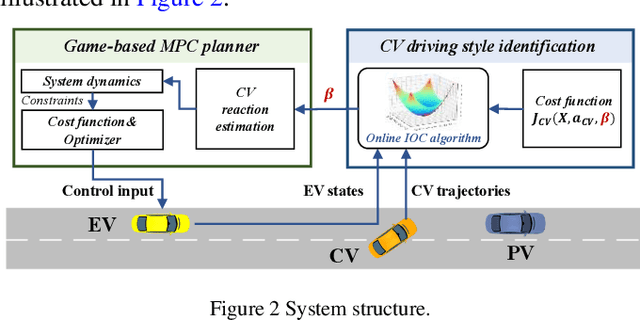
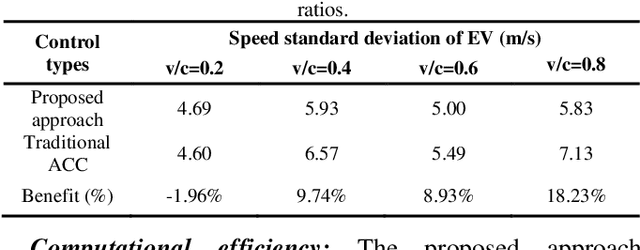

The current Adaptive Cruise Control (ACC) systems are vulnerable to "road bully" such as cut-ins. This paper proposed an Anti-bullying Adaptive Cruise Control (AACC) approach with proactive right-of-way protection ability. It bears the following features: i) with the enhanced capability of preventing bullying from cut-ins; ii) optimal but not unsafe; iii) adaptive to various driving styles of cut-in vehicles; iv) with real-time field implementation capability. The proposed approach can identify other road users' driving styles online and conduct game-based motion planning for right-of-way protection. A detailed investigation of the simulation results shows that the proposed approach can prevent bullying from cut-ins and be adaptive to different cut-in vehicles' driving styles. The proposed approach is capable of enhancing travel efficiency by up to 29.55% under different cut-in gaps and can strengthen driving safety compared with the current ACC controller. The proposed approach is flexible and robust against traffic congestion levels. It can improve mobility by up to 11.93% and robustness by 8.74% in traffic flow. Furthermore, the proposed approach can support real-time field implementation by ensuring less than 50 milliseconds computation time.