 Add to Chrome
 Add to Firefox
 Add to Edge
Partial Decoder Attention Network with Contour-weighted Loss Function for Data-Imbalance Medical Image Segmentation
Jan 20, 2026
Image segmentation is pivotal in medical image analysis, facilitating clinical diagnosis, treatment planning, and disease evaluation. Deep learning has significantly advanced automatic segmentation methodologies by providing superior modeling capability for complex structures and fine-grained anatomical regions. However, medical images often suffer from data imbalance issues, such as large volume disparities among organs or tissues, and uneven sample distributions across different anatomical structures. This imbalance tends to bias the model toward larger organs or more frequently represented structures, while overlooking smaller or less represented structures, thereby affecting the segmentation accuracy and robustness. To address these challenges, we proposed a novel contour-weighted segmentation approach, which improves the model's capability to represent small and underrepresented structures. We developed PDANet, a lightweight and efficient segmentation network based on a partial decoder mechanism. We evaluated our method using three prominent public datasets. The experimental results show that our methodology excelled in three distinct tasks: segmenting multiple abdominal organs, brain tumors, and pelvic bone fragments with injuries. It consistently outperformed nine state-of-the-art methods. Moreover, the proposed contour-weighted strategy improved segmentation for other comparison methods across the three datasets, yielding average enhancements in Dice scores of 2.32%, 1.67%, and 3.60%, respectively. These results demonstrate that our contour-weighted segmentation method surpassed current leading approaches in both accuracy and robustness. As a model-independent strategy, it can seamlessly fit various segmentation frameworks, enhancing their performance. This flexibility highlighted its practical importance and potential for broad use in medical image analysis.

ISA-Net: Improved spatial attention network for PET-CT tumor segmentation
Nov 04, 2022
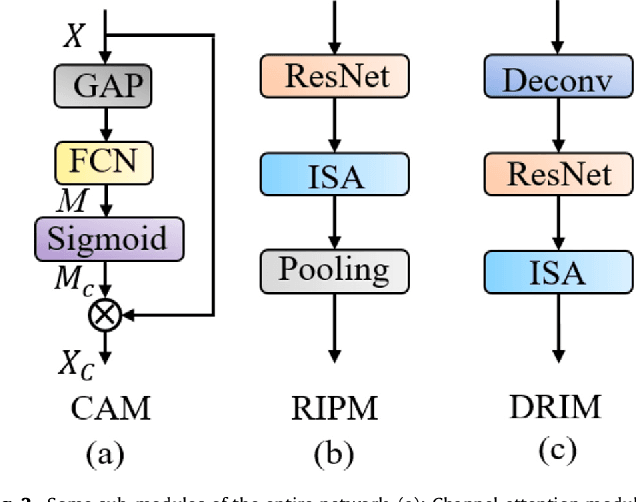
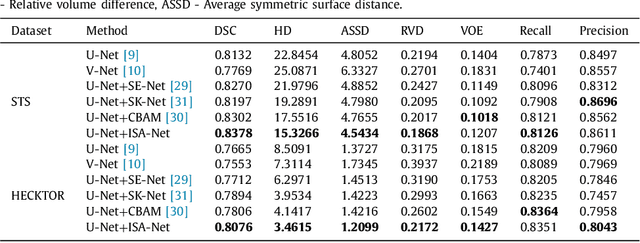
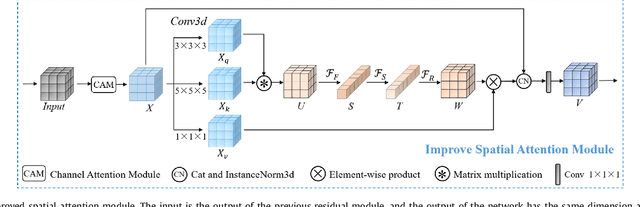
Achieving accurate and automated tumor segmentation plays an important role in both clinical practice and radiomics research. Segmentation in medicine is now often performed manually by experts, which is a laborious, expensive and error-prone task. Manual annotation relies heavily on the experience and knowledge of these experts. In addition, there is much intra- and interobserver variation. Therefore, it is of great significance to develop a method that can automatically segment tumor target regions. In this paper, we propose a deep learning segmentation method based on multimodal positron emission tomography-computed tomography (PET-CT), which combines the high sensitivity of PET and the precise anatomical information of CT. We design an improved spatial attention network(ISA-Net) to increase the accuracy of PET or CT in detecting tumors, which uses multi-scale convolution operation to extract feature information and can highlight the tumor region location information and suppress the non-tumor region location information. In addition, our network uses dual-channel inputs in the coding stage and fuses them in the decoding stage, which can take advantage of the differences and complementarities between PET and CT. We validated the proposed ISA-Net method on two clinical datasets, a soft tissue sarcoma(STS) and a head and neck tumor(HECKTOR) dataset, and compared with other attention methods for tumor segmentation. The DSC score of 0.8378 on STS dataset and 0.8076 on HECKTOR dataset show that ISA-Net method achieves better segmentation performance and has better generalization. Conclusions: The method proposed in this paper is based on multi-modal medical image tumor segmentation, which can effectively utilize the difference and complementarity of different modes. The method can also be applied to other multi-modal data or single-modal data by proper adjustment.