 Add to Chrome
 Add to Firefox
 Add to Edge
The Ensemble Inverse Problem: Applications and Methods
Jan 29, 2026
We introduce a new multivariate statistical problem that we refer to as the Ensemble Inverse Problem (EIP). The aim of EIP is to invert for an ensemble that is distributed according to the pushforward of a prior under a forward process. In high energy physics (HEP), this is related to a widely known problem called unfolding, which aims to reconstruct the true physics distribution of quantities, such as momentum and angle, from measurements that are distorted by detector effects. In recent applications, the EIP also arises in full waveform inversion (FWI) and inverse imaging with unknown priors. We propose non-iterative inference-time methods that construct posterior samplers based on a new class of conditional generative models, which we call ensemble inverse generative models. For the posterior modeling, these models additionally use the ensemble information contained in the observation set on top of single measurements. Unlike existing methods, our proposed methods avoid explicit and iterative use of the forward model at inference time via training across several sets of truth-observation pairs that are consistent with the same forward model, but originate from a wide range of priors. We demonstrate that this training procedure implicitly encodes the likelihood model. The use of ensemble information helps posterior inference and enables generalization to unseen priors. We benchmark the proposed method on several synthetic and real datasets in inverse imaging, HEP, and FWI. The codes are available at https://github.com/ZhengyanHuan/The-Ensemble-Inverse-Problem--Applications-and-Methods.

Resilient Constrained Reinforcement Learning
Dec 29, 2023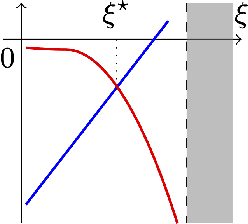
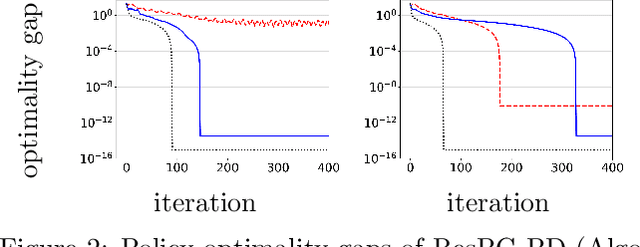
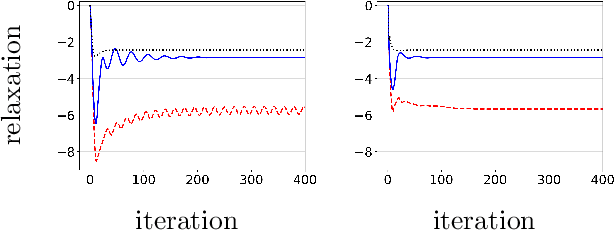

We study a class of constrained reinforcement learning (RL) problems in which multiple constraint specifications are not identified before training. It is challenging to identify appropriate constraint specifications due to the undefined trade-off between the reward maximization objective and the constraint satisfaction, which is ubiquitous in constrained decision-making. To tackle this issue, we propose a new constrained RL approach that searches for policy and constraint specifications together. This method features the adaptation of relaxing the constraint according to a relaxation cost introduced in the learning objective. Since this feature mimics how ecological systems adapt to disruptions by altering operation, our approach is termed as resilient constrained RL. Specifically, we provide a set of sufficient conditions that balance the constraint satisfaction and the reward maximization in notion of resilient equilibrium, propose a tractable formulation of resilient constrained policy optimization that takes this equilibrium as an optimal solution, and advocate two resilient constrained policy search algorithms with non-asymptotic convergence guarantees on the optimality gap and constraint satisfaction. Furthermore, we demonstrate the merits and the effectiveness of our approach in computational experiments.
Shaped Four-Dimensional Modulation Formats for Optical Fiber Communication Systems
Dec 23, 2021We review the design of multidimensional modulations by maximizing generalized mutual information and compare the maximum transmission reach of recently introduced 4D formats. A model-based optimization for nonlinear-tolerant 4D modulations is also discussed.