 Add to Chrome
 Add to Firefox
 Add to Edge
Auditing Training-Free 3D Shape Retrieval with Diffused Geodesic Moments
May 27, 2026
Reported retrieval scores for training-free shape descriptors conflate local signal design, normalization, aggregation, codebook fitting, and metric choices, making isolated component evaluation difficult. This paper reframes descriptor evaluation as a {\em protocol audit}. We introduce Diffused Geodesic Moments (DGM), a seed-conditioned descriptor that computes sparse implicit heat responses, converts them to distance-like fields, and summarizes each vertex by low-order moments across seeds and scales. DGM is used both as a practical non-spectral baseline and as an instrument for isolating protocol effects. On the registered FAUST benchmark split (FAUST-Reg) and the TOSCA shape collection, aggregation-matched experiments show that an independent Geometric Moment Shape Descriptor baseline built on Heat Kernel Signature features (GMSD-HKS) obtains the highest scores in this implementation ($0.621/0.820$ and $0.865/0.963$ mean average precision (mAP)/top-1), Wave Kernel Signature (WKS) remains a strong classical signal, and DGM is useful mainly when sparse solves, non-spectral deployment, or symmetry-informative seed frames are priorities. The broader finding is methodological: the input field and aggregation protocol can dominate the moment formula. The paper contributes a reproducible protocol-cascade analysis, a cross-shape alignment diagnostic for functional-map compatibility, and concrete recommendations for designing and reporting training-free shape descriptors.

Cognitive resilience: Unraveling the proficiency of image-captioning models to interpret masked visual content
Mar 23, 2024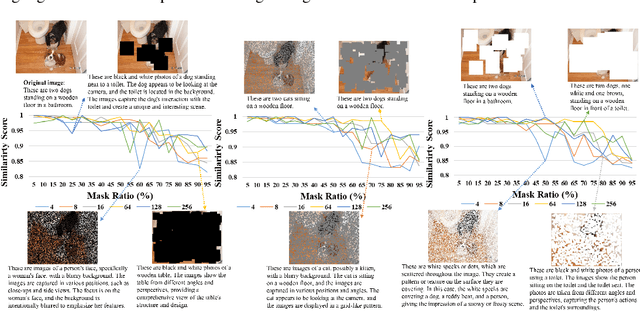
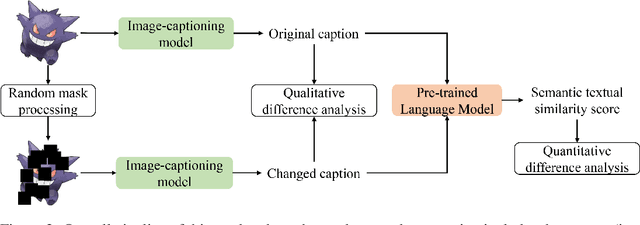
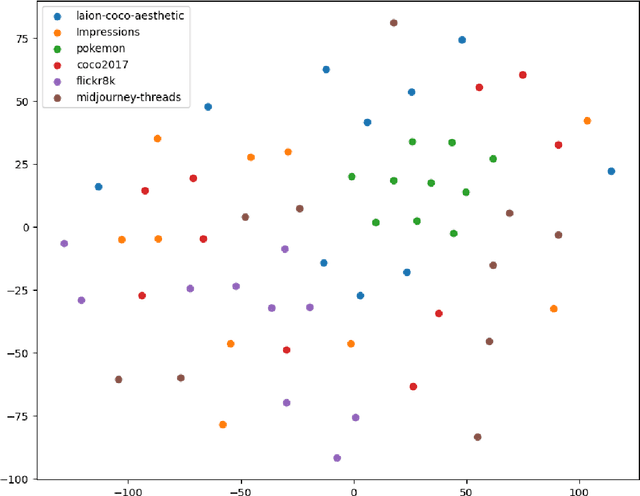

This study explores the ability of Image Captioning (IC) models to decode masked visual content sourced from diverse datasets. Our findings reveal the IC model's capability to generate captions from masked images, closely resembling the original content. Notably, even in the presence of masks, the model adeptly crafts descriptive textual information that goes beyond what is observable in the original image-generated captions. While the decoding performance of the IC model experiences a decline with an increase in the masked region's area, the model still performs well when important regions of the image are not masked at high coverage.
LAMPER: LanguAge Model and Prompt EngineeRing for zero-shot time series classification
Mar 23, 2024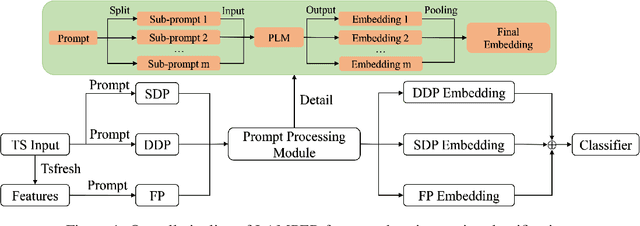


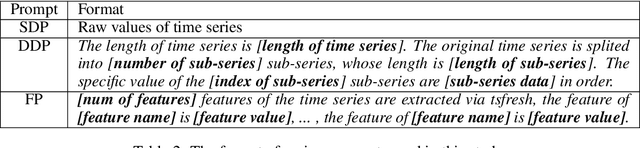
This study constructs the LanguAge Model with Prompt EngineeRing (LAMPER) framework, designed to systematically evaluate the adaptability of pre-trained language models (PLMs) in accommodating diverse prompts and their integration in zero-shot time series (TS) classification. We deploy LAMPER in experimental assessments using 128 univariate TS datasets sourced from the UCR archive. Our findings indicate that the feature representation capacity of LAMPER is influenced by the maximum input token threshold imposed by PLMs.