 Add to Chrome
 Add to Firefox
 Add to Edge
LLMBDC: Language Model for Biological Domains Oriented Clustering of Gene Ontology
Jul 30, 2026
Gene Ontology (GO) enrichment analysis is a foundational tool for translating large-scale genomic data into biological insights, but typically yields hundreds of redundant terms that obscure overarching themes. Existing summarization tools rely on fixed similarity metrics (REVIGO, GOSemSim, clusterProfiler::simplify()), gene-overlap measures (Metascape), or static hierarchy mappings (GO-slim), and therefore cannot incorporate biological context. Manual curation provides context-aware grouping but is subjective and labor-intensive. A scalable, context-aware framework is needed to cluster GO terms into interpretable higher-order biological domains. Here we present LLMBDC (Large Language Model for Biological Domains Oriented Clustering of Gene Ontology), a training-free framework that leverages zero-shot semantic reasoning of LLMs with confidence scoring to cluster GO terms into BioDomains using only ontology information at inference time. Benchmarked across Alzheimer's disease (AD) and Fragile X syndrome (FXS) against six baseline methods including SapBERT, LLMBDC achieved substantially higher precision, recall, and clustering performance. Against ground-truth annotations, LLMBDC improved ARI from 9.7% to 73.3% (AD) and from 15.7% to 66.6% (FXS) over REVIGO, with corresponding NMI gains from 59.9% to 73.4% (AD) and 66.0% to 79.5% (FXS). A Cauchy combination test further confirmed that aggregated BioDomains retained statistically significant functional signals. LLMBDC provides a scalable, reproducible, and interpretable route to context-aware, system-level interpretation of GO enrichment results while preserving biological specificity.

A Temporal Machine Learning-Based Time-to-Event Model for Predicting ALS Progression and Healthcare Utilization
Jul 15, 2026Amyotrophic lateral sclerosis (ALS) is a progressive and heterogeneous neurodegenerative disease in which predicting clinically meaningful milestones, such as assistive device use, remains challenging. We developed a time-to-event, digital-twin-inspired framework that integrates longitudinal ALS Functional Rating Scale-Revised (ALSFRS-R) trajectories with survival modeling to support individualized prediction of functional decline and assistive device utilization. We constructed a harmonized longitudinal dataset by integrating diagnosis records, ALSFRS-R assessments, activities of daily living, and demographic information, followed by preprocessing to ensure data quality, temporal alignment, and cohort consistency. Correlation-based clustering identified coherent functional domains spanning bulbar, upper limb, axial, lower limb, and respiratory systems. Generalized additive mixed models characterized nonlinear, domain-specific functional decline across all domains. In addition, a temporal machine learning model was developed to predict longitudinal functional decline and capture stage-dependent disease progression. Cox proportional hazards modeling further identified lower limb function, particularly walking and stair climbing, as the strongest predictors of earlier wheelchair access. Building on these results, we implemented a digital twin-inspired temporal machine learning-based time-to-event (TTE) model that generates individualized survival curves and dynamically predicts wheelchair-free survival. This framework provides a scalable, interpretable, and clinically actionable approach for linking ALS progression with personalized decision support, with applications in proactive care planning, clinical trial stratification, and precision medicine.
Deep Causal Generative Models with Property Control
May 25, 2024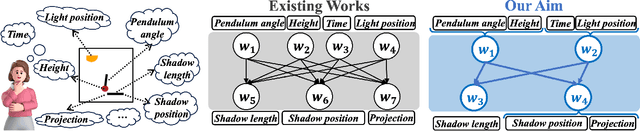
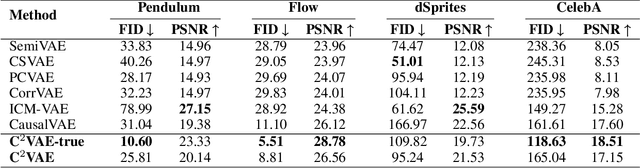
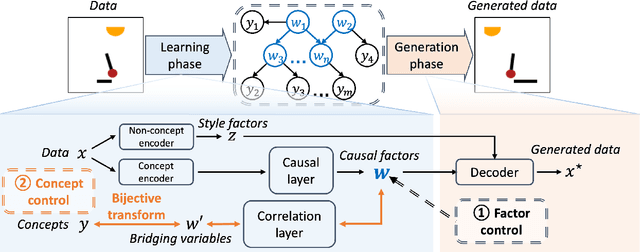
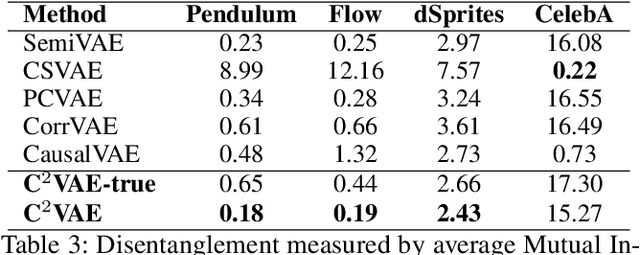
Generating data with properties of interest by external users while following the right causation among its intrinsic factors is important yet has not been well addressed jointly. This is due to the long-lasting challenge of jointly identifying key latent variables, their causal relations, and their correlation with properties of interest, as well as how to leverage their discoveries toward causally controlled data generation. To address these challenges, we propose a novel deep generative framework called the Correlation-aware Causal Variational Auto-encoder (C2VAE). This framework simultaneously recovers the correlation and causal relationships between properties using disentangled latent vectors. Specifically, causality is captured by learning the causal graph on latent variables through a structural causal model, while correlation is learned via a novel correlation pooling algorithm. Extensive experiments demonstrate C2VAE's ability to accurately recover true causality and correlation, as well as its superiority in controllable data generation compared to baseline models.
Gene-associated Disease Discovery Powered by Large Language Models
Jan 16, 2024The intricate relationship between genetic variation and human diseases has been a focal point of medical research, evidenced by the identification of risk genes regarding specific diseases. The advent of advanced genome sequencing techniques has significantly improved the efficiency and cost-effectiveness of detecting these genetic markers, playing a crucial role in disease diagnosis and forming the basis for clinical decision-making and early risk assessment. To overcome the limitations of existing databases that record disease-gene associations from existing literature, which often lack real-time updates, we propose a novel framework employing Large Language Models (LLMs) for the discovery of diseases associated with specific genes. This framework aims to automate the labor-intensive process of sifting through medical literature for evidence linking genetic variations to diseases, thereby enhancing the efficiency of disease identification. Our approach involves using LLMs to conduct literature searches, summarize relevant findings, and pinpoint diseases related to specific genes. This paper details the development and application of our LLM-powered framework, demonstrating its potential in streamlining the complex process of literature retrieval and summarization to identify diseases associated with specific genetic variations.
Domain Generalization Deep Graph Transformation
May 23, 2023Graph transformation that predicts graph transition from one mode to another is an important and common problem. Despite much progress in developing advanced graph transformation techniques in recent years, the fundamental assumption typically required in machine-learning models that the testing and training data preserve the same distribution does not always hold. As a result, domain generalization graph transformation that predicts graphs not available in the training data is under-explored, with multiple key challenges to be addressed including (1) the extreme space complexity when training on all input-output mode combinations, (2) difference of graph topologies between the input and the output modes, and (3) how to generalize the model to (unseen) target domains that are not in the training data. To fill the gap, we propose a multi-input, multi-output, hypernetwork-based graph neural network (MultiHyperGNN) that employs a encoder and a decoder to encode topologies of both input and output modes and semi-supervised link prediction to enhance the graph transformation task. Instead of training on all mode combinations, MultiHyperGNN preserves a constant space complexity with the encoder and the decoder produced by two novel hypernetworks. Comprehensive experiments show that MultiHyperGNN has a superior performance than competing models in both prediction and domain generalization tasks.