 Add to Chrome
 Add to Firefox
 Add to Edge
Emergent Misaligned Communication in Long-Horizon Multi-Agent LLM Commerce
Aug 18, 2026
Frontier LLM agents increasingly transact on behalf of separate principals, often using natural language rather than structured APIs. Much of the safety literature studies misaligned LLM behavior through adversarial-elicitation evaluations on single agents or stylized tasks. Its prevalence and structure in settings that combine long horizons, separate principals, real operational state, and inter-agent natural-language exchange remain insufficiently measured. We study 2,583 inter-agent emails from 20 one-year simulation runs of Vending-Bench Arena, a competitive vending environment spanning 13 frontier LLMs. We operationalize speech-act misalignment as emails containing false factual claims, manipulation, collusion, or threats, combining message content with ground-truth simulator state and logged reasoning traces to classify and validate such behavior. Under our primary classifier, 12.6% of emails are labeled misaligned; misalignment appears in all 20 runs and 74.7% of individual agent-runs. Both the magnitude and composition of this misalignment are preserved under repeated classification at different sampling temperatures and under full-pipeline replication with judges from two other frontier-model families. Misalignment is also reciprocal and stress-conditioned: receiving a misaligned email from a counterparty raises the odds of a misaligned reply by 1.65x, and low-inventory conditions raise them by 1.58x. Across tests of capability-asymmetric exploitation, we find no evidence that higher-capability models differentially exploit weaker counterparties, and model performance rank does not predict misalignment rates. Together, these results indicate that measurable, state-dependent misalignment can arise in competitive multi-agent environments without engineered elicitation, in patterns associated with operational scarcity and counterparty behavior rather than model capability alone.

Rethinking EEG-Based Disease Diagnosis: Decoupling Instance Representation Learning from Subject-Level Supervision
Jul 29, 2026EEG-based disease diagnosis requires one prediction per subject, yet common pipelines segment recordings into short instances, inherit the subject label for every instance, and train instance-level classifiers. This assumes that all instances provide equally reliable diagnostic evidence. Multiple instance learning (MIL) avoids inherited labels by treating each subject as a bag. However, EEG datasets contain far fewer subjects than instances, which can limit the quality of the representations learned by end-to-end MIL. We propose BridgeMIL, a two-stage framework that decouples instance representation learning from subject-level supervision. Stage 1 pretrains the encoder without inherited instance labels by aligning temporally nearby windows and independently sampled within-subject sub-bags. Variance and covariance regularization prevent collapse and reduce redundancy without negative pairs. Stage 2 transfers the encoder to an attention-based MIL aggregator, applies supervision only to subject predictions, and limits representation drift through feature retention. Across three EEG disease datasets and five representative backbones, BridgeMIL attains the highest mean accuracy in 14 of 15 dataset-backbone settings and an overall mean accuracy of 76.57%, 4.28 percentage points higher than the strongest baseline. Further analyses reveal substantial variation in inherited-label reliability across instances, greater performance sensitivity to subject scarcity than to instance scarcity, and a more structured representation space with distinct subject-wise clusters and improved separation between diagnostic classes. Together, these findings underscore the importance of aligning supervision with the subject-level prediction objective while learning from abundant EEG instances without assigning disease labels to individual instances.
Mirror Illusion Art
Jul 02, 2026Mirror Illusion Art is a novel reflection-conditioned 3D illusion where one object yields two target appearances (front and mirror). The task is formulated as inverse design from two target 2D images (front and mirror) to a printable 3D object with geometry and texture. Prior topology-driven and shadow-based approaches demand substantial manual effort, optimize shape only, and often yield non-smooth or incomplete geometry. To address these challenges, we propose AutoMIA, an automated Mirror Illusion Art design pipeline that jointly optimizes shape and color. To stabilize optimization and suppress artifacts, four mechanisms are introduced: (1) projection-alignment component (PAC) selection to reduce surface noise, (2) position-weighted adaptive (PWA) suppression for background noise, (3) internal voxel preservation (IVP) to prevent internal fractures, and (4) shape-color decoupled (SCD) optimization that balance shape and color optimization. AutoMIA generate diverse smooth Mirror Illusion artworks successfully both in the digital and physical world, with only around 76s design time and 2.6 GB memory on average using a single RTX 3090, advancing inverse graphics and computational design. Our code is available at https://github.com/zxp555/AutoMIA.
DSAINet: An Efficient Dual-Scale Attentive Interaction Network for General EEG Decoding
Apr 20, 2026In real-world applications of noninvasive electroencephalography (EEG), specialized decoders often show limited generalizability across diverse tasks under subject-independent settings. One central challenge is that task-relevant EEG signals often follow different temporal organization patterns across tasks, while many existing methods rely on task-tailored architectural designs that introduce task-specific temporal inductive biases. This mismatch makes it difficult to adapt temporal modeling across tasks without changing the model configuration. To address these challenges, we propose DSAINet, an efficient dual-scale attentive interaction network for general EEG decoding. Specifically, DSAINet constructs shared spatiotemporal token representations from raw EEG signals and models diverse temporal dynamics through parallel convolutional branches at fine and coarse scales. The resulting representations are then adaptively refined by intra-branch attention to emphasize salient scale-specific patterns and by inter-branch attention to integrate task-relevant features across scales, followed by adaptive token aggregation to yield a compact representation for prediction. Extensive experiments on five downstream EEG decoding tasks across ten public datasets show that DSAINet consistently outperforms 13 representative baselines under strict subject-independent evaluation. Notably, this performance is achieved using the same architecture hyperparameters across datasets. Moreover, DSAINet achieves a favorable accuracy-efficiency trade-off with only about 77K trainable parameters and provides interpretable neurophysiological insights. The code is publicly available at https://github.com/zy0929/DSAINet.
Bit-Efficient Quantisation for Two-Channel Modulo-Sampling Systems
Jan 20, 2026Two-channel modulo analog-to-digital converters (ADCs) enable high-dynamic-range signal sensing at the Nyquist rate per channel, but existing designs quantise both channel outputs independently, incurring redundant bitrate costs. This paper proposes a bit-efficient quantisation scheme that exploits the integer-valued structure of inter-channel differences, transmitting one quantised channel output together with a compact difference index. We prove that this approach requires only 1-2 bits per signal sample overhead relative to conventional ADCs, despite operating with a much smaller per-channel dynamic range. Simulations confirm the theoretical error bounds and bitrate analysis, while hardware experiments demonstrate substantial bitrate savings compared with existing modulo sampling schemes, while maintaining comparable reconstruction accuracy. These results highlight a practical path towards high-resolution, bandwidth-efficient modulo ADCs for bitrate-constrained systems.
Difference-Based Recovery for Modulo Sampling: Tightened Bounds and Robustness Guarantees
Sep 16, 2025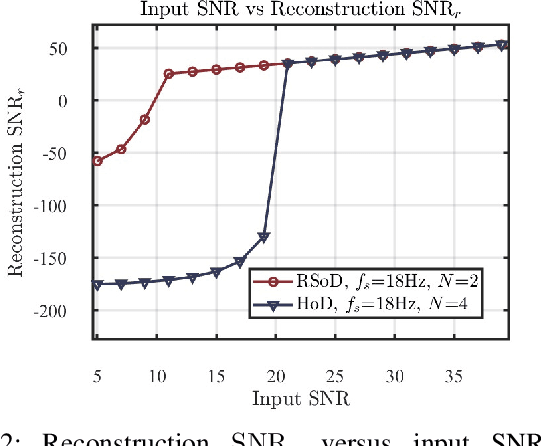
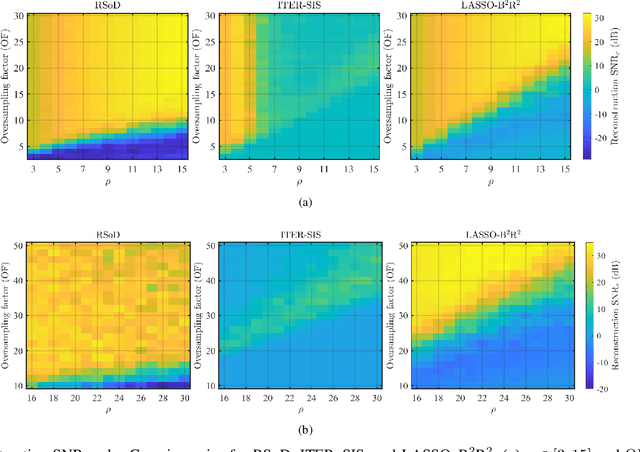
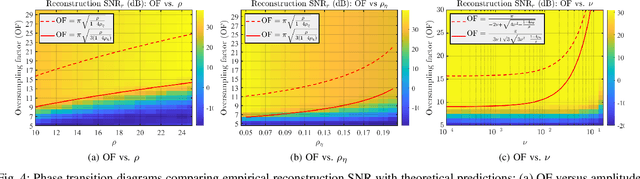
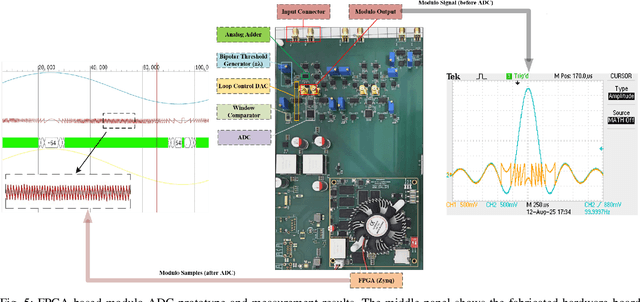
Conventional analog-to-digital converters (ADCs) clip when signals exceed their input range. Modulo (unlimited) sampling overcomes this limitation by folding the signal before digitization, but existing recovery methods are either computationally intensive or constrained by loose oversampling bounds that demand high sampling rates. In addition, none account for sampling jitter, which is unavoidable in practice. This paper revisits difference-based recovery and establishes new theoretical and practical guarantees. In the noiseless setting, we prove that arbitrarily high difference order reduces the sufficient oversampling factor from $2\pi e$ to $\pi$, substantially tightening classical bounds. For fixed order $N$, we derive a noise-aware sampling condition that guarantees stable recovery. For second-order difference-based recovery ($N=2$), we further extend the analysis to non-uniform sampling, proving robustness under bounded jitter. An FPGA-based hardware prototype demonstrates reliable reconstruction with amplitude expansion up to $\rho = 108$, confirming the feasibility of high-performance unlimited sensing with a simple and robust recovery pipeline.
Option Pricing Using Ensemble Learning
Jun 06, 2025Ensemble learning is characterized by flexibility, high precision, and refined structure. As a critical component within computational finance, option pricing with machine learning requires both high predictive accuracy and reduced structural complexity-features that align well with the inherent advantages of ensemble learning. This paper investigates the application of ensemble learning to option pricing, and conducts a comparative analysis with classical machine learning models to assess their performance in terms of accuracy, local feature extraction, and robustness to noise. A novel experimental strategy is introduced, leveraging parameter transfer across experiments to improve robustness and realism in financial simulations.Building upon this strategy, an evaluation mechanism is developed that incorporates a scoring strategy and a weighted evaluation strategy explicitly emphasizing the foundational role of financial theory. This mechanism embodies an orderly integration of theoretical finance and computational methods. In addition, the study examines the interaction between sliding window technique and noise, revealing nuanced patterns that suggest a potential connection relevant to ongoing research in machine learning and data science.
FALCON: Feedback-driven Adaptive Long/short-term memory reinforced Coding Optimization system
Oct 28, 2024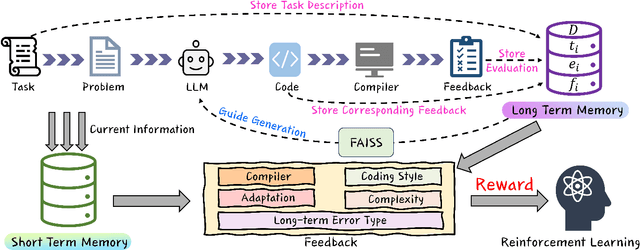
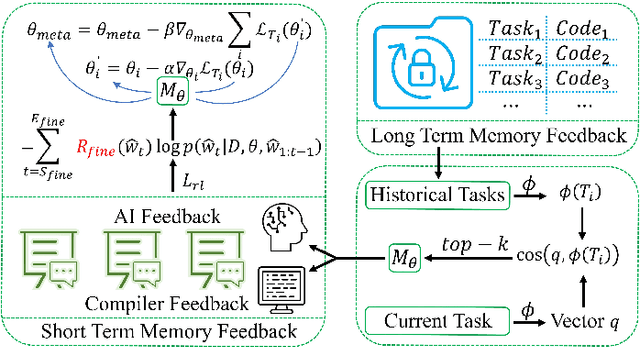
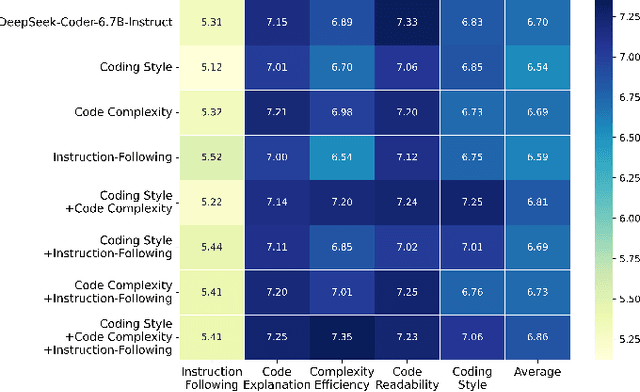
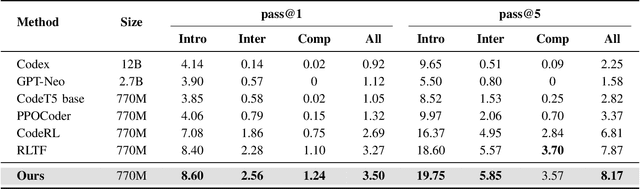
Recently, large language models (LLMs) have achieved significant progress in automated code generation. Despite their strong instruction-following capabilities, these models frequently struggled to align with user intent in coding scenarios. In particular, they were hampered by datasets that lacked diversity and failed to address specialized tasks or edge cases. Furthermore, challenges in supervised fine-tuning (SFT) and reinforcement learning from human feedback (RLHF) led to failures in generating precise, human-intent-aligned code. To tackle these challenges and improve the code generation performance for automated programming systems, we propose Feedback-driven Adaptive Long/short-term memory reinforced Coding Optimization (i.e., FALCON). FALCON is structured into two hierarchical levels. From the global level, long-term memory improves code quality by retaining and applying learned knowledge. At the local level, short-term memory allows for the incorporation of immediate feedback from compilers and AI systems. Additionally, we introduce meta-reinforcement learning with feedback rewards to solve the global-local bi-level optimization problem and enhance the model's adaptability across diverse code generation tasks. Extensive experiments demonstrate that our technique achieves state-of-the-art performance, leading other reinforcement learning methods by more than 4.5 percentage points on the MBPP benchmark and 6.1 percentage points on the Humaneval benchmark. The open-sourced code is publicly available at https://github.com/titurte/FALCON.
Structure-Preserving Transformers for Learning Parametrized Hamiltonian Systems
Dec 18, 2023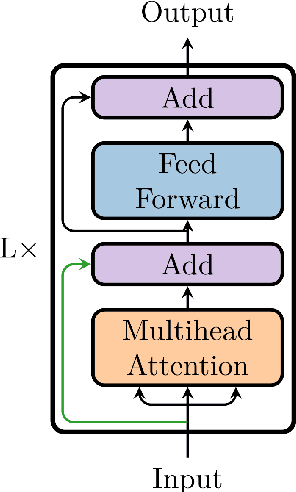
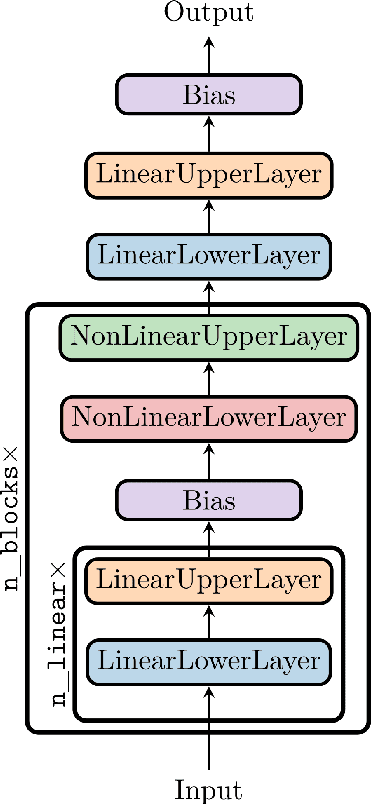
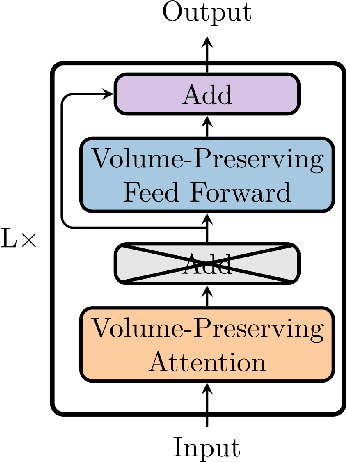
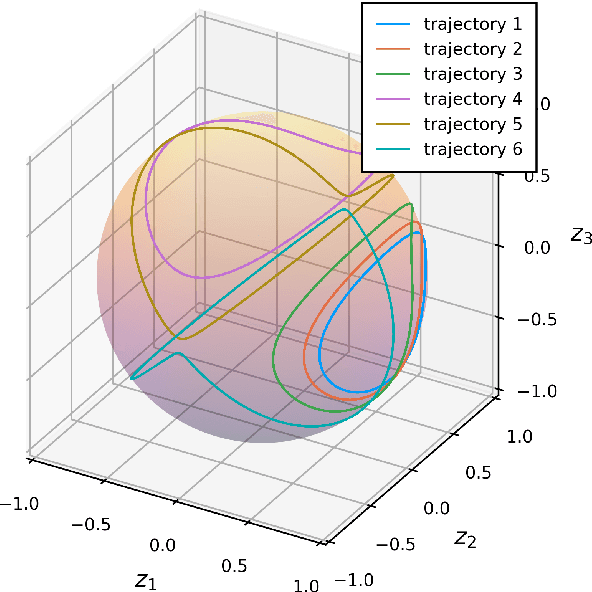
Two of the many trends in neural network research of the past few years have been (i) the learning of dynamical systems, especially with recurrent neural networks such as long short-term memory networks (LSTMs) and (ii) the introduction of transformer neural networks for natural language processing (NLP) tasks. Both of these trends have created enormous amounts of traction, particularly the second one: transformer networks now dominate the field of NLP. Even though some work has been performed on the intersection of these two trends, this work was largely limited to using the vanilla transformer directly without adjusting its architecture for the setting of a physical system. In this work we use a transformer-inspired neural network to learn a complicated non-linear dynamical system and furthermore (for the first time) imbue it with structure-preserving properties to improve long-term stability. This is shown to be extremely important when applying the neural network to real world applications.