 Add to Chrome
 Add to Firefox
 Add to Edge
HyperANFIS: Enhancing Rule Representation and Interpretability in Adaptive Neuro-Fuzzy Systems via Hyperbolic Geometry
Aug 12, 2026
The adaptive neuro-fuzzy inference system (ANFIS) is an interpretable reasoning framework capable of generating explicit IF-THEN fuzzy rules, making it suitable for tasks requiring transparent reasoning. However, existing ANFIS models generally construct rule antecedents and perform inference in Euclidean space, limiting their representational capacity and predictive performance. To address this issue, we propose Hyperbolic ANFIS (HyperANFIS), a hyperbolic extension of ANFIS. HyperANFIS preserves the fuzzy semantics and core architecture of conventional ANFIS while performing rule-prototype learning, rule activation, and consequent aggregation in hyperbolic space. It also retains the ability to generate interpretable IF-THEN rules. By exploiting the representational properties of hyperbolic geometry, HyperANFIS strengthens the fuzzy inference process, thereby improving predictive accuracy, inter-rule collaboration, and the credibility of its interpretable rules. Experimental results show that HyperANFIS consistently outperforms the standard ANFIS baseline and various ANFIS variants across all datasets, while also generating higher-quality fuzzy rules.

Breaking the Black-Box: Confidence-Guided Model Inversion Attack for Distribution Shift
Feb 28, 2024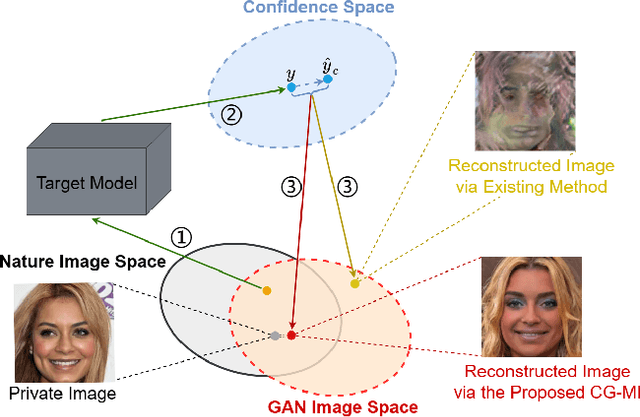

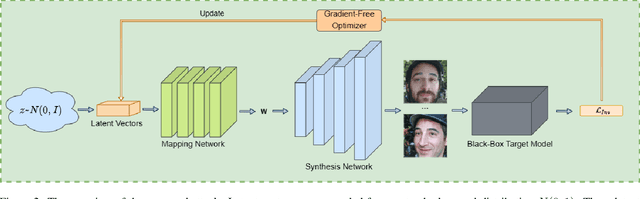
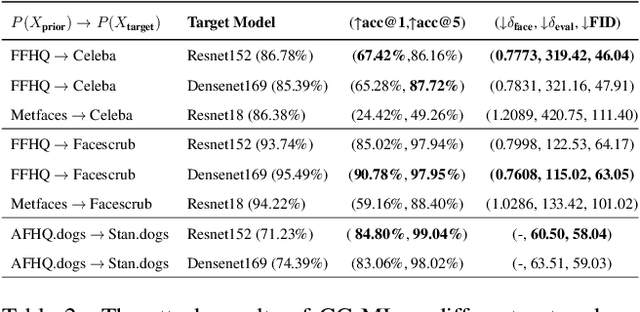
Model inversion attacks (MIAs) seek to infer the private training data of a target classifier by generating synthetic images that reflect the characteristics of the target class through querying the model. However, prior studies have relied on full access to the target model, which is not practical in real-world scenarios. Additionally, existing black-box MIAs assume that the image prior and target model follow the same distribution. However, when confronted with diverse data distribution settings, these methods may result in suboptimal performance in conducting attacks. To address these limitations, this paper proposes a \textbf{C}onfidence-\textbf{G}uided \textbf{M}odel \textbf{I}nversion attack method called CG-MI, which utilizes the latent space of a pre-trained publicly available generative adversarial network (GAN) as prior information and gradient-free optimizer, enabling high-resolution MIAs across different data distributions in a black-box setting. Our experiments demonstrate that our method significantly \textbf{outperforms the SOTA black-box MIA by more than 49\% for Celeba and 58\% for Facescrub in different distribution settings}. Furthermore, our method exhibits the ability to generate high-quality images \textbf{comparable to those produced by white-box attacks}. Our method provides a practical and effective solution for black-box model inversion attacks.