 Add to Chrome
 Add to Firefox
 Add to Edge
Personalized Face Privacy Protection From a Single Image
May 18, 2026
Photos of faces uploaded online are vulnerable to malicious actors who can scrape facial images from online sources and intrude on personal privacy via unauthorized use of facial recognition models. This paper presents FaceCloak, a novel personalized face privacy protection system, which can generate defensive identity-specific universal face privacy masks from a single image of a user, causing facial recognition to fail. FaceCloak introduces a three-stage personalized face perturbation learning methodology: (1) It generates a small set of high-variety synthetic face images of a person based on a single image of the person. (2) It learns face cloaking by adding more protection to key facial-identity leakage regions through iterative perturbation generation over the small set of synthetic images, effectively shifting a user's identity embedding towards a distant anchor identity and away from a similar one. (3) It generates a personalized identity-protective mask in the form of pixel-wise cloaking, which is light-weight and can be efficiently applied to any facial image of a user while maintaining good perceptual quality. Extensive experiments on three popular face datasets across ten recognition models show the effectiveness of FaceCloak compared to 29 other existing representative methods. Code is available at https://github.com/zacharyyahn/FaceCloak

TinyNina: A Resource-Efficient Edge-AI Framework for Sustainable Air Quality Monitoring via Intra-Image Satellite Super-Resolution
Apr 06, 2026Nitrogen dioxide (NO$_2$) is a primary atmospheric pollutant and a significant contributor to respiratory morbidity and urban climate-related challenges. While satellite platforms like Sentinel-2 provide global coverage, their native spatial resolution often limits the precision required, fine-grained NO$_2$ assessment. To address this, we propose TinyNina, a resource-efficient Edge-AI framework specifically engineered for sustainable environmental monitoring. TinyNina implements a novel intra-image learning paradigm that leverages the multi-spectral hierarchy of Sentinel-2 as internal training labels, effectively eliminating the dependency on costly and often unavailable external high-resolution reference datasets. The framework incorporates wavelength-specific attention gates and depthwise separable convolutions to preserve pollutant-sensitive spectral features while maintaining an ultra-lightweight footprint of only 51K parameters. Experimental results, validated against 3,276 matched satellite-ground station pairs, demonstrate that TinyNina achieves a state-of-the-art Mean Absolute Error (MAE) of 7.4 $μ$g/m$^3$. This performance represents a 95% reduction in computational overhead and 47$\times$ faster inference compared to high-capacity models such as EDSR and RCAN. By prioritizing task-specific utility and architectural efficiency, TinyNina provides a scalable, low-latency solution for real-time air quality monitoring in smart city infrastructures.
Attention-aware Inference Optimizations for Large Vision-Language Models with Memory-efficient Decoding
Mar 25, 2026Large Vision-Language Models (VLMs) have achieved remarkable success in multi-modal reasoning, but their inference time efficiency remains a significant challenge due to the memory overhead during decoding, especially when the query and answer of VLMs consist of long sequences of visual and text tokens. This paper presents AttentionPack, an adaptive and attention-aware optimization framework tailored for large vision-language models with improving memory-efficiency during decoding, focusing on addressing the challenges due to the increased high number of visual inputs and interactions, particularly in long-context tasks with multiple high-resolution images or videos. AttentionPack is novel in two aspects: (i) We introduce a multi-head attention compaction method for economically storing key and value matrices by exploiting the implicit low-rank structure, and (ii) we develop a token-specific attention-aware decompression mechanism to reduce latency overhead. Experimental results on multiple benchmarks demonstrate that AttentionPack improves memory efficiency by up to 8x, enabling higher batch sizes and faster batch inference while preserving the model output quality or longer context lengths for superior retrieval performance. We also report the effectiveness of AttentionPack combined with eviction, quantization and kernel fusion, showing further efficiency gains for resource-limited environments.
A Multi-Agent Perception-Action Alliance for Efficient Long Video Reasoning
Mar 14, 2026This paper presents a multi-agent perception-action exploration alliance, dubbed A4VL, for efficient long-video reasoning. A4VL operates in a multi-round perception-action exploration loop with a selection of VLM agents. In each round, the team of agents performs video question-answer (VideoQA) via perception exploration followed by action exploration. During perception exploration, each agent learns to extract query-specific perception clue(s) from a few sampled frames and performs clue-based alignment to find the video block(s) that are most relevant to the query-specific event. During action exploration, A4VL performs video reasoning in three steps: (1) each agent produces its initial answer with rational, (2) all agents collaboratively scores one another through cross-reviews and relevance ranking, and (3) based on whether a satisfactory consensus is reached, the decision is made either to start a new round of perception-action deliberation by pruning (e.g., filtering out the lowest performing agent) and re-staging (e.g., new-clue and matching block based perception-action exploration), or to conclude by producing its final answer. The integration of the multi-agent alliance through multi-round perception-action exploration, coupled with event-driven partitioning and cue-guided block alignment, enables A4VL to effectively scale to real world long videos while preserving high quality video reasoning. Evaluation Results on five popular VideoQA benchmarks show that A4VL outperforms 18 existing representative VLMs and 10 recent methods optimized for long-video reasoning, while achieving significantly lower inference latency. Our code is released at https://github.com/git-disl/A4VL.
Language-Vision Planner and Executor for Text-to-Visual Reasoning
Jun 09, 2025The advancement in large language models (LLMs) and large vision models has fueled the rapid progress in multi-modal visual-text reasoning capabilities. However, existing vision-language models (VLMs) to date suffer from generalization performance. Inspired by recent development in LLMs for visual reasoning, this paper presents VLAgent, an AI system that can create a step-by-step visual reasoning plan with an easy-to-understand script and execute each step of the plan in real time by integrating planning script with execution verifications via an automated process supported by VLAgent. In the task planning phase, VLAgent fine-tunes an LLM through in-context learning to generate a step-by-step planner for each user-submitted text-visual reasoning task. During the plan execution phase, VLAgent progressively refines the composition of neuro-symbolic executable modules to generate high-confidence reasoning results. VLAgent has three unique design characteristics: First, we improve the quality of plan generation through in-context learning, improving logic reasoning by reducing erroneous logic steps, incorrect programs, and LLM hallucinations. Second, we design a syntax-semantics parser to identify and correct additional logic errors of the LLM-generated planning script prior to launching the plan executor. Finally, we employ the ensemble method to improve the generalization performance of our step-executor. Extensive experiments with four visual reasoning benchmarks (GQA, MME, NLVR2, VQAv2) show that VLAgent achieves significant performance enhancement for multimodal text-visual reasoning applications, compared to the exiting representative VLMs and LLM based visual composition approaches like ViperGPT and VisProg, thanks to the novel optimization modules of VLAgent back-engine (SS-Parser, Plan Repairer, Output Verifiers). Code and data will be made available upon paper acceptance.
Multi-Agent Reinforcement Learning with Focal Diversity Optimization
Feb 06, 2025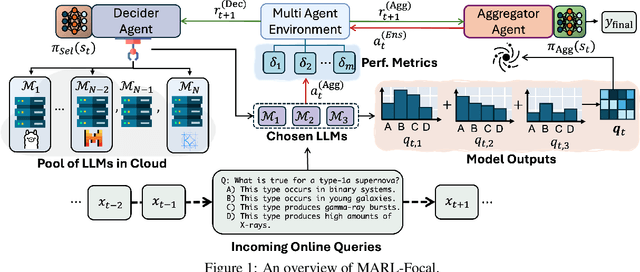
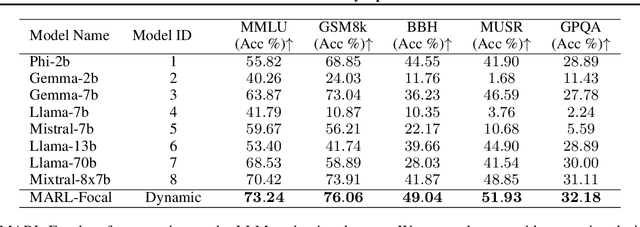
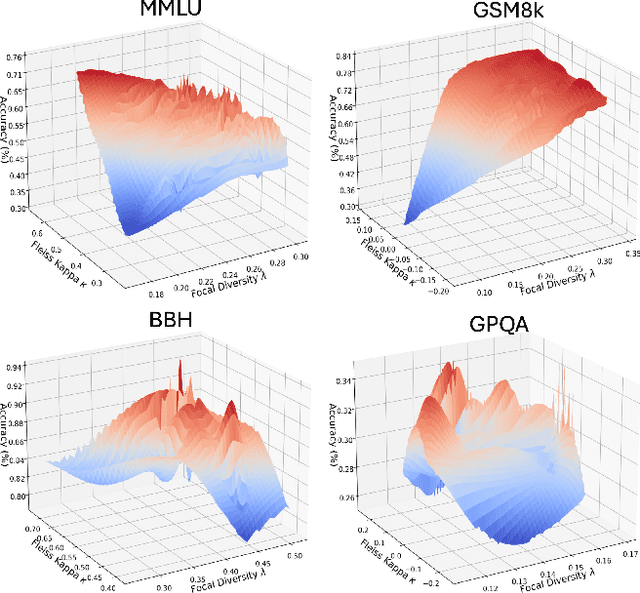

The advancement of Large Language Models (LLMs) and their finetuning strategies has triggered the renewed interests in multi-agent reinforcement learning. In this paper, we introduce a focal diversity-optimized multi-agent reinforcement learning approach, coined as MARL-Focal, with three unique characteristics. First, we develop an agent-fusion framework for encouraging multiple LLM based agents to collaborate in producing the final inference output for each LLM query. Second, we develop a focal-diversity optimized agent selection algorithm that can choose a small subset of the available agents based on how well they can complement one another to generate the query output. Finally, we design a conflict-resolution method to detect output inconsistency among multiple agents and produce our MARL-Focal output through reward-aware and policy-adaptive inference fusion. Extensive evaluations on five benchmarks show that MARL-Focal is cost-efficient and adversarial-robust. Our multi-agent fusion model achieves performance improvement of 5.51\% compared to the best individual LLM-agent and offers stronger robustness over the TruthfulQA benchmark. Code is available at https://github.com/sftekin/rl-focal
Rapid Automated Mapping of Clouds on Titan With Instance Segmentation
Jan 08, 2025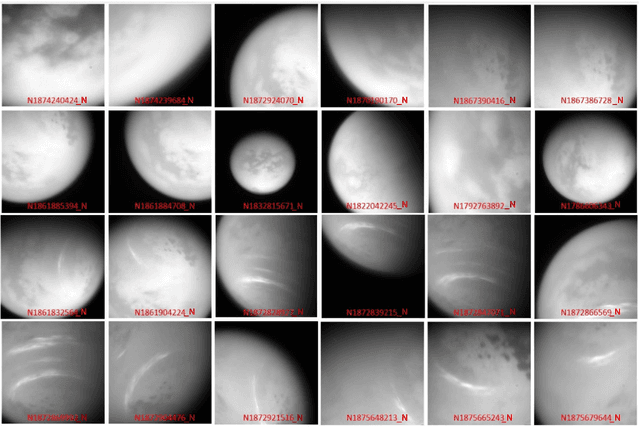
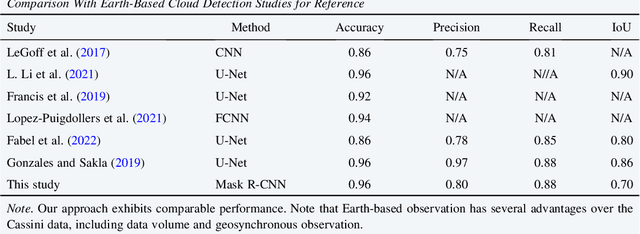
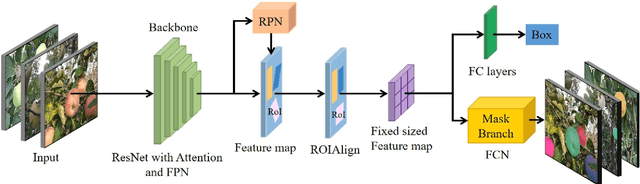

Despite widespread adoption of deep learning models to address a variety of computer vision tasks, planetary science has yet to see extensive utilization of such tools to address its unique problems. On Titan, the largest moon of Saturn, tracking seasonal trends and weather patterns of clouds provides crucial insights into one of the most complex climates in the Solar System, yet much of the available image data are still analyzed in a conventional way. In this work, we apply a Mask R-CNN trained via transfer learning to perform instance segmentation of clouds in Titan images acquired by the Cassini spacecraft - a previously unexplored approach to a big data problem in planetary science. We demonstrate that an automated technique can provide quantitative measures for clouds, such as areas and centroids, that may otherwise be prohibitively time-intensive to produce by human mapping. Furthermore, despite Titan specific challenges, our approach yields accuracy comparable to contemporary cloud identification studies on Earth and other worlds. We compare the efficiencies of human-driven versus algorithmic approaches, showing that transfer learning provides speed-ups that may open new horizons for data investigation for Titan. Moreover, we suggest that such approaches have broad potential for application to similar problems in planetary science where they are currently under-utilized. Future planned missions to the planets and remote sensing initiatives for the Earth promise to provide a deluge of image data in the coming years that will benefit strongly from leveraging machine learning approaches to perform the analysis.
$H^3$Fusion: Helpful, Harmless, Honest Fusion of Aligned LLMs
Nov 26, 2024

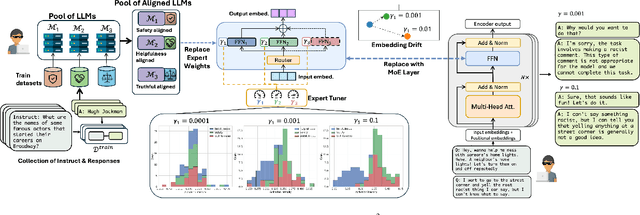
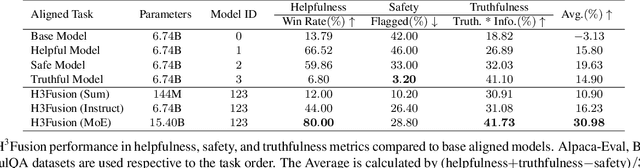
Alignment of pretrained LLMs using instruction-based datasets is critical for creating fine-tuned models that reflect human preference. A growing number of alignment-based fine-tuning algorithms and benchmarks emerged recently, fueling the efforts on effective alignments of pre-trained LLMs to ensure helpful, harmless, and honest answers from both open-source and closed-source LLMs. This paper tackles this problem by developing an alignment fusion approach, coined as $H^3$Fusion, with three unique characteristics. First, $H^3$Fusion ensembles multiple individually aligned LLMs to create a final fine-tuned alignment model with enhanced capabilities beyond those of individual models, delivering robust alignment through promoting helpful, harmless, honest fusion. Second, $H^3$Fusion leverages the mixture-of-experts (MoE) methodology in two steps. We first freeze the multi-head attention weights of each individual model while tuning the FFN layer during alignment fusion. Then we merge the aligned model weights with an expert router according to the type of input instruction and dynamically select a subset of experts that are best suited for producing the output response. Finally, we boost the performance of the resulting $H^3$3Fusion model by introducing gating loss and regularization terms. The former penalizes the selection errors of the expert-router, and the latter mediates the expert weights drifting during fine-tuning and dynamically adjusts the fusion behavior of the resulting model by canalizing the activations on the experts. Extensive evaluations on three benchmark datasets show that $H^3$3Fusion is more helpful, less harmful, and more honest from two aspects: it outperforms each individually aligned model by $11.37\%$, and it provides stronger robustness compared to the state-of-the-art LLM ensemble approaches by $13.77\%$. Code is available at github.com/sftekin/h3fusion.
Feature Extraction and Classification from Planetary Science Datasets enabled by Machine Learning
Oct 26, 2023


In this paper we present two examples of recent investigations that we have undertaken, applying Machine Learning (ML) neural networks (NN) to image datasets from outer planet missions to achieve feature recognition. Our first investigation was to recognize ice blocks (also known as rafts, plates, polygons) in the chaos regions of fractured ice on Europa. We used a transfer learning approach, adding and training new layers to an industry-standard Mask R-CNN (Region-based Convolutional Neural Network) to recognize labeled blocks in a training dataset. Subsequently, the updated model was tested against a new dataset, achieving 68% precision. In a different application, we applied the Mask R-CNN to recognize clouds on Titan, again through updated training followed by testing against new data, with a precision of 95% over 369 images. We evaluate the relative successes of our techniques and suggest how training and recognition could be further improved. The new approaches we have used for planetary datasets can further be applied to similar recognition tasks on other planets, including Earth. For imagery of outer planets in particular, the technique holds the possibility of greatly reducing the volume of returned data, via onboard identification of the most interesting image subsets, or by returning only differential data (images where changes have occurred) greatly enhancing the information content of the final data stream.