 Add to Chrome
 Add to Firefox
 Add to Edge
A Locally Tokenized Generative Model for Robust Time-Series Watermarking
Aug 20, 2026
Watermarking is a central tool for provenance in generative models, yet its application to multivariate time series remains hindered by reliability failures under post-editing attacks. We show that existing detectors, which rely on globally coupled re-encoding, suffer from bidirectional drift of the null distribution: post-editing attacks can shift the z-score of non-watermarked samples in either direction, invalidating clean-calibrated thresholds. We argue that this instability is a property of the re-encoding, and that reliable detection requires each recovered unit to depend only on a bounded temporal neighborhood. Guided by this principle, we propose L-VQVAE, a generative model in which each discrete token is produced from a short contiguous window, and LVQMark, a watermarking method over this token space that combines logit-bias injection with robust re-encoding for attack-time detection. Experiments on four benchmarks spanning finance, energy, and neuroimaging show that our approach preserves generation quality while stabilizing both detection power and false-positive behavior under post-editing attacks.

Leveraging Pathology Co-occurrence for Test-Time Adaptation in Chest X-Ray Diagnosis
Jul 04, 2026Medical imaging models often degrade when deployed at new clinical sites due to differences in imaging equipment, protocols, and patient populations. Test-time adaptation (TTA) addresses this by updating a pretrained model using only unlabeled target data, without access to source data. However, existing TTA methods were designed for single-label classification on natural image benchmarks, minimizing entropy uniformly across all samples without considering label dependencies. This overlooks a key property of multi-label medical imaging: pathologies do not occur independently but exhibit structured co-occurrence patterns. In this work, we propose Co-occurrence Weighted Adaptation (CoWA), which leverages disease co-occurrence patterns as a reliability signal for adaptation. CoWA estimates label co-occurrence structure from model predictions and downweights samples that deviate from expected patterns, enabling adaptation to rely more on consistent predictions while reducing the impact of noisy ones. We evaluate CoWA on chest X-ray benchmarks under domain shifts and demonstrate consistent improvements over established baselines.
Confidence-Aware Tool Orchestration for Robust Video Understanding
Jun 25, 2026Video reasoning language models implicitly assume that every input frame is equally reliable. This leads to what we term the Blind Trust Problem: under realistic perturbations such as motion blur, glare, or occlusion, frontier video reasoning models can suffer 15-30%p accuracy drops on real-world embodied benchmarks, while remaining unaware that their visual evidence has been degraded. To address this challenge, we propose Robust-TO, an agentic video understanding framework that explicitly integrates per-frame trustworthiness into every stage of reasoning. Robust-TO organizes heterogeneous visual perception tools under a unified evidence interface. Each tool receives a sub-query derived from the original question and a set of trustworthy frames selected by the reliability-relevance score. It returns evidence in a shared format: a concrete prediction (e.g., a bounding box, motion trajectory, recognized text, or action label), temporal grounding, and a calibrated reliability score. During reasoning, these calibrated scores guide evidence weighting in a three-tier synthesis process (high/medium/low) and define a confidence-cost GRPO reward that jointly optimizes correctness, evidence reliability, and efficiency. On two video reasoning benchmarks spanning eight tasks, Robust-TO achieves 56.4% average accuracy on clean inputs, surpassing the strongest open-source baseline by 10.6%p and outperforming Gemini-2.5-Pro (46.2%). Under five realistic corruption types, Robust-TO maintains 54.3% average accuracy, 5.8%p above the strongest open-source baseline, while exhibiting the smallest clean-to-corrupted accuracy drop among all compared methods.
Safe Few-Step Generation via Velocity Editing
Jun 22, 2026Flow matching has recently emerged as a strong paradigm for state-of-the-art text-to-image (T2I) generation, enabling high-quality generation with a small number of sampling steps. As these models are increasingly integrated into real-world applications, ensuring safe and non-sensitive content generation has become a critical requirement. However, adapting safety and concept removal methods to this new generation framework remains an open challenge. Specifically, prior methods largely rely on iterative trajectory steering across a number of denoising steps or on CLIP-centric prompt embedding manipulation. These design assumptions pose fundamental bottlenecks for safety in flow matching-based T2I generation, where limited sampling steps constrain iterative correction and modern context-aware text encoders diminish the effectiveness of embedding-level interventions. In this paper, we propose VESFlow, a training-free safety method tailored to flow matching with extremely few sampling steps. Leveraging the fact that flow matching models learn the marginal velocity, we directly edit the velocity field via a safe-conditional posterior. VESFlow steers the trajectory toward safe outputs while leaving the conditioning prompt unchanged. Building on the observation that VESFlow leaves outputs unchanged under benign prompts, we further introduce a risk score-based filtering that bypasses velocity editing to reduce computational cost while preserving benign prompt generation. Based on this filtering, we propose VESFlow+, a stronger variant of VESFlow that not only edits the velocity toward the safe direction, but also pushes it away from the unsafe direction. Experimental results show that VESFlow+ removes the target concept, reducing the attack success rate by NudeNet to 6.3% on Ring-A-Bell and 6.8% on MMA-Diffusion on the 4-step MeanFlow model, while preserving fidelity on benign prompts.
Safeguarding Privacy of Retrieval Data against Membership Inference Attacks: Is This Query Too Close to Home?
May 28, 2025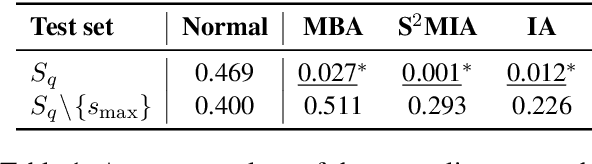
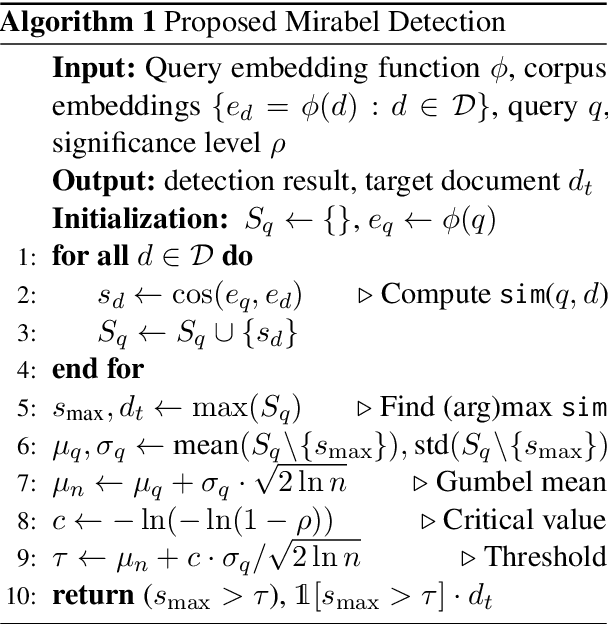
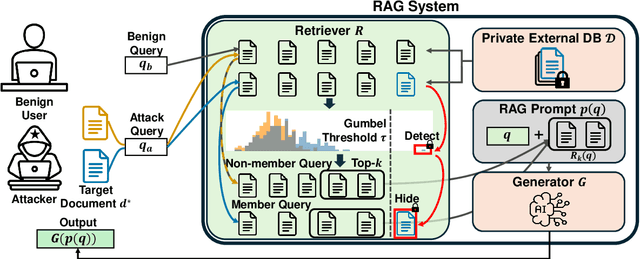
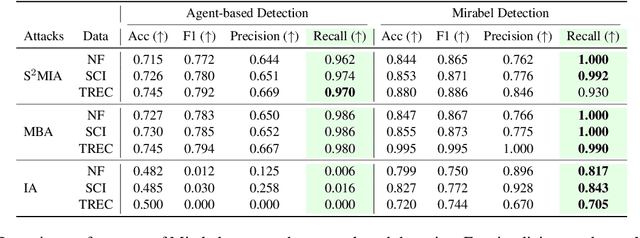
Retrieval-augmented generation (RAG) mitigates the hallucination problem in large language models (LLMs) and has proven effective for specific, personalized applications. However, passing private retrieved documents directly to LLMs introduces vulnerability to membership inference attacks (MIAs), which try to determine whether the target datum exists in the private external database or not. Based on the insight that MIA queries typically exhibit high similarity to only one target document, we introduce Mirabel, a similarity-based MIA detection framework designed for the RAG system. With the proposed Mirabel, we show that simple detect-and-hide strategies can successfully obfuscate attackers, maintain data utility, and remain system-agnostic. We experimentally prove its detection and defense against various state-of-the-art MIA methods and its adaptability to existing private RAG systems.
Leveraging Programmatically Generated Synthetic Data for Differentially Private Diffusion Training
Dec 13, 2024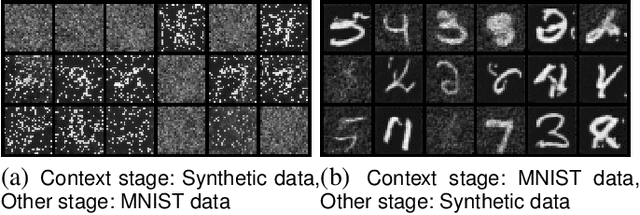
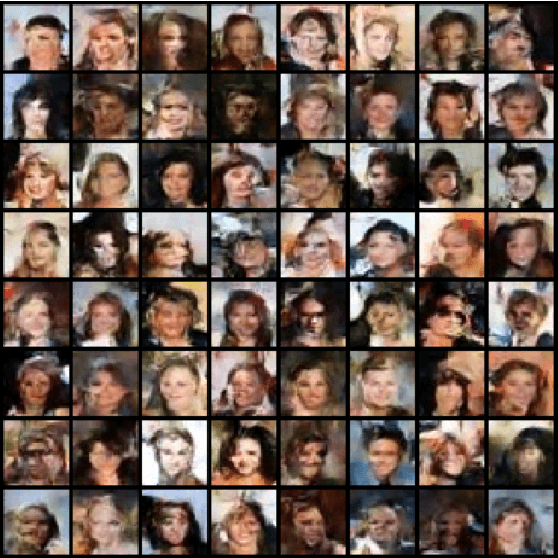
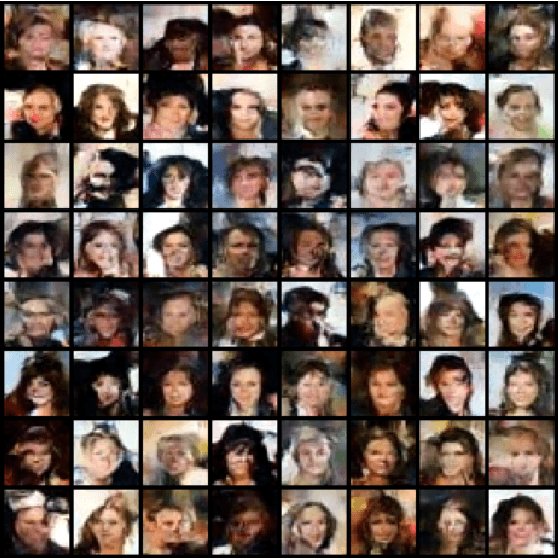
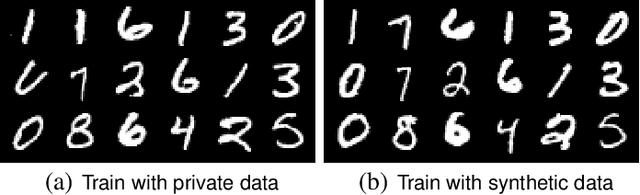
Programmatically generated synthetic data has been used in differential private training for classification to enhance performance without privacy leakage. However, as the synthetic data is generated from a random process, the distribution of real data and the synthetic data are distinguishable and difficult to transfer. Therefore, the model trained with the synthetic data generates unrealistic random images, raising challenges to adapt the synthetic data for generative models. In this work, we propose DP-SynGen, which leverages programmatically generated synthetic data in diffusion models to address this challenge. By exploiting the three stages of diffusion models(coarse, context, and cleaning) we identify stages where synthetic data can be effectively utilized. We theoretically and empirically verified that cleaning and coarse stages can be trained without private data, replacing them with synthetic data to reduce the privacy budget. The experimental results show that DP-SynGen improves the quality of generative data by mitigating the negative impact of privacy-induced noise on the generation process.
BayesNAM: Leveraging Inconsistency for Reliable Explanations
Nov 10, 2024Neural additive model (NAM) is a recently proposed explainable artificial intelligence (XAI) method that utilizes neural network-based architectures. Given the advantages of neural networks, NAMs provide intuitive explanations for their predictions with high model performance. In this paper, we analyze a critical yet overlooked phenomenon: NAMs often produce inconsistent explanations, even when using the same architecture and dataset. Traditionally, such inconsistencies have been viewed as issues to be resolved. However, we argue instead that these inconsistencies can provide valuable explanations within the given data model. Through a simple theoretical framework, we demonstrate that these inconsistencies are not mere artifacts but emerge naturally in datasets with multiple important features. To effectively leverage this information, we introduce a novel framework, Bayesian Neural Additive Model (BayesNAM), which integrates Bayesian neural networks and feature dropout, with theoretical proof demonstrating that feature dropout effectively captures model inconsistencies. Our experiments demonstrate that BayesNAM effectively reveals potential problems such as insufficient data or structural limitations of the model, providing more reliable explanations and potential remedies.
Leveraging Priors via Diffusion Bridge for Time Series Generation
Aug 13, 2024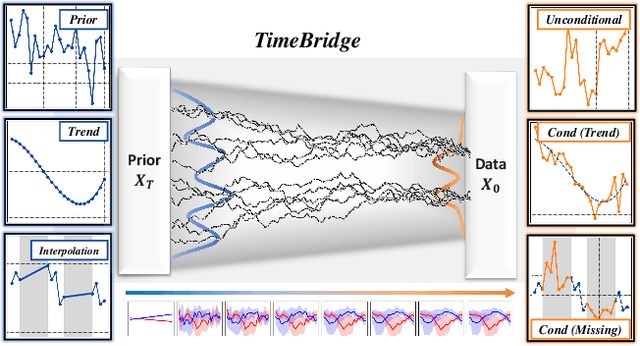
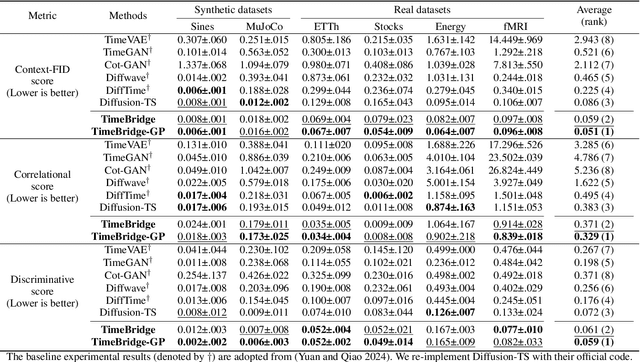
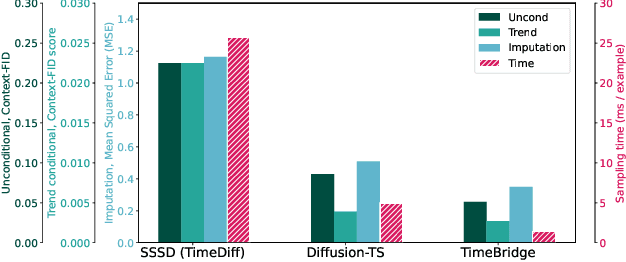
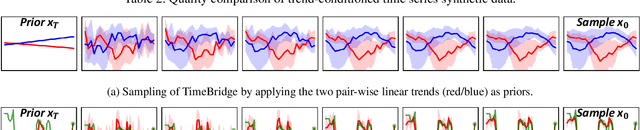
Time series generation is widely used in real-world applications such as simulation, data augmentation, and hypothesis test techniques. Recently, diffusion models have emerged as the de facto approach for time series generation, emphasizing diverse synthesis scenarios based on historical or correlated time series data streams. Since time series have unique characteristics, such as fixed time order and data scaling, standard Gaussian prior might be ill-suited for general time series generation. In this paper, we exploit the usage of diverse prior distributions for synthesis. Then, we propose TimeBridge, a framework that enables flexible synthesis by leveraging diffusion bridges to learn the transport between chosen prior and data distributions. Our model covers a wide range of scenarios in time series diffusion models, which leverages (i) data- and time-dependent priors for unconditional synthesis, and (ii) data-scale preserving synthesis with a constraint as a prior for conditional generation. Experimentally, our model achieves state-of-the-art performance in both unconditional and conditional time series generation tasks.
Fair Sampling in Diffusion Models through Switching Mechanism
Jan 09, 2024Diffusion models have shown their effectiveness in generation tasks by well-approximating the underlying probability distribution. However, diffusion models are known to suffer from an amplified inherent bias from the training data in terms of fairness. While the sampling process of diffusion models can be controlled by conditional guidance, previous works have attempted to find empirical guidance to achieve quantitative fairness. To address this limitation, we propose a fairness-aware sampling method called \textit{attribute switching} mechanism for diffusion models. Without additional training, the proposed sampling can obfuscate sensitive attributes in generated data without relying on classifiers. We mathematically prove and experimentally demonstrate the effectiveness of the proposed method on two key aspects: (i) the generation of fair data and (ii) the preservation of the utility of the generated data.
Differentially Private Sharpness-Aware Training
Jun 09, 2023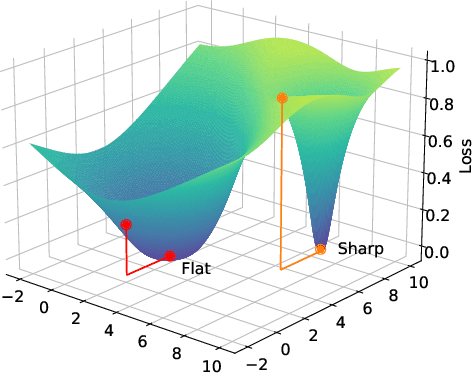
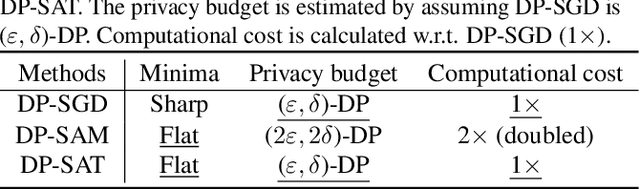
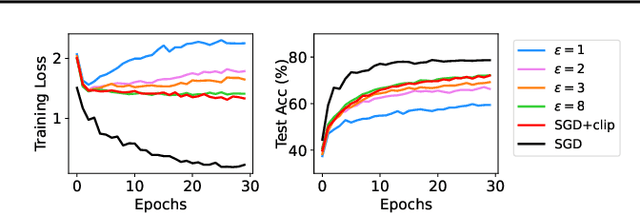
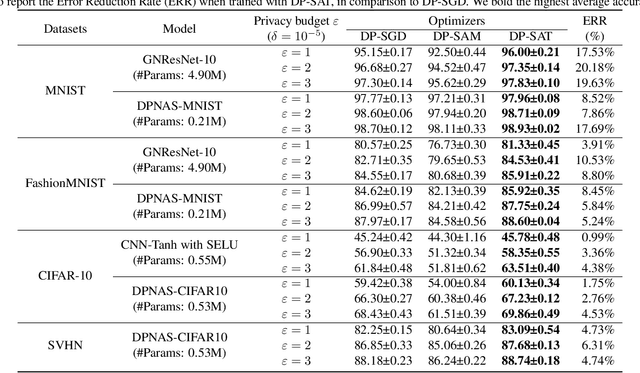
Training deep learning models with differential privacy (DP) results in a degradation of performance. The training dynamics of models with DP show a significant difference from standard training, whereas understanding the geometric properties of private learning remains largely unexplored. In this paper, we investigate sharpness, a key factor in achieving better generalization, in private learning. We show that flat minima can help reduce the negative effects of per-example gradient clipping and the addition of Gaussian noise. We then verify the effectiveness of Sharpness-Aware Minimization (SAM) for seeking flat minima in private learning. However, we also discover that SAM is detrimental to the privacy budget and computational time due to its two-step optimization. Thus, we propose a new sharpness-aware training method that mitigates the privacy-optimization trade-off. Our experimental results demonstrate that the proposed method improves the performance of deep learning models with DP from both scratch and fine-tuning. Code is available at https://github.com/jinseongP/DPSAT.