 Add to Chrome
 Add to Firefox
 Add to Edge
Learning Fair Domain Adaptation with Virtual Label Distribution
Jan 26, 2026
Unsupervised Domain Adaptation (UDA) aims to mitigate performance degradation when training and testing data are sampled from different distributions. While significant progress has been made in enhancing overall accuracy, most existing methods overlook performance disparities across categories-an issue we refer to as category fairness. Our empirical analysis reveals that UDA classifiers tend to favor certain easy categories while neglecting difficult ones. To address this, we propose Virtual Label-distribution-aware Learning (VILL), a simple yet effective framework designed to improve worst-case performance while preserving high overall accuracy. The core of VILL is an adaptive re-weighting strategy that amplifies the influence of hard-to-classify categories. Furthermore, we introduce a KL-divergence-based re-balancing strategy, which explicitly adjusts decision boundaries to enhance category fairness. Experiments on commonly used datasets demonstrate that VILL can be seamlessly integrated as a plug-and-play module into existing UDA methods, significantly improving category fairness.

Fully-integrated multipurpose microwave frequency identification system on a single chip
Feb 17, 2022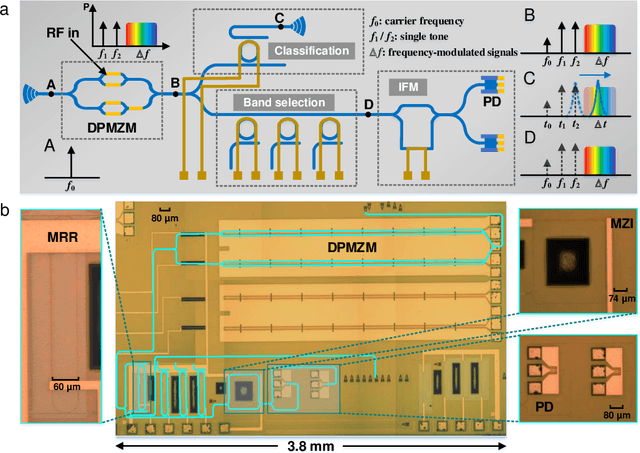
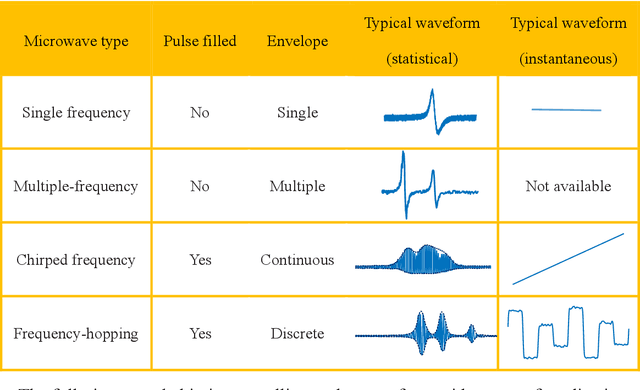
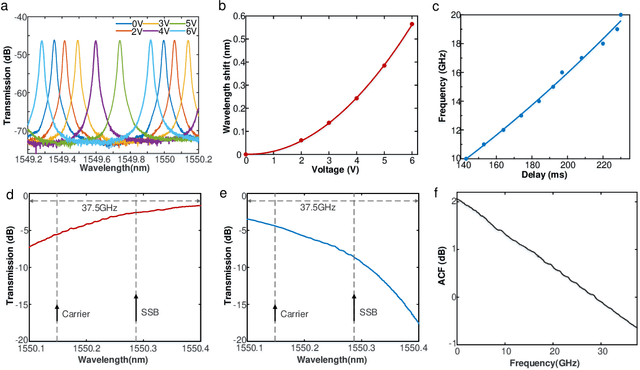
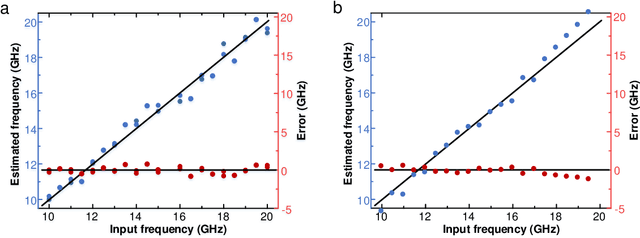
We demonstrate a fully-integrated multipurpose microwave frequency identification system on silicon-on-insulator platform. Thanks to its multipurpose features, the chip is able to identify different types of microwave signals, including single-frequency, multiple-frequency, chirped and frequency-hopping microwave signals, as well as discriminate instantaneous frequency variation among the frequency-modulated signals. This demonstration exhibits fully integrated solution and fully functional microwave frequency identification, which can meet the requirements in reduction of size, weight and power for future advanced microwave photonic processor.