 Add to Chrome
 Add to Firefox
 Add to Edge
CyberAGENTS: Structured Autonomy for Agentic Gamified Learning in Cybersecurity
Aug 08, 2026
Gamification is especially effective in learning domains requiring active problem-solving and iterative skill-building, such as cybersecurity education. Generative AI agents offer a path to delivering such experiences adaptively at scale, but introduce well-documented risks in educational settings: inconsistent behavior, hallucinated reasoning, and misalignment with pedagogical frameworks. Grounding these systems in learning science is therefore essential. We present \model, an agentic framework for gamified cybersecurity learning that enables structured autonomy through ontology-guided validation, schema-governed behavioral control, and competency-based progression. The system is organized around a competency-based progression model that structures topics by difficulty and prerequisite relationships, reflecting evidence-based principles of scaffolded instruction. The learning loop is decomposed into four specialized agents: challenge, support, evaluation, and reward, each governed by behavioral schemas that encode operational modes and progression logic, bounding agent autonomy without eliminating generative flexibility. A cybersecurity ontology validates all generated content prior to display, enforcing domain-consistent reasoning and safety constraints. We evaluate CyberAgents through classroom deployment with undergraduate students, complemented by expert evaluations from educators and domain specialists. Results indicate improved engagement, clearer feedback interpretation, and greater learner trust in AI-generated responses when behavioral schemas and ontology validation are active. Preliminary comparisons with an unconstrained configuration further support the role of structured control in stabilizing instructional behavior. These findings offer a blueprint for designing pedagogically grounded agentic gamified learning systems.

CyberBOT: Towards Reliable Cybersecurity Education via Ontology-Grounded Retrieval Augmented Generation
Apr 01, 2025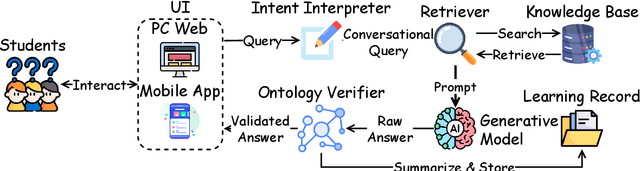
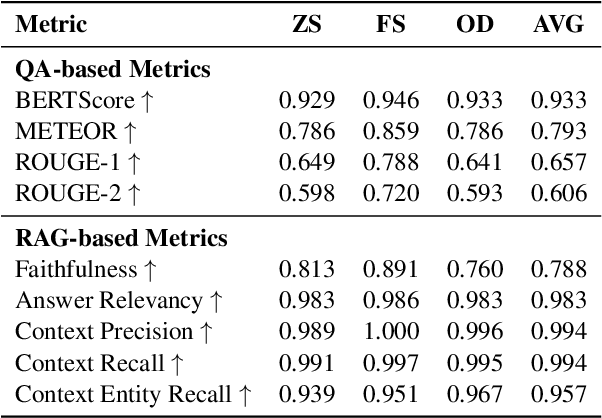
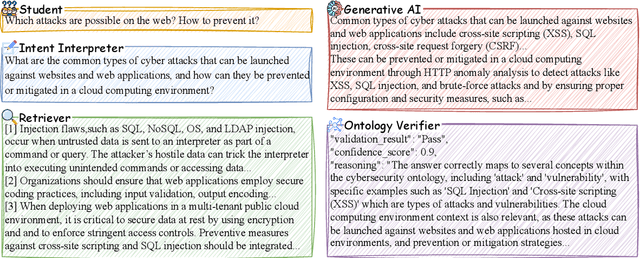
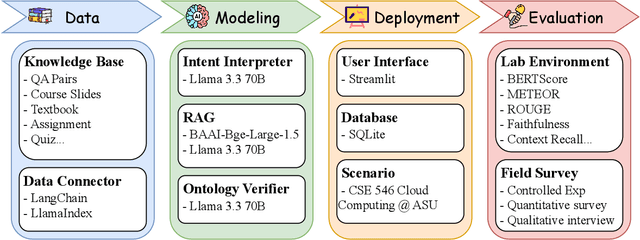
Advancements in large language models (LLMs) have enabled the development of intelligent educational tools that support inquiry-based learning across technical domains. In cybersecurity education, where accuracy and safety are paramount, systems must go beyond surface-level relevance to provide information that is both trustworthy and domain-appropriate. To address this challenge, we introduce CyberBOT, a question-answering chatbot that leverages a retrieval-augmented generation (RAG) pipeline to incorporate contextual information from course-specific materials and validate responses using a domain-specific cybersecurity ontology. The ontology serves as a structured reasoning layer that constrains and verifies LLM-generated answers, reducing the risk of misleading or unsafe guidance. CyberBOT has been deployed in a large graduate-level course at Arizona State University (ASU), where more than one hundred students actively engage with the system through a dedicated web-based platform. Computational evaluations in lab environments highlight the potential capacity of CyberBOT, and a forthcoming field study will evaluate its pedagogical impact. By integrating structured domain reasoning with modern generative capabilities, CyberBOT illustrates a promising direction for developing reliable and curriculum-aligned AI applications in specialized educational contexts.
Ontology-Aware RAG for Improved Question-Answering in Cybersecurity Education
Dec 10, 2024Integrating AI into education has the potential to transform the teaching of science and technology courses, particularly in the field of cybersecurity. AI-driven question-answering (QA) systems can actively manage uncertainty in cybersecurity problem-solving, offering interactive, inquiry-based learning experiences. Large language models (LLMs) have gained prominence in AI-driven QA systems, offering advanced language understanding and user engagement. However, they face challenges like hallucinations and limited domain-specific knowledge, which reduce their reliability in educational settings. To address these challenges, we propose CyberRAG, an ontology-aware retrieval-augmented generation (RAG) approach for developing a reliable and safe QA system in cybersecurity education. CyberRAG employs a two-step approach: first, it augments the domain-specific knowledge by retrieving validated cybersecurity documents from a knowledge base to enhance the relevance and accuracy of the response. Second, it mitigates hallucinations and misuse by integrating a knowledge graph ontology to validate the final answer. Experiments on publicly available cybersecurity datasets show that CyberRAG delivers accurate, reliable responses aligned with domain knowledge, demonstrating the potential of AI tools to enhance education.