 Add to Chrome
 Add to Firefox
 Add to Edge
AlphaContext: An Evolutionary Tree-based Psychometric Context Generator for Creativity Assessment
Apr 21, 2026
Creativity has become a core competence in the era of LLMs and human-AI collaboration, underpinning innovation in real-world problem solving. Crucially, the systematic improvement of creativity necessitates scientifically valid assessment instruments. Psychometric research recognizes context-based assessment as an effective way to measure creative thinking. However, high-quality expert-designed contexts remain scarce. Existing LLM-based generators often struggle with insufficient assessment cues, weak narrative coherence, limited stylistic diversity, and poor support for creative thinking. To address these challenges, we propose AlphaContext, an evolutionary tree-based psychometric context generator for creativity assessment. First, the HyperTree Outline Planner formalizes expert-designed outlining as a rule-guided hypertree and performs top-down hierarchical planning. The MCTS-based Context Generator fills the outline via MCTS to balance global structure and local quality. Then, the Evolutionary Context Optimizer evolves contexts with MAP-Elites by repeatedly updating niche elites to jointly improve diversity and quality. Finally, the Assessment-Guided Evolution Refiner simulates virtual participants with diverse styles and recycles weak contexts for further evolution. Experiments show that AlphaContext yields an average improvement of 8% over competitive methods across 6 quality metrics.

A novel Time-frequency Transformer and its Application in Fault Diagnosis of Rolling Bearings
Apr 19, 2021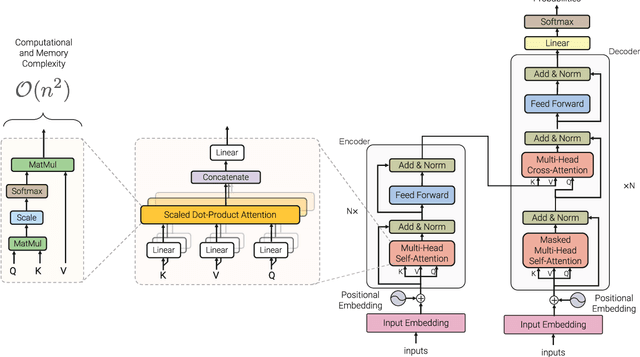
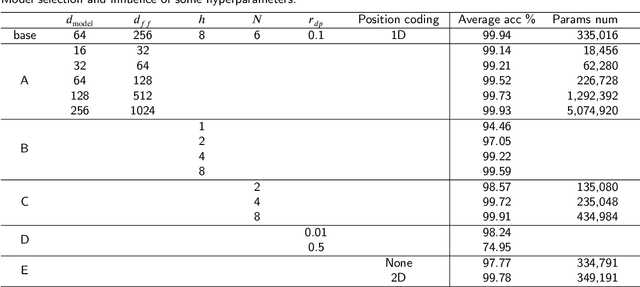
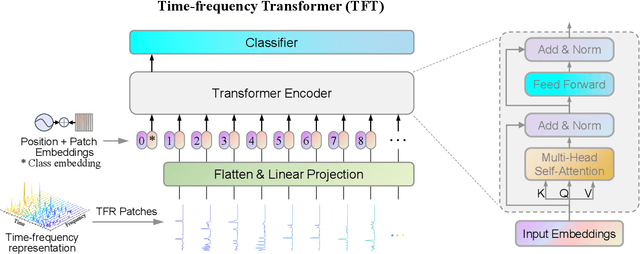
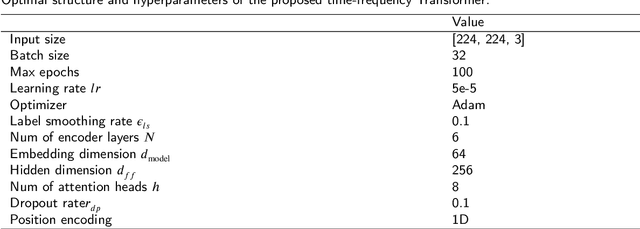
The scope of data-driven fault diagnosis models is greatly improved through deep learning (DL). However, the classical convolution and recurrent structure have their defects in computational efficiency and feature representation, while the latest Transformer architecture based on attention mechanism has not been applied in this field. To solve these problems, we propose a novel time-frequency Transformer (TFT) model inspired by the massive success of standard Transformer in sequence processing. Specially, we design a fresh tokenizer and encoder module to extract effective abstractions from the time-frequency representation (TFR) of vibration signals. On this basis, a new end-to-end fault diagnosis framework based on time-frequency Transformer is presented in this paper. Through the case studies on bearing experimental datasets, we constructed the optimal Transformer structure and verified the performance of the diagnostic method. The superiority of the proposed method is demonstrated in comparison with the benchmark model and other state-of-the-art methods.