 Add to Chrome
 Add to Firefox
 Add to Edge
Exploring the Impact of Skin Color on Skin Lesion Segmentation
Mar 31, 2026
Skin cancer, particularly melanoma, remains a major cause of morbidity and mortality, making early detection critical. AI-driven dermatology systems often rely on skin lesion segmentation as a preprocessing step to delineate the lesion from surrounding skin and support downstream analysis. While fairness concerns regarding skin tone have been widely studied for lesion classification, the influence of skin tone on the segmentation stage remains under-quantified and is frequently assessed using coarse, discrete skin tone categories. In this work, we evaluate three strong segmentation architectures (UNet, DeepLabV3 with a ResNet50 backbone, and DINOv2) on two public dermoscopic datasets (HAM10000 and ISIC2017) and introduce a continuous pigment or contrast analysis that treats pixel-wise ITA values as distributions. Using Wasserstein distances between within-image distributions for skin-only, lesion-only, and whole-image regions, we quantify lesion skin contrast and relate it to segmentation performance across multiple metrics. Within the range represented in these datasets, global skin tone metrics (Fitzpatrick grouping or mean ITA) show weak association with segmentation quality. In contrast, low lesion-skin contrast is consistently associated with larger segmentation errors in models, indicating that boundary ambiguity and low contrast are key drivers of failure. These findings suggest that fairness improvements in dermoscopic segmentation should prioritize robust handling of low-contrast lesions, and the distribution-based pigment measures provide a more informative audit signal than discrete skin-tone categories.

Mitigating Individual Skin Tone Bias in Skin Lesion Classification through Distribution-Aware Reweighting
Dec 09, 2025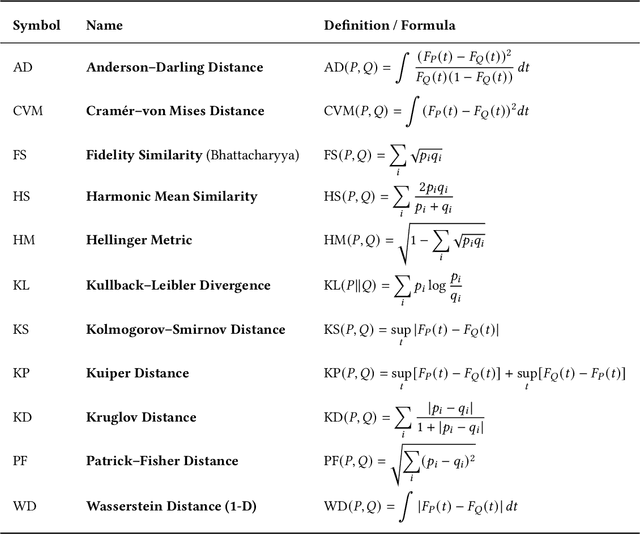
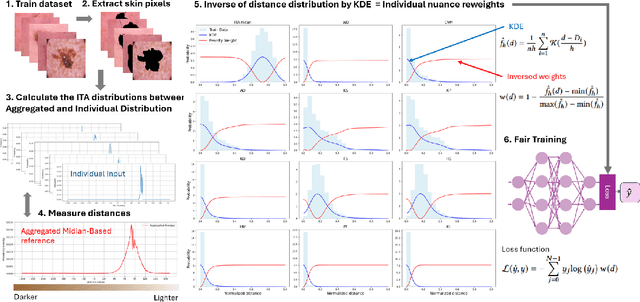
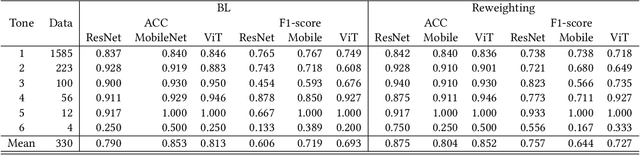
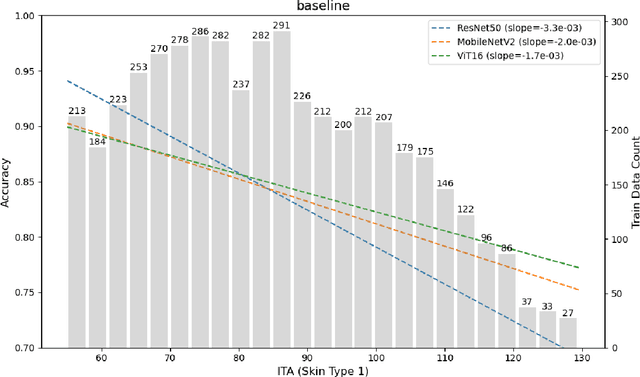
Skin color has historically been a focal point of discrimination, yet fairness research in machine learning for medical imaging often relies on coarse subgroup categories, overlooking individual-level variations. Such group-based approaches risk obscuring biases faced by outliers within subgroups. This study introduces a distribution-based framework for evaluating and mitigating individual fairness in skin lesion classification. We treat skin tone as a continuous attribute rather than a categorical label, and employ kernel density estimation (KDE) to model its distribution. We further compare twelve statistical distance metrics to quantify disparities between skin tone distributions and propose a distance-based reweighting (DRW) loss function to correct underrepresentation in minority tones. Experiments across CNN and Transformer models demonstrate: (i) the limitations of categorical reweighting in capturing individual-level disparities, and (ii) the superior performance of distribution-based reweighting, particularly with Fidelity Similarity (FS), Wasserstein Distance (WD), Hellinger Metric (HM), and Harmonic Mean Similarity (HS). These findings establish a robust methodology for advancing fairness at individual level in dermatological AI systems, and highlight broader implications for sensitive continuous attributes in medical image analysis.
Skewness-Guided Pruning of Multimodal Swin Transformers for Federated Skin Lesion Classification on Edge Devices
Dec 09, 2025In recent years, high-performance computer vision models have achieved remarkable success in medical imaging, with some skin lesion classification systems even surpassing dermatology specialists in diagnostic accuracy. However, such models are computationally intensive and large in size, making them unsuitable for deployment on edge devices. In addition, strict privacy constraints hinder centralized data management, motivating the adoption of Federated Learning (FL). To address these challenges, this study proposes a skewness-guided pruning method that selectively prunes the Multi-Head Self-Attention and Multi-Layer Perceptron layers of a multimodal Swin Transformer based on the statistical skewness of their output distributions. The proposed method was validated in a horizontal FL environment and shown to maintain performance while substantially reducing model complexity. Experiments on the compact Swin Transformer demonstrate approximately 36\% model size reduction with no loss in accuracy. These findings highlight the feasibility of achieving efficient model compression and privacy-preserving distributed learning for multimodal medical AI on edge devices.
RAGuard: A Novel Approach for in-context Safe Retrieval Augmented Generation for LLMs
Sep 03, 2025Accuracy and safety are paramount in Offshore Wind (OSW) maintenance, yet conventional Large Language Models (LLMs) often fail when confronted with highly specialised or unexpected scenarios. We introduce RAGuard, an enhanced Retrieval-Augmented Generation (RAG) framework that explicitly integrates safety-critical documents alongside technical manuals.By issuing parallel queries to two indices and allocating separate retrieval budgets for knowledge and safety, RAGuard guarantees both technical depth and safety coverage. We further develop a SafetyClamp extension that fetches a larger candidate pool, "hard-clamping" exact slot guarantees to safety. We evaluate across sparse (BM25), dense (Dense Passage Retrieval) and hybrid retrieval paradigms, measuring Technical Recall@K and Safety Recall@K. Both proposed extensions of RAG show an increase in Safety Recall@K from almost 0\% in RAG to more than 50\% in RAGuard, while maintaining Technical Recall above 60\%. These results demonstrate that RAGuard and SafetyClamp have the potential to establish a new standard for integrating safety assurance into LLM-powered decision support in critical maintenance contexts.
Safer Skin Lesion Classification with Global Class Activation Probability Map Evaluation and SafeML
Aug 28, 2025Recent advancements in skin lesion classification models have significantly improved accuracy, with some models even surpassing dermatologists' diagnostic performance. However, in medical practice, distrust in AI models remains a challenge. Beyond high accuracy, trustworthy, explainable diagnoses are essential. Existing explainability methods have reliability issues, with LIME-based methods suffering from inconsistency, while CAM-based methods failing to consider all classes. To address these limitations, we propose Global Class Activation Probabilistic Map Evaluation, a method that analyses all classes' activation probability maps probabilistically and at a pixel level. By visualizing the diagnostic process in a unified manner, it helps reduce the risk of misdiagnosis. Furthermore, the application of SafeML enhances the detection of false diagnoses and issues warnings to doctors and patients as needed, improving diagnostic reliability and ultimately patient safety. We evaluated our method using the ISIC datasets with MobileNetV2 and Vision Transformers.
Evaluating Fairness and Mitigating Bias in Machine Learning: A Novel Technique using Tensor Data and Bayesian Regression
Jun 13, 2025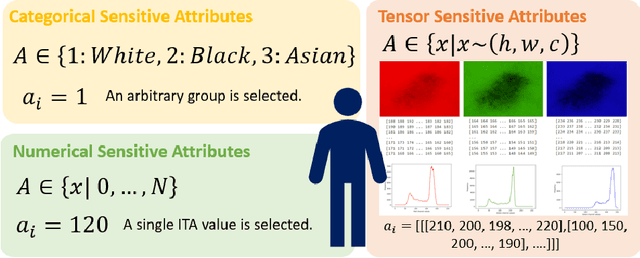
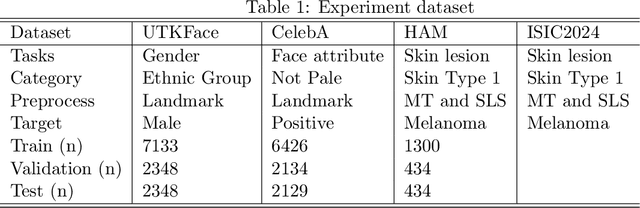
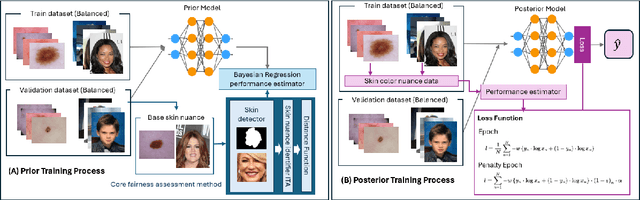
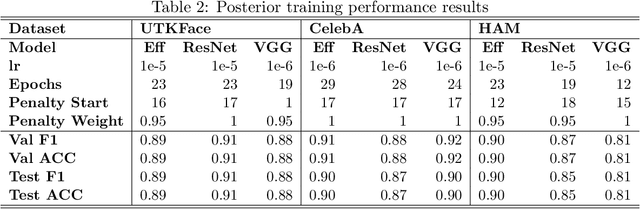
Fairness is a critical component of Trustworthy AI. In this paper, we focus on Machine Learning (ML) and the performance of model predictions when dealing with skin color. Unlike other sensitive attributes, the nature of skin color differs significantly. In computer vision, skin color is represented as tensor data rather than categorical values or single numerical points. However, much of the research on fairness across sensitive groups has focused on categorical features such as gender and race. This paper introduces a new technique for evaluating fairness in ML for image classification tasks, specifically without the use of annotation. To address the limitations of prior work, we handle tensor data, like skin color, without classifying it rigidly. Instead, we convert it into probability distributions and apply statistical distance measures. This novel approach allows us to capture fine-grained nuances in fairness both within and across what would traditionally be considered distinct groups. Additionally, we propose an innovative training method to mitigate the latent biases present in conventional skin tone categorization. This method leverages color distance estimates calculated through Bayesian regression with polynomial functions, ensuring a more nuanced and equitable treatment of skin color in ML models.
Incorporating Failure of Machine Learning in Dynamic Probabilistic Safety Assurance
Jun 07, 2025Machine Learning (ML) models are increasingly integrated into safety-critical systems, such as autonomous vehicle platooning, to enable real-time decision-making. However, their inherent imperfection introduces a new class of failure: reasoning failures often triggered by distributional shifts between operational and training data. Traditional safety assessment methods, which rely on design artefacts or code, are ill-suited for ML components that learn behaviour from data. SafeML was recently proposed to dynamically detect such shifts and assign confidence levels to the reasoning of ML-based components. Building on this, we introduce a probabilistic safety assurance framework that integrates SafeML with Bayesian Networks (BNs) to model ML failures as part of a broader causal safety analysis. This allows for dynamic safety evaluation and system adaptation under uncertainty. We demonstrate the approach on an simulated automotive platooning system with traffic sign recognition. The findings highlight the potential broader benefits of explicitly modelling ML failures in safety assessment.
SafeLLM: Domain-Specific Safety Monitoring for Large Language Models: A Case Study of Offshore Wind Maintenance
Oct 06, 2024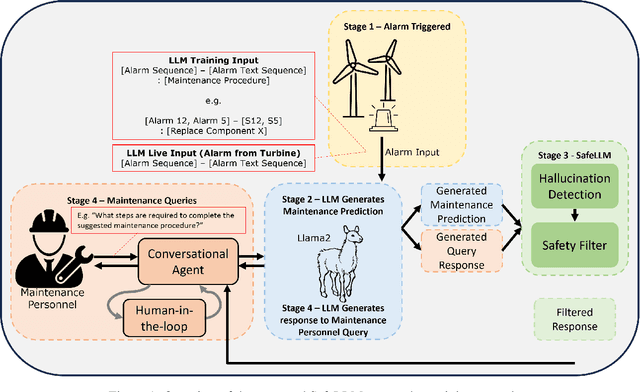

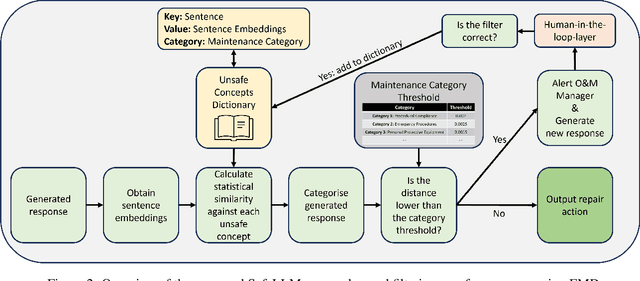
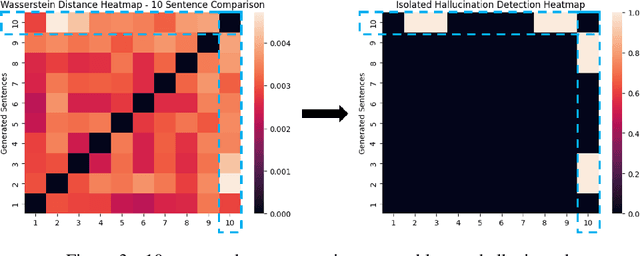
The Offshore Wind (OSW) industry is experiencing significant expansion, resulting in increased Operations \& Maintenance (O\&M) costs. Intelligent alarm systems offer the prospect of swift detection of component failures and process anomalies, enabling timely and precise interventions that could yield reductions in resource expenditure, as well as scheduled and unscheduled downtime. This paper introduces an innovative approach to tackle this challenge by capitalising on Large Language Models (LLMs). We present a specialised conversational agent that incorporates statistical techniques to calculate distances between sentences for the detection and filtering of hallucinations and unsafe output. This potentially enables improved interpretation of alarm sequences and the generation of safer repair action recommendations by the agent. Preliminary findings are presented with the approach applied to ChatGPT-4 generated test sentences. The limitation of using ChatGPT-4 and the potential for enhancement of this agent through re-training with specialised OSW datasets are discussed.
Explaining black boxes with a SMILE: Statistical Model-agnostic Interpretability with Local Explanations
Nov 13, 2023Machine learning is currently undergoing an explosion in capability, popularity, and sophistication. However, one of the major barriers to widespread acceptance of machine learning (ML) is trustworthiness: most ML models operate as black boxes, their inner workings opaque and mysterious, and it can be difficult to trust their conclusions without understanding how those conclusions are reached. Explainability is therefore a key aspect of improving trustworthiness: the ability to better understand, interpret, and anticipate the behaviour of ML models. To this end, we propose SMILE, a new method that builds on previous approaches by making use of statistical distance measures to improve explainability while remaining applicable to a wide range of input data domains.
Online Dynamic Reliability Evaluation of Wind Turbines based on Drone-assisted Monitoring
Nov 23, 2022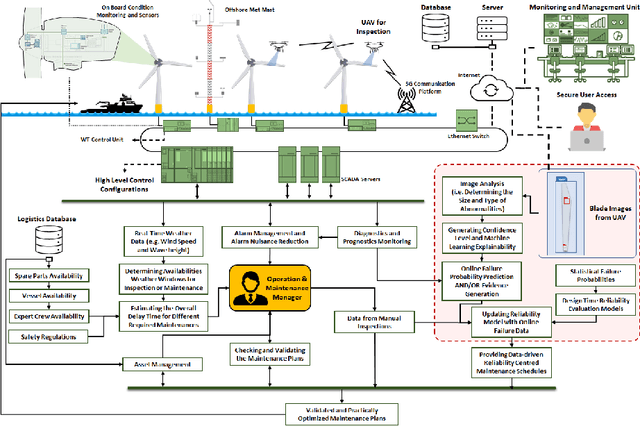
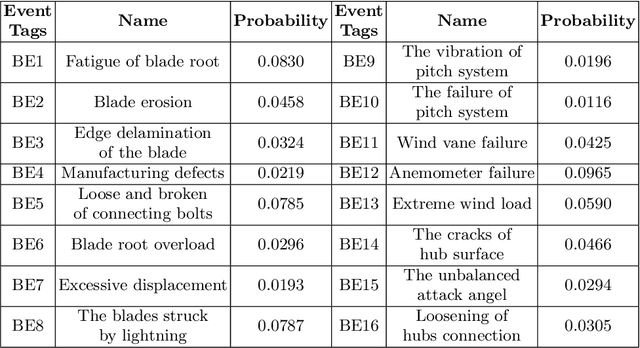
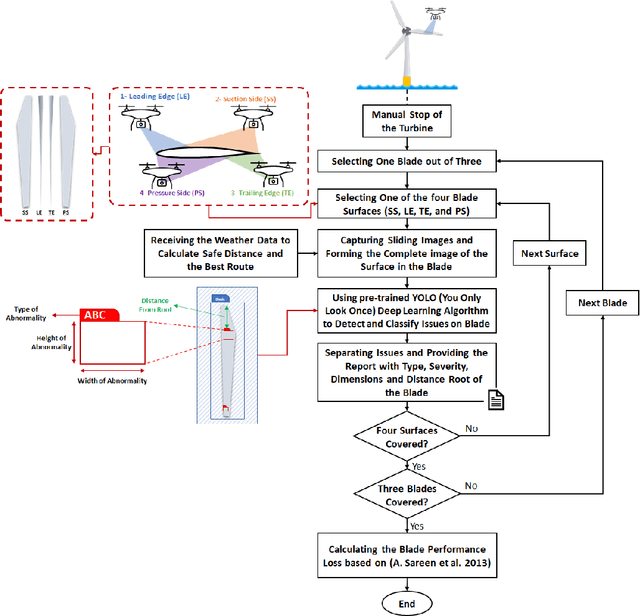
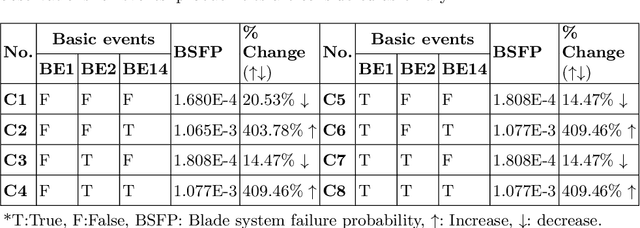
The offshore wind energy is increasingly becoming an attractive source of energy due to having lower environmental impact. Effective operation and maintenance that ensures the maximum availability of the energy generation process using offshore facilities and minimal production cost are two key factors to improve the competitiveness of this energy source over other traditional sources of energy. Condition monitoring systems are widely used for health management of offshore wind farms to have improved operation and maintenance. Reliability of the wind farms are increasingly being evaluated to aid in the maintenance process and thereby to improve the availability of the farms. However, much of the reliability analysis is performed offline based on statistical data. In this article, we propose a drone-assisted monitoring based method for online reliability evaluation of wind turbines. A blade system of a wind turbine is used as an illustrative example to demonstrate the proposed approach.