 Add to Chrome
 Add to Firefox
 Add to Edge
Human-Centered Explainable AI for TinyML Edge Devices: A Pareto-Based Selection Framework with LLM-Guided Design
Aug 07, 2026
Edge Artificial Intelligence (Edge AI) enables the deployment of AI models directly on local edge devices, while such deployments are subject to strict resource constraints, particularly in clinical applications requiring local and timely inference. In such contexts, explainable artificial intelligence (XAI) can serve as a human-AI interface intended to support healthcare professionals' and patients' understanding of model predictions and informed decision-making. To fulfill this role, XAI method selection for TinyML deployments can be formulated as a human-centered multi-objective design problem that jointly considers qualitative stakeholder preferences, explanation quality, and proxy-based deployment cost. We propose a framework that integrates a large language model (LLM)-guided design interface that maps qualitative stakeholder preferences to candidate XAI methods, followed by deterministic feasibility filtering and Pareto-based optimization. The framework exposes trade-offs among explanation fidelity, stability, and proxy-based deployment cost while characterizing their implications for explanation quality and estimated deployment feasibility. A proof-of-concept evaluation on a skin lesion classification task illustrates how the framework systematically compares candidate XAI methods and identifies Pareto-efficient trade-offs. The present evaluation covers the computational selection stages, while physical MCU deployment and empirical human-expert validation remain outside the scope of this study.

Data Safety: Synthetic Data Quality Analysis Using CIFAKE Dataset
Jul 13, 2026Recently, the societal implementation of high-performance image classification models has expanded rapidly. While these models require vast amounts of training data to improve performance, securing sufficient real images is often impractical. As a means to compensate for this shortage, the use of synthetic data is becoming widespread. However, synthetic images are not necessarily equivalent to real images for training purposes. This study systematically analyzes the differences between two types of synthetic images created by different generation methods and real images from three perspectives: high-dimensional feature space, low-level statistics in color space, and the model training process. Furthermore, it experimentally verifies how synthetic data should be utilized by considering realistic data mixing scenarios. This enables the proposal of an evaluation and application strategy for performing preliminary assessments on synthetic images of unknown quality and safely incorporating them into training. This research aims to contribute to enhancing the reliability and safety of image classification models utilizing synthetic images.
Exploring the Impact of Skin Color on Skin Lesion Segmentation
Mar 31, 2026Skin cancer, particularly melanoma, remains a major cause of morbidity and mortality, making early detection critical. AI-driven dermatology systems often rely on skin lesion segmentation as a preprocessing step to delineate the lesion from surrounding skin and support downstream analysis. While fairness concerns regarding skin tone have been widely studied for lesion classification, the influence of skin tone on the segmentation stage remains under-quantified and is frequently assessed using coarse, discrete skin tone categories. In this work, we evaluate three strong segmentation architectures (UNet, DeepLabV3 with a ResNet50 backbone, and DINOv2) on two public dermoscopic datasets (HAM10000 and ISIC2017) and introduce a continuous pigment or contrast analysis that treats pixel-wise ITA values as distributions. Using Wasserstein distances between within-image distributions for skin-only, lesion-only, and whole-image regions, we quantify lesion skin contrast and relate it to segmentation performance across multiple metrics. Within the range represented in these datasets, global skin tone metrics (Fitzpatrick grouping or mean ITA) show weak association with segmentation quality. In contrast, low lesion-skin contrast is consistently associated with larger segmentation errors in models, indicating that boundary ambiguity and low contrast are key drivers of failure. These findings suggest that fairness improvements in dermoscopic segmentation should prioritize robust handling of low-contrast lesions, and the distribution-based pigment measures provide a more informative audit signal than discrete skin-tone categories.
EcoFair: Trustworthy and Energy-Aware Routing for Privacy-Preserving Vertically Partitioned Medical Inference
Mar 27, 2026Privacy-preserving medical inference must balance data locality, diagnostic reliability, and deployment efficiency. This paper presents EcoFair, a simulated vertically partitioned inference framework for dermatological diagnosis in which raw image and tabular data remain local and only modality-specific embeddings are transmitted for server-side multimodal fusion. EcoFair introduces a lightweight-first routing mechanism that selectively activates a heavier image encoder when local uncertainty or metadata-derived clinical risk indicates that additional computation is warranted. The routing decision combines predictive uncertainty, a safe--danger probability gap, and a tabular neurosymbolic risk score derived from patient age and lesion localisation. Experiments on three dermatology benchmarks show that EcoFair can substantially reduce edge-side inference energy in representative model pairings while remaining competitive in classification performance. The results further indicate that selective routing can improve subgroup-sensitive malignant-case behaviour in representative settings without modifying the global training objective. These findings position EcoFair as a practical framework for privacy-preserving and energy-aware medical inference under edge deployment constraints.
HybridVFL: Disentangled Feature Learning for Edge-Enabled Vertical Federated Multimodal Classification
Dec 11, 2025Vertical Federated Learning (VFL) offers a privacy-preserving paradigm for Edge AI scenarios like mobile health diagnostics, where sensitive multimodal data reside on distributed, resource-constrained devices. Yet, standard VFL systems often suffer performance limitations due to simplistic feature fusion. This paper introduces HybridVFL, a novel framework designed to overcome this bottleneck by employing client-side feature disentanglement paired with a server-side cross-modal transformer for context-aware fusion. Through systematic evaluation on the multimodal HAM10000 skin lesion dataset, we demonstrate that HybridVFL significantly outperforms standard federated baselines, validating the criticality of advanced fusion mechanisms in robust, privacy-preserving systems.
Skewness-Guided Pruning of Multimodal Swin Transformers for Federated Skin Lesion Classification on Edge Devices
Dec 09, 2025In recent years, high-performance computer vision models have achieved remarkable success in medical imaging, with some skin lesion classification systems even surpassing dermatology specialists in diagnostic accuracy. However, such models are computationally intensive and large in size, making them unsuitable for deployment on edge devices. In addition, strict privacy constraints hinder centralized data management, motivating the adoption of Federated Learning (FL). To address these challenges, this study proposes a skewness-guided pruning method that selectively prunes the Multi-Head Self-Attention and Multi-Layer Perceptron layers of a multimodal Swin Transformer based on the statistical skewness of their output distributions. The proposed method was validated in a horizontal FL environment and shown to maintain performance while substantially reducing model complexity. Experiments on the compact Swin Transformer demonstrate approximately 36\% model size reduction with no loss in accuracy. These findings highlight the feasibility of achieving efficient model compression and privacy-preserving distributed learning for multimodal medical AI on edge devices.
Mitigating Individual Skin Tone Bias in Skin Lesion Classification through Distribution-Aware Reweighting
Dec 09, 2025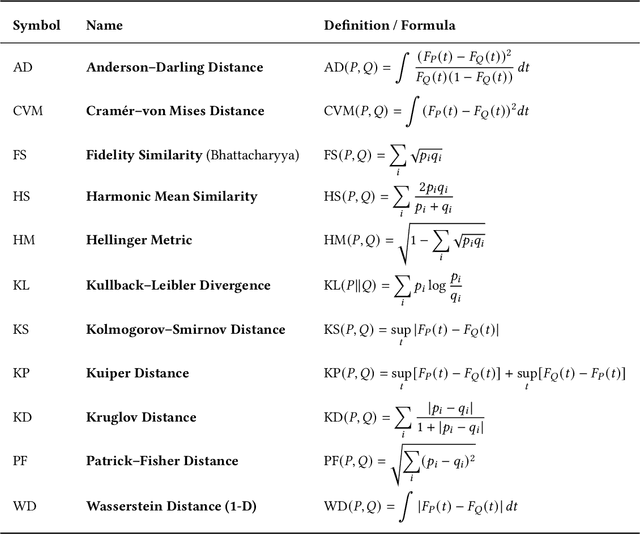
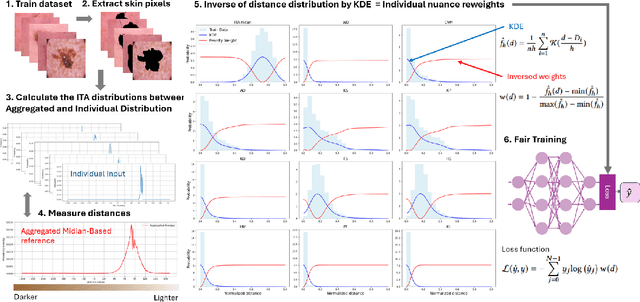
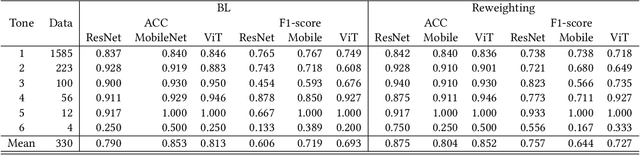
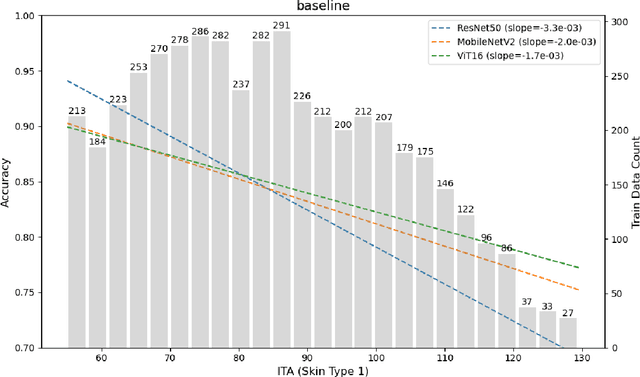
Skin color has historically been a focal point of discrimination, yet fairness research in machine learning for medical imaging often relies on coarse subgroup categories, overlooking individual-level variations. Such group-based approaches risk obscuring biases faced by outliers within subgroups. This study introduces a distribution-based framework for evaluating and mitigating individual fairness in skin lesion classification. We treat skin tone as a continuous attribute rather than a categorical label, and employ kernel density estimation (KDE) to model its distribution. We further compare twelve statistical distance metrics to quantify disparities between skin tone distributions and propose a distance-based reweighting (DRW) loss function to correct underrepresentation in minority tones. Experiments across CNN and Transformer models demonstrate: (i) the limitations of categorical reweighting in capturing individual-level disparities, and (ii) the superior performance of distribution-based reweighting, particularly with Fidelity Similarity (FS), Wasserstein Distance (WD), Hellinger Metric (HM), and Harmonic Mean Similarity (HS). These findings establish a robust methodology for advancing fairness at individual level in dermatological AI systems, and highlight broader implications for sensitive continuous attributes in medical image analysis.
Safer Skin Lesion Classification with Global Class Activation Probability Map Evaluation and SafeML
Aug 28, 2025Recent advancements in skin lesion classification models have significantly improved accuracy, with some models even surpassing dermatologists' diagnostic performance. However, in medical practice, distrust in AI models remains a challenge. Beyond high accuracy, trustworthy, explainable diagnoses are essential. Existing explainability methods have reliability issues, with LIME-based methods suffering from inconsistency, while CAM-based methods failing to consider all classes. To address these limitations, we propose Global Class Activation Probabilistic Map Evaluation, a method that analyses all classes' activation probability maps probabilistically and at a pixel level. By visualizing the diagnostic process in a unified manner, it helps reduce the risk of misdiagnosis. Furthermore, the application of SafeML enhances the detection of false diagnoses and issues warnings to doctors and patients as needed, improving diagnostic reliability and ultimately patient safety. We evaluated our method using the ISIC datasets with MobileNetV2 and Vision Transformers.
Evaluating Fairness and Mitigating Bias in Machine Learning: A Novel Technique using Tensor Data and Bayesian Regression
Jun 13, 2025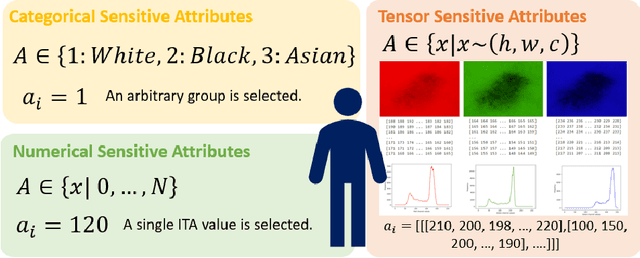
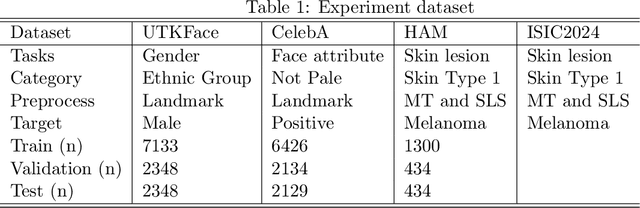
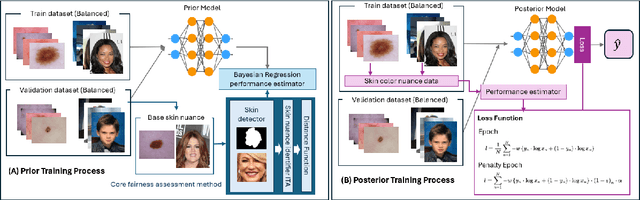
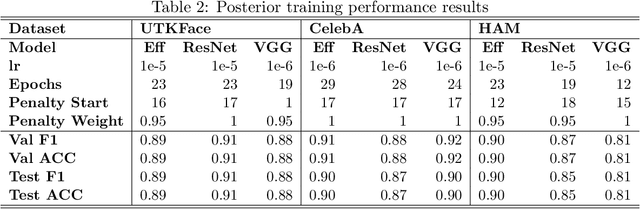
Fairness is a critical component of Trustworthy AI. In this paper, we focus on Machine Learning (ML) and the performance of model predictions when dealing with skin color. Unlike other sensitive attributes, the nature of skin color differs significantly. In computer vision, skin color is represented as tensor data rather than categorical values or single numerical points. However, much of the research on fairness across sensitive groups has focused on categorical features such as gender and race. This paper introduces a new technique for evaluating fairness in ML for image classification tasks, specifically without the use of annotation. To address the limitations of prior work, we handle tensor data, like skin color, without classifying it rigidly. Instead, we convert it into probability distributions and apply statistical distance measures. This novel approach allows us to capture fine-grained nuances in fairness both within and across what would traditionally be considered distinct groups. Additionally, we propose an innovative training method to mitigate the latent biases present in conventional skin tone categorization. This method leverages color distance estimates calculated through Bayesian regression with polynomial functions, ensuring a more nuanced and equitable treatment of skin color in ML models.