 Add to Chrome
 Add to Firefox
 Add to Edge
Implicit Maximum Likelihood Estimation for Real-time Generative Model Predictive Control
Mar 14, 2026
Diffusion-based models have recently shown strong performance in trajectory planning, as they are capable of capturing diverse, multimodal distributions of complex behaviors. A key limitation of these models is their slow inference speed, which results from the iterative denoising process. This makes them less suitable for real-time applications such as closed-loop model predictive control (MPC), where plans must be generated quickly and adapted continuously to a changing environment. In this paper, we investigate Implicit Maximum Likelihood Estimation (IMLE) as an alternative generative modeling approach for planning. IMLE offers strong mode coverage while enabling inference that is two orders of magnitude faster, making it particularly well suited for real-time MPC tasks. Our results demonstrate that IMLE achieves competitive performance on standard offline reinforcement learning benchmarks compared to the standard diffusion-based planner, while substantially improving planning speed in both open-loop and closed-loop settings. We further validate IMLE in a closed-loop human navigation scenario, operating in real-time, demonstrating how it enables rapid and adaptive plan generation in dynamic environments.

HJRNO: Hamilton-Jacobi Reachability with Neural Operators
Apr 28, 2025Ensuring the safety of autonomous systems under uncertainty is a critical challenge. Hamilton-Jacobi reachability (HJR) analysis is a widely used method for guaranteeing safety under worst-case disturbances. Traditional HJR methods provide safety guarantees but suffer from the curse of dimensionality, limiting their scalability to high-dimensional systems or varying environmental conditions. In this work, we propose HJRNO, a neural operator-based framework for solving backward reachable tubes (BRTs) efficiently and accurately. By leveraging the Fourier Neural Operator (FNO), HJRNO learns a mapping between value functions, enabling fast inference with strong generalization across different obstacle shapes, system configurations, and hyperparameters. We demonstrate that HJRNO achieves low error on random obstacle scenarios and generalizes effectively across varying system dynamics. These results suggest that HJRNO offers a promising foundation model approach for scalable, real-time safety analysis in autonomous systems.
Unifying Model Predictive Path Integral Control, Reinforcement Learning, and Diffusion Models for Optimal Control and Planning
Feb 27, 2025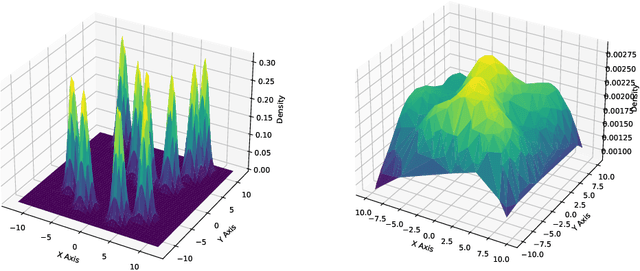
Model Predictive Path Integral (MPPI) control, Reinforcement Learning (RL), and Diffusion Models have each demonstrated strong performance in trajectory optimization, decision-making, and motion planning. However, these approaches have traditionally been treated as distinct methodologies with separate optimization frameworks. In this work, we establish a unified perspective that connects MPPI, RL, and Diffusion Models through gradient-based optimization on the Gibbs measure. We first show that MPPI can be interpreted as performing gradient ascent on a smoothed energy function. We then demonstrate that Policy Gradient methods reduce to MPPI when treating policy parameters as control variables under a fixed initial state. Additionally, we establish that the reverse sampling process in diffusion models follows the same update rule as MPPI.
ST-GIN: An Uncertainty Quantification Approach in Traffic Data Imputation with Spatio-temporal Graph Attention and Bidirectional Recurrent United Neural Networks
May 19, 2023Traffic data serves as a fundamental component in both research and applications within intelligent transportation systems. However, real-world transportation data, collected from loop detectors or similar sources, often contain missing values (MVs), which can adversely impact associated applications and research. Instead of discarding this incomplete data, researchers have sought to recover these missing values through numerical statistics, tensor decomposition, and deep learning techniques. In this paper, we propose an innovative deep-learning approach for imputing missing data. A graph attention architecture is employed to capture the spatial correlations present in traffic data, while a bidirectional neural network is utilized to learn temporal information. Experimental results indicate that our proposed method outperforms all other benchmark techniques, thus demonstrating its effectiveness.