 Add to Chrome
 Add to Firefox
 Add to Edge
Beyond Retrieval: Analytic Memory for Multimodal Agents
Jul 31, 2026
Long-term multimodal memory must support not only retrieving relevant information but also computing over observations accumulated across interactions. Existing systems largely emphasize \emph{retrieval memory}, organizing interaction histories through summaries and indexes to return query-relevant information at multiple granularities, from high-level abstractions to underlying records. In this paper, we formulate \emph{analytic memory} as a complementary abstraction that organizes recurring multimodal observations into queryable structures supporting filtering, aggregation, ranking, and temporal comparison. We present AdaMM, a framework that jointly supports retrieval and analytic memory. Rather than relying on application-defined schemas, AdaMM extracts provenance-linked attribute-value observations from dialogue, images, and contextual metadata, discovers recurring field structures, and materializes them for analytical access. At inference time, a memory-aware planner decomposes queries into retrieval and analytic operations and routes each operation to the appropriate tools. Experiments on two long-term multimodal memory benchmarks, MemEye and MemGallery, show that AdaMM improves performance by up to 11.3\% and 7.3\%, respectively.

Color image restoration based on nonlocal saturation-value similarity
Mar 19, 2026In this paper, we propose and develop a novel nonlocal variational technique based on saturation-value similarity for color image restoration. In traditional nonlocal methods, image patches are extracted from red, green and blue channels of a color image directly, and the color information can not be described finely because the patch similarity is mainly based on the grayscale value of independent channel. The main aim of this paper is to propose and develop a novel nonlocal regularization method by considering the similarity of image patches in saturation-value channel of a color image. In particular, we first establish saturation-value similarity based nonlocal total variation by incorporating saturation-value similarity of color image patches into the proposed nonlocal gradients, which can describe the saturation and value similarity of two adjacent color image patches. The proposed nonlocal variational models are then formulated based on saturation-value similarity based nonlocal total variation. Moreover, we design an effective and efficient algorithm to solve the proposed optimization problem numerically by employing bregmanized operator splitting method, and we also study the convergence of the proposed algorithms. Numerical examples are presented to demonstrate that the performance of the proposed models is better than that of other testing methods in terms of visual quality and some quantitative metrics including peak signal-to-noise ratio (PSNR), structural similarity index (SSIM), quaternion structural similarity index (QSSIM) and S-CIELAB color error.
A Challenge on Semi-Supervised and Reinforced Task-Oriented Dialog Systems
Jul 06, 2022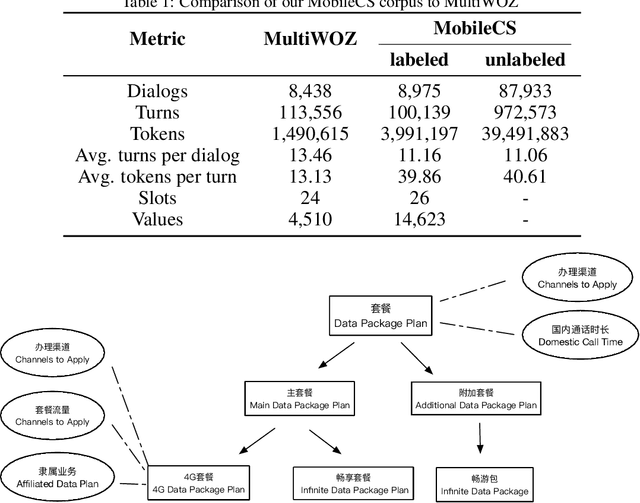

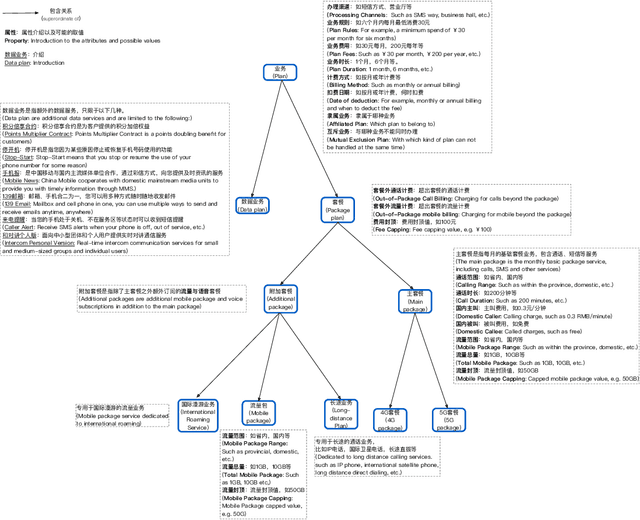

A challenge on Semi-Supervised and Reinforced Task-Oriented Dialog Systems, Co-located with EMNLP2022 SereTOD Workshop.
A Public Ground-Truth Dataset for Handwritten Circuit Diagram Images
Jul 21, 2021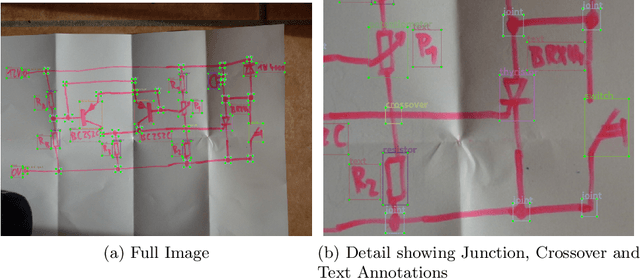
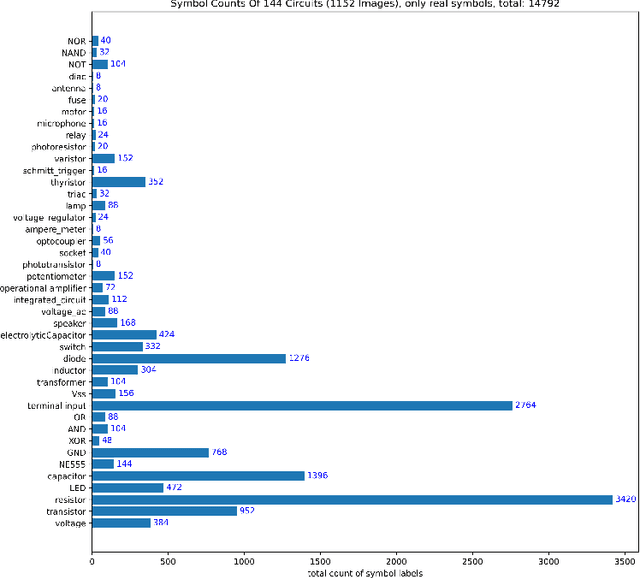
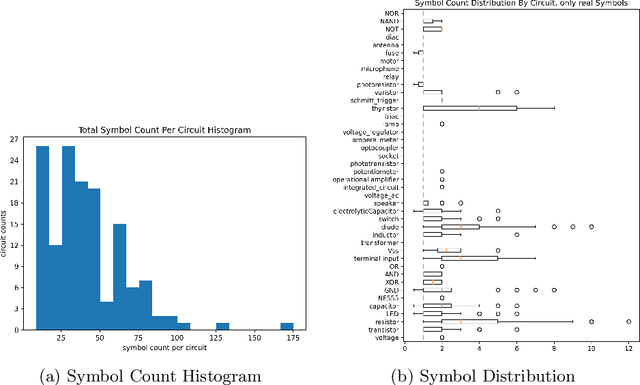
The development of digitization methods for line drawings (especially in the area of electrical engineering) relies on the availability of publicly available training and evaluation data. This paper presents such an image set along with annotations. The dataset consists of 1152 images of 144 circuits by 12 drafters and 48 563 annotations. Each of these images depicts an electrical circuit diagram, taken by consumer grade cameras under varying lighting conditions and perspectives. A variety of different pencil types and surface materials has been used. For each image, all individual electrical components are annotated with bounding boxes and one out of 45 class labels. In order to simplify a graph extraction process, different helper symbols like junction points and crossovers are introduced, while texts are annotated as well. The geometric and taxonomic problems arising from this task as well as the classes themselves and statistics of their appearances are stated. The performance of a standard Faster RCNN on the dataset is provided as an object detection baseline.