 Add to Chrome
 Add to Firefox
 Add to Edge
On the (In-)Security of the Shuffling Defense in the Transformer Secure Inference
May 06, 2026
For Transformer models, cryptographically secure inference ensures that the client learns only the final output, while the server learns nothing about the client's input. However, securely computing nonlinear layers remains a major efficiency bottleneck due to the substantial communication rounds and data transmission required. To address this issue, prior works reveal intermediate activations to the client, allowing nonlinear operations to be computed in plaintext. Although this approach significantly improves efficiency, exposing activations enables adversaries to extract model weights. To mitigate this risk, existing works employ a shuffling defense that reveals only randomly permuted activations to the client. In this work, we show that the shuffling defense is not as robust as previously claimed. We propose an attack that aligns differently shuffled activations to a common permutation and subsequently exploits them to extract model weights. Experiments on Pythia-70m and GPT-2 demonstrate that the proposed attack can align shuffled activations with mean squared errors ranging from $10^{-9}$ to $10^{-6}$. With a query cost of approximately \$1, the adversary can recover model weights with L1-norm differences ranging from $10^{-4}$ to $10^{-2}$ compared to the oracle weights.

Multi-Task Learning for Fatigue Detection and Face Recognition of Drivers via Tree-Style Space-Channel Attention Fusion Network
May 13, 2024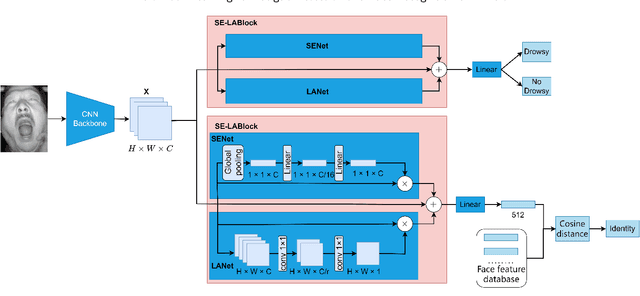
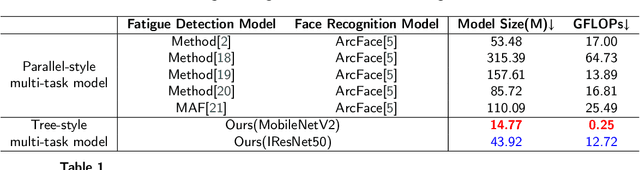
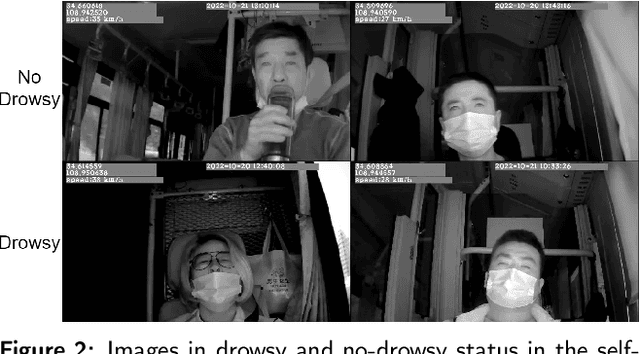
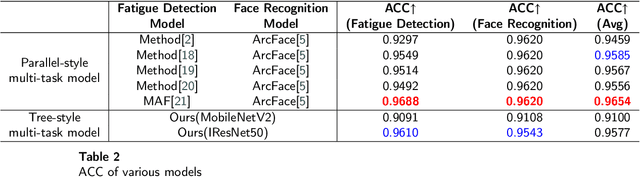
In driving scenarios, automobile active safety systems are increasingly incorporating deep learning technology. These systems typically need to handle multiple tasks simultaneously, such as detecting fatigue driving and recognizing the driver's identity. However, the traditional parallel-style approach of combining multiple single-task models tends to waste resources when dealing with similar tasks. Therefore, we propose a novel tree-style multi-task modeling approach for multi-task learning, which rooted at a shared backbone, more dedicated separate module branches are appended as the model pipeline goes deeper. Following the tree-style approach, we propose a multi-task learning model for simultaneously performing driver fatigue detection and face recognition for identifying a driver. This model shares a common feature extraction backbone module, with further separated feature extraction and classification module branches. The dedicated branches exploit and combine spatial and channel attention mechanisms to generate space-channel fused-attention enhanced features, leading to improved detection performance. As only single-task datasets are available, we introduce techniques including alternating updation and gradient accumulation for training our multi-task model using only the single-task datasets. The effectiveness of our tree-style multi-task learning model is verified through extensive validations.
Support-Query Prototype Fusion Network for Few-shot Medical Image Segmentation
May 13, 2024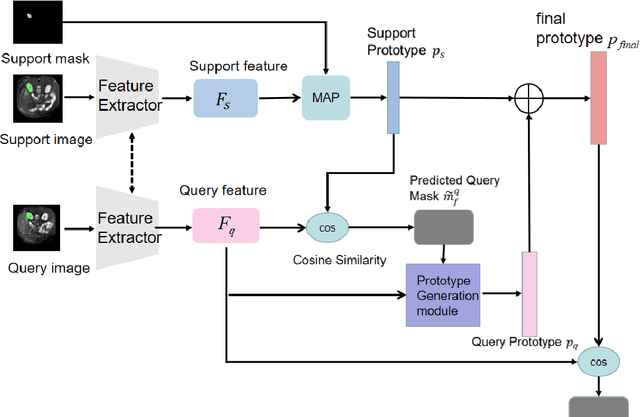
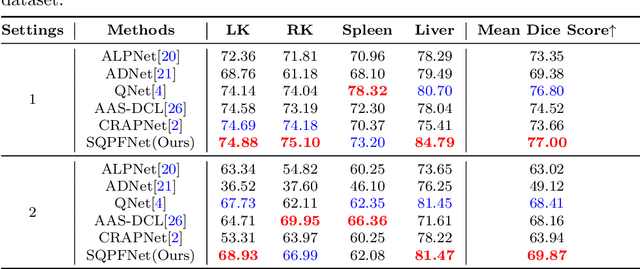
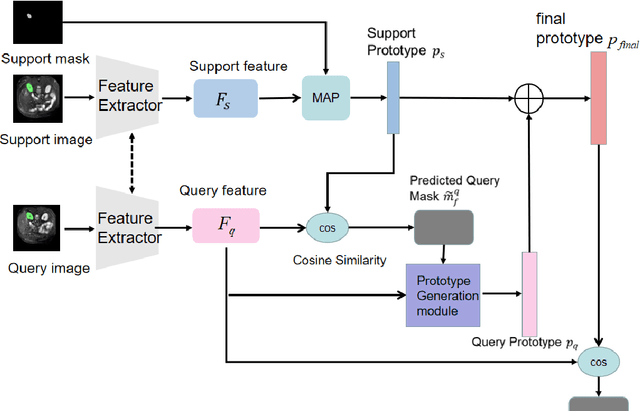
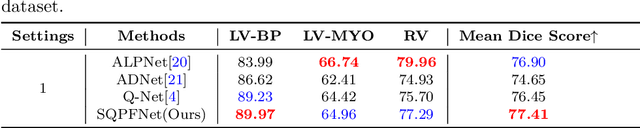
In recent years, deep learning based on Convolutional Neural Networks (CNNs) has achieved remarkable success in many applications. However, their heavy reliance on extensive labeled data and limited generalization ability to unseen classes pose challenges to their suitability for medical image processing tasks. Few-shot learning, which utilizes a small amount of labeled data to generalize to unseen classes, has emerged as a critical research area, attracting substantial attention. Currently, most studies employ a prototype-based approach, in which prototypical networks are used to construct prototypes from the support set, guiding the processing of the query set to obtain the final results. While effective, this approach heavily relies on the support set while neglecting the query set, resulting in notable disparities within the model classes. To mitigate this drawback, we propose a novel Support-Query Prototype Fusion Network (SQPFNet). SQPFNet initially generates several support prototypes for the foreground areas of the support images, thus producing a coarse segmentation mask. Subsequently, a query prototype is constructed based on the coarse segmentation mask, additionally exploiting pattern information in the query set. Thus, SQPFNet constructs high-quality support-query fused prototypes, upon which the query image is segmented to obtain the final refined query mask. Evaluation results on two public datasets, SABS and CMR, show that SQPFNet achieves state-of-the-art performance.