 Add to Chrome
 Add to Firefox
 Add to Edge
TokenSeek: Memory Efficient Fine Tuning via Instance-Aware Token Ditching
Jan 27, 2026
Fine tuning has been regarded as a de facto approach for adapting large language models (LLMs) to downstream tasks, but the high training memory consumption inherited from LLMs makes this process inefficient. Among existing memory efficient approaches, activation-related optimization has proven particularly effective, as activations consistently dominate overall memory consumption. Although prior arts offer various activation optimization strategies, their data-agnostic nature ultimately results in ineffective and unstable fine tuning. In this paper, we propose TokenSeek, a universal plugin solution for various transformer-based models through instance-aware token seeking and ditching, achieving significant fine-tuning memory savings (e.g., requiring only 14.8% of the memory on Llama3.2 1B) with on-par or even better performance. Furthermore, our interpretable token seeking process reveals the underlying reasons for its effectiveness, offering valuable insights for future research on token efficiency. Homepage: https://runjia.tech/iclr_tokenseek/

ProMotion: Prototypes As Motion Learners
Jun 07, 2024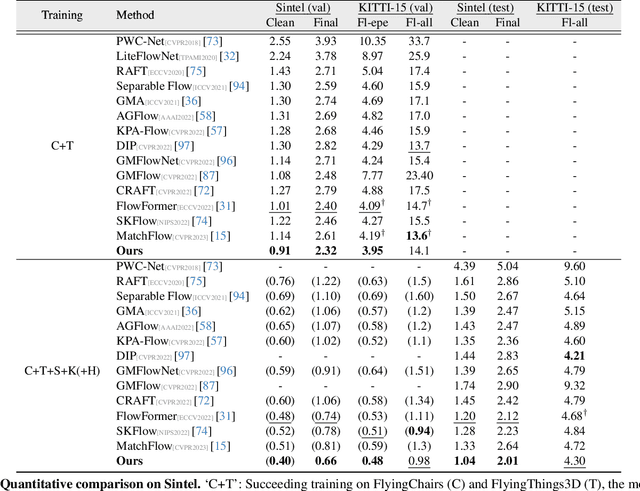
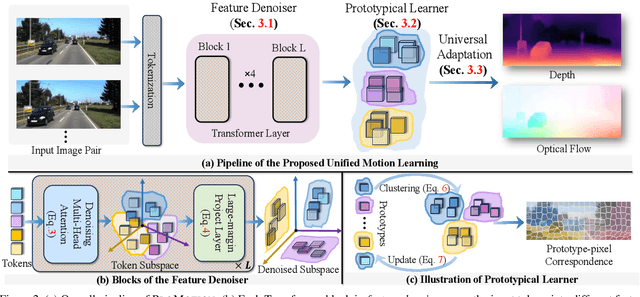
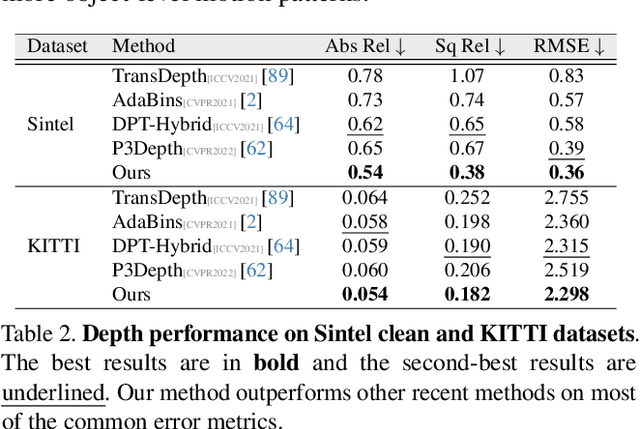
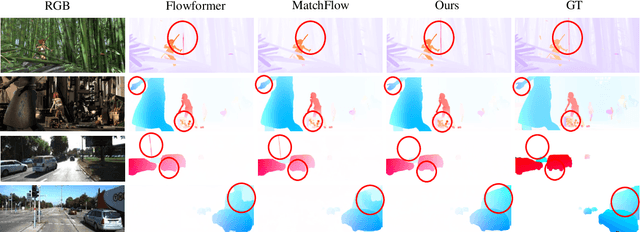
In this work, we introduce ProMotion, a unified prototypical framework engineered to model fundamental motion tasks. ProMotion offers a range of compelling attributes that set it apart from current task-specific paradigms. We adopt a prototypical perspective, establishing a unified paradigm that harmonizes disparate motion learning approaches. This novel paradigm streamlines the architectural design, enabling the simultaneous assimilation of diverse motion information. We capitalize on a dual mechanism involving the feature denoiser and the prototypical learner to decipher the intricacies of motion. This approach effectively circumvents the pitfalls of ambiguity in pixel-wise feature matching, significantly bolstering the robustness of motion representation. We demonstrate a profound degree of transferability across distinct motion patterns. This inherent versatility reverberates robustly across a comprehensive spectrum of both 2D and 3D downstream tasks. Empirical results demonstrate that ProMotion outperforms various well-known specialized architectures, achieving 0.54 and 0.054 Abs Rel error on the Sintel and KITTI depth datasets, 1.04 and 2.01 average endpoint error on the clean and final pass of Sintel flow benchmark, and 4.30 F1-all error on the KITTI flow benchmark. For its efficacy, we hope our work can catalyze a paradigm shift in universal models in computer vision.