 Add to Chrome
 Add to Firefox
 Add to Edge
FinRL-X: An AI-Native Modular Infrastructure for Quantitative Trading
Mar 22, 2026
We present FinRL-X, a modular and deployment-consistent trading architecture that unifies data processing, strategy construction, backtesting, and broker execution under a weight-centric interface. While existing open-source platforms are often backtesting- or model-centric, they rarely provide system-level consistency between research evaluation and live deployment. FinRL-X addresses this gap through a composable strategy pipeline that integrates stock selection, portfolio allocation, timing, and portfolio-level risk overlays within a unified protocol. The framework supports both rule-based and AI-driven components, including reinforcement learning allocators and LLM-based sentiment signals, without altering downstream execution semantics. FinRL-X provides an extensible foundation for reproducible, end-to-end quantitative trading research and deployment. The official FinRL-X implementation is available at https://github.com/AI4Finance-Foundation/FinRL-Trading.

Score Neural Operator: A Generative Model for Learning and Generalizing Across Multiple Probability Distributions
Oct 11, 2024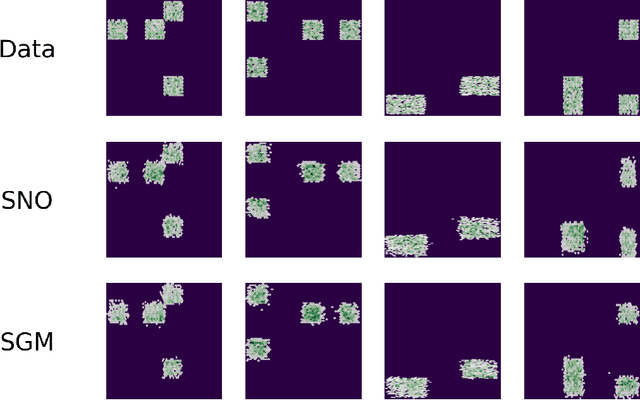
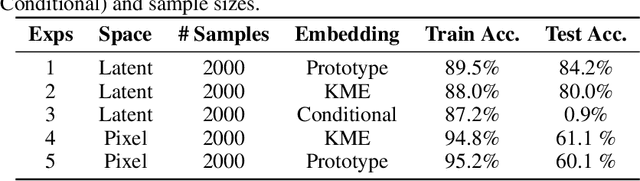
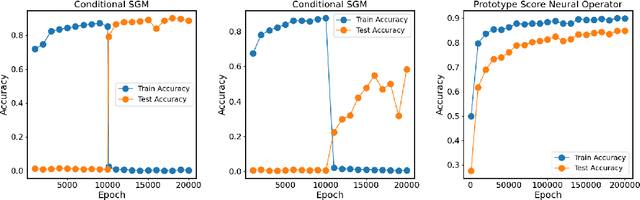
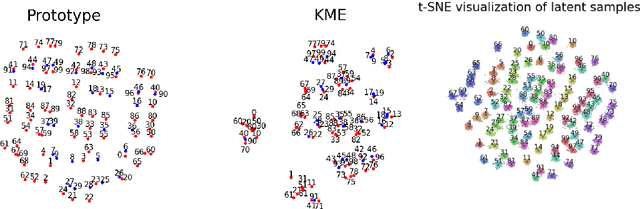
Most existing generative models are limited to learning a single probability distribution from the training data and cannot generalize to novel distributions for unseen data. An architecture that can generate samples from both trained datasets and unseen probability distributions would mark a significant breakthrough. Recently, score-based generative models have gained considerable attention for their comprehensive mode coverage and high-quality image synthesis, as they effectively learn an operator that maps a probability distribution to its corresponding score function. In this work, we introduce the $\emph{Score Neural Operator}$, which learns the mapping from multiple probability distributions to their score functions within a unified framework. We employ latent space techniques to facilitate the training of score matching, which tends to over-fit in the original image pixel space, thereby enhancing sample generation quality. Our trained Score Neural Operator demonstrates the ability to predict score functions of probability measures beyond the training space and exhibits strong generalization performance in both 2-dimensional Gaussian Mixture Models and 1024-dimensional MNIST double-digit datasets. Importantly, our approach offers significant potential for few-shot learning applications, where a single image from a new distribution can be leveraged to generate multiple distinct images from that distribution.