 Add to Chrome
 Add to Firefox
 Add to Edge
O-Researcher: An Open Ended Deep Research Model via Multi-Agent Distillation and Agentic RL
Jan 07, 2026
The performance gap between closed-source and open-source large language models (LLMs) is largely attributed to disparities in access to high-quality training data. To bridge this gap, we introduce a novel framework for the automated synthesis of sophisticated, research-grade instructional data. Our approach centers on a multi-agent workflow where collaborative AI agents simulate complex tool-integrated reasoning to generate diverse and high-fidelity data end-to-end. Leveraging this synthesized data, we develop a two-stage training strategy that integrates supervised fine-tuning with a novel reinforcement learning method, designed to maximize model alignment and capability. Extensive experiments demonstrate that our framework empowers open-source models across multiple scales, enabling them to achieve new state-of-the-art performance on the major deep research benchmark. This work provides a scalable and effective pathway for advancing open-source LLMs without relying on proprietary data or models.

MLEP: Multi-granularity Local Entropy Patterns for Universal AI-generated Image Detection
Apr 18, 2025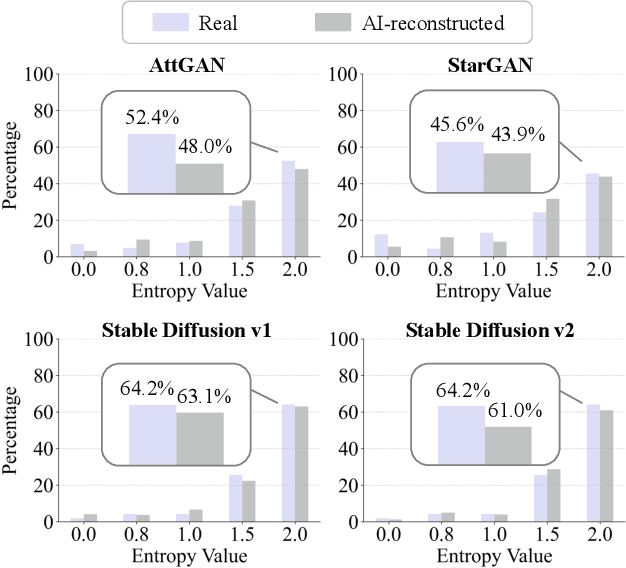
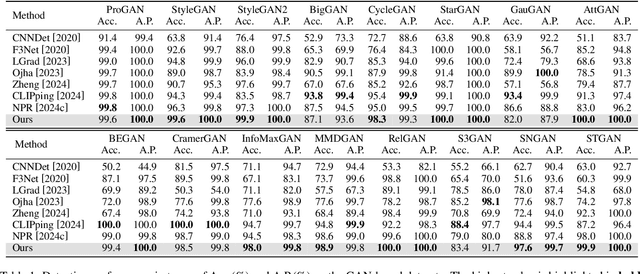
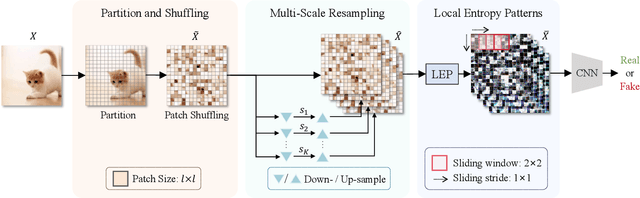
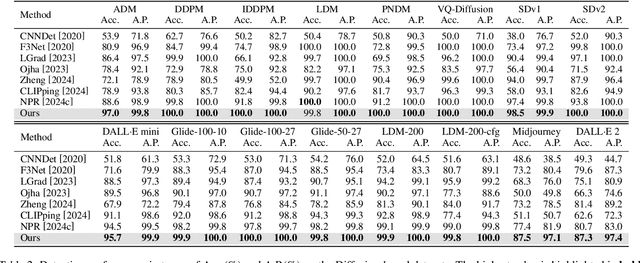
Advancements in image generation technologies have raised significant concerns about their potential misuse, such as producing misinformation and deepfakes. Therefore, there is an urgent need for effective methods to detect AI-generated images (AIGI). Despite progress in AIGI detection, achieving reliable performance across diverse generation models and scenes remains challenging due to the lack of source-invariant features and limited generalization capabilities in existing methods. In this work, we explore the potential of using image entropy as a cue for AIGI detection and propose Multi-granularity Local Entropy Patterns (MLEP), a set of entropy feature maps computed across shuffled small patches over multiple image scaled. MLEP comprehensively captures pixel relationships across dimensions and scales while significantly disrupting image semantics, reducing potential content bias. Leveraging MLEP, a robust CNN-based classifier for AIGI detection can be trained. Extensive experiments conducted in an open-world scenario, evaluating images synthesized by 32 distinct generative models, demonstrate significant improvements over state-of-the-art methods in both accuracy and generalization.