 Add to Chrome
 Add to Firefox
 Add to Edge
Cascaded Multi-Granularity Pruning for On-Device LLM Inference in Industrial IoT
Jun 25, 2026
Deploying large language models (LLMs) on Industrial Internet of Things (IIoT) edge devices demands extreme compression, yet existing structured pruning methods collapse at high compression ratios due to one-shot importance estimation, and their cross-architecture behavior remains unpredictable. This article presents a cascaded multi-granularity pruning framework that removes layers, attention heads, and feed-forward channels in coarse-to-fine order, with lightweight low-rank recovery between stages to re-estimate component importance. An information-theoretic analysis motivates this ordering, and the Structural Independence Assumption (SIA) is formalized as a checkable condition predicting whether per-component pruning criteria are reliable for a given architecture: Multi-Head Attention (MHA)+GELU designs satisfy the SIA, whereas Grouped Query Attention (GQA)+SwiGLU designs violate it. On bearing fault diagnosis spanning 88M to 6.25B-parameter models, the framework extends achievable compression to 13.8 times on MHA+GELU architectures with 83.82% accuracy (+3.70 percentage points (pp) over the strongest baseline), while exposing a ~74pp accuracy collapse on GQA+SwiGLU architectures that violate the SIA. Deployed on an industrial slewing bearing fault diagnosis platform with NVIDIA DGX Spark, compressed models reduce inference latency by up to 67.2% and peak memory by 62.5%, demonstrating viability for IIoT edge inference.

rLLM: Relational Table Learning with LLMs
Jul 29, 2024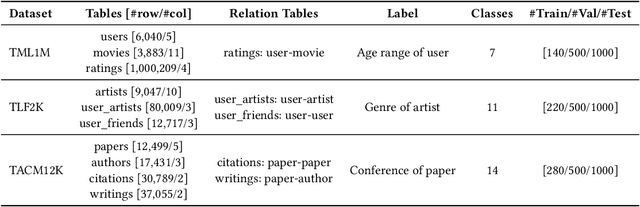
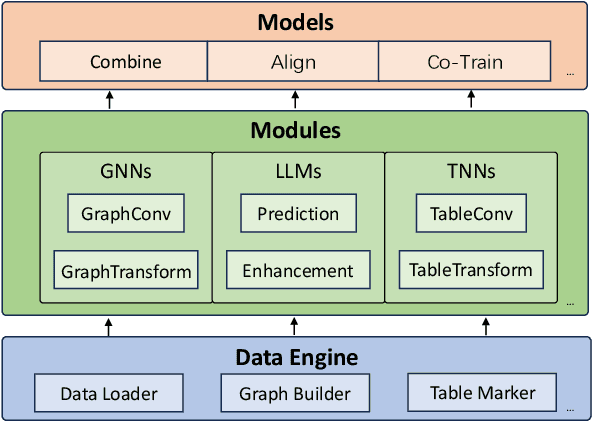
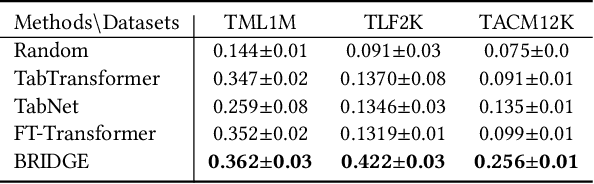
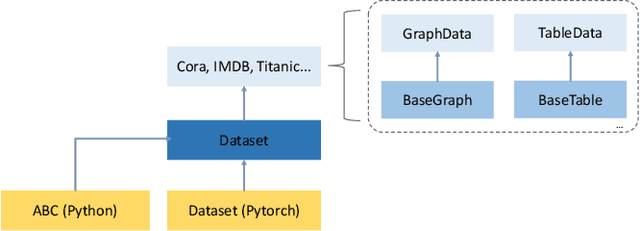
We introduce rLLM (relationLLM), a PyTorch library designed for Relational Table Learning (RTL) with Large Language Models (LLMs). The core idea is to decompose state-of-the-art Graph Neural Networks, LLMs, and Table Neural Networks into standardized modules, to enable the fast construction of novel RTL-type models in a simple "combine, align, and co-train" manner. To illustrate the usage of rLLM, we introduce a simple RTL method named \textbf{BRIDGE}. Additionally, we present three novel relational tabular datasets (TML1M, TLF2K, and TACM12K) by enhancing classic datasets. We hope rLLM can serve as a useful and easy-to-use development framework for RTL-related tasks. Our code is available at: https://github.com/rllm-project/rllm.