 Add to Chrome
 Add to Firefox
 Add to Edge
Zing: Social Mind for LLMs
Jul 26, 2026
As large language models move from isolated task solving toward long-term service in human environments, they require social intelligence: the ability to infer mental states, track social relations, reason over norms, and adapt behavior under context. This report presents Zhijing, an integrated framework for measuring, internalizing, and grounding social intelligence. For measurement, we introduce SoMBench, a psychology-grounded benchmark spanning 3 primary dimensions, 17 secondary dimensions, and 71 task paradigms. It controls question format, narrative perspective, and context length across 284 shared scenarios and 3,481 expert-verified instances. Evaluation of 20 representative LLMs reveals substantial headroom: the best model achieves only 72.08% overall accuracy, and none of the 17 secondary dimensions reaches the 90% near-ceiling band. For internalization, we develop Zing, a diagnosis-driven training recipe combining supervised fine-tuning, on-policy distillation, and rubric-based reinforcement learning. Across five social-cognition benchmarks, Zing consistently outperforms its base models, with Zing-27B-Stage2 achieving the best average score and Zing-32B-Stage2 remaining competitive with DeepSeek-V4-Pro. For deployment-time grounding, we build Actio, a harness-controlled inference architecture that routes four typed supports into reasoning: PRISM for procedural guidance, Starling for runtime mental-state representation, SAGE for reusable experience, and gated RAG for external social and normative knowledge. Across five base models and three benchmarks, the full harness improves 14 of 15 model-benchmark pairs and is best or tied for best in 8, demonstrating the effectiveness of typed runtime support. Together, these results show that socially intelligent LLMs require coordinated advances in evaluation, parametric internalization, and deployment-time grounding.

Efficient Oriented Object Detection with Enhanced Small Object Recognition in Aerial Images
Dec 17, 2024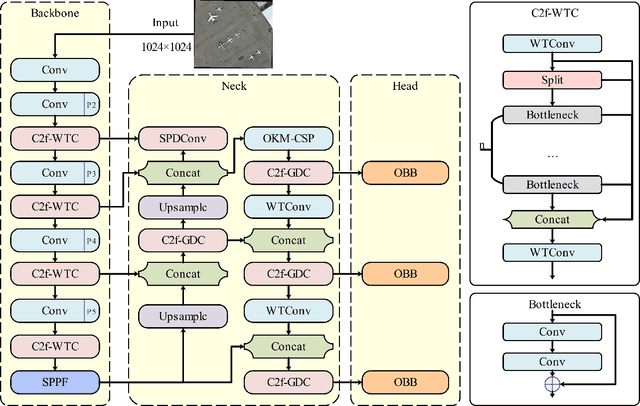
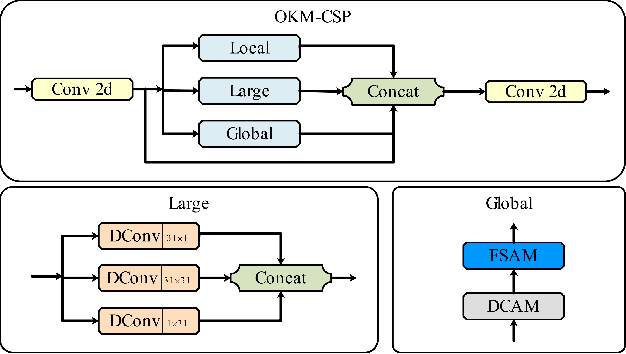
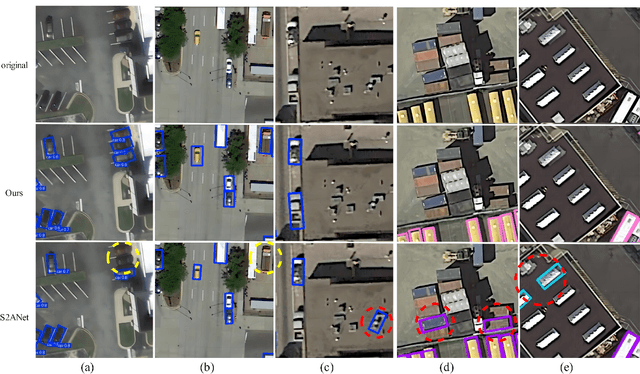
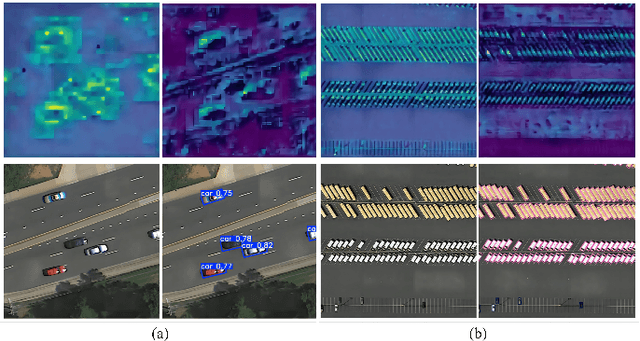
Achieving a balance between computational efficiency and detection accuracy in the realm of rotated bounding box object detection within aerial imagery is a significant challenge. While prior research has aimed at creating lightweight models that enhance computational performance and feature extraction, there remains a gap in the performance of these networks when it comes to the detection of small and multi-scale objects in remote sensing (RS) imagery. To address these challenges, we present a novel enhancement to the YOLOv8 model, tailored for oriented object detection tasks and optimized for environments with limited computational resources. Our model features a wavelet transform-based C2f module for capturing associative features and an Adaptive Scale Feature Pyramid (ASFP) module that leverages P2 layer details. Additionally, the incorporation of GhostDynamicConv significantly contributes to the model's lightweight nature, ensuring high efficiency in aerial imagery analysis. Featuring a parameter count of 21.6M, our approach provides a more efficient architectural design than DecoupleNet, which has 23.3M parameters, all while maintaining detection accuracy. On the DOTAv1.0 dataset, our model demonstrates a mean Average Precision (mAP) that is competitive with leading methods such as DecoupleNet. The model's efficiency, combined with its reduced parameter count, makes it a strong candidate for aerial object detection, particularly in resource-constrained environments.
A PLMs based protein retrieval framework
Jul 16, 2024


Protein retrieval, which targets the deconstruction of the relationship between sequences, structures and functions, empowers the advancing of biology. Basic Local Alignment Search Tool (BLAST), a sequence-similarity-based algorithm, has proved the efficiency of this field. Despite the existing tools for protein retrieval, they prioritize sequence similarity and probably overlook proteins that are dissimilar but share homology or functionality. In order to tackle this problem, we propose a novel protein retrieval framework that mitigates the bias towards sequence similarity. Our framework initiatively harnesses protein language models (PLMs) to embed protein sequences within a high-dimensional feature space, thereby enhancing the representation capacity for subsequent analysis. Subsequently, an accelerated indexed vector database is constructed to facilitate expedited access and retrieval of dense vectors. Extensive experiments demonstrate that our framework can equally retrieve both similar and dissimilar proteins. Moreover, this approach enables the identification of proteins that conventional methods fail to uncover. This framework will effectively assist in protein mining and empower the development of biology.
Synth-to-Real Unsupervised Domain Adaptation for Instance Segmentation
May 15, 2024Unsupervised Domain Adaptation (UDA) aims to transfer knowledge learned from a labeled source domain to an unlabeled target domain. While UDA methods for synthetic to real-world domains (synth-to-real) show remarkable performance in tasks such as semantic segmentation and object detection, very few were proposed for the instance segmentation task. In this paper, we introduce UDA4Inst, a model of synth-to-real UDA for instance segmentation in autonomous driving. We propose a novel cross-domain bidirectional data mixing method at the instance level to fully leverage the data from both source and target domains. Rare-class balancing and category module training are also employed to further improve the performance. It is worth noting that we are the first to demonstrate results on two new synth-to-real instance segmentation benchmarks, with 39.0 mAP on UrbanSyn->Cityscapes and 35.7 mAP on Synscapes->Cityscapes. UDA4Inst also achieves the state-of-the-art result on SYNTHIA->Cityscapes with 31.3 mAP, +15.6 higher than the latest approach. Our code will be released.
Linear building pattern recognition via spatial knowledge graph
Apr 21, 2023Building patterns are important urban structures that reflect the effect of the urban material and social-economic on a region. Previous researches are mostly based on the graph isomorphism method and use rules to recognize building patterns, which are not efficient. The knowledge graph uses the graph to model the relationship between entities, and specific subgraph patterns can be efficiently obtained by using relevant reasoning tools. Thus, we try to apply the knowledge graph to recognize linear building patterns. First, we use the property graph to express the spatial relations in proximity, similar and linear arrangement between buildings; secondly, the rules of linear pattern recognition are expressed as the rules of knowledge graph reasoning; finally, the linear building patterns are recognized by using the rule-based reasoning in the built knowledge graph. The experimental results on a dataset containing 1289 buildings show that the method in this paper can achieve the same precision and recall as the existing methods; meanwhile, the recognition efficiency is improved by 5.98 times.
iExam: A Novel Online Exam Monitoring and Analysis System Based on Face Detection and Recognition
Jun 27, 2022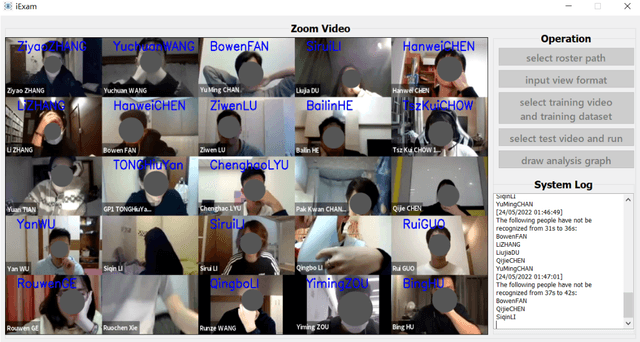
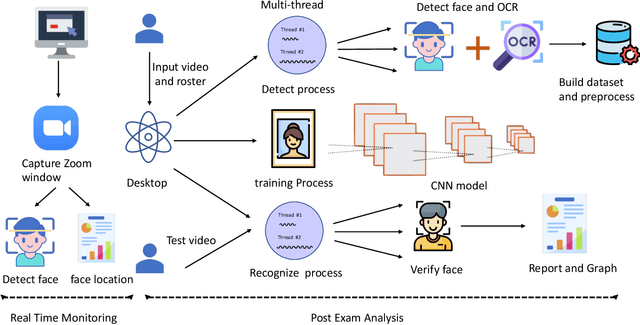
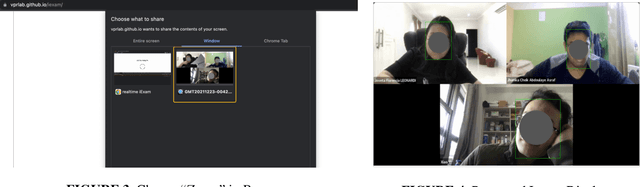

Online exams via video conference software like Zoom have been adopted in many schools due to COVID-19. While it is convenient, it is challenging for teachers to supervise online exams from simultaneously displayed student Zoom windows. In this paper, we propose iExam, an intelligent online exam monitoring and analysis system that can not only use face detection to assist invigilators in real-time student identification, but also be able to detect common abnormal behaviors (including face disappearing, rotating faces, and replacing with a different person during the exams) via a face recognition-based post-exam video analysis. To build such a novel system in its first kind, we overcome three challenges. First, we discover a lightweight approach to capturing exam video streams and analyzing them in real time. Second, we utilize the left-corner names that are displayed on each student's Zoom window and propose an improved OCR (optical character recognition) technique to automatically gather the ground truth for the student faces with dynamic positions. Third, we perform several experimental comparisons and optimizations to efficiently shorten the training and testing time required on teachers' PC. Our evaluation shows that iExam achieves high accuracy, 90.4% for real-time face detection and 98.4% for post-exam face recognition, while maintaining acceptable runtime performance. We have made iExam's source code available at https://github.com/VPRLab/iExam.