 Add to Chrome
 Add to Firefox
 Add to Edge
A Multi-modal Detection System for Infrastructure-based Freight Signal Priority
Feb 19, 2026
Freight vehicles approaching signalized intersections require reliable detection and motion estimation to support infrastructure-based Freight Signal Priority (FSP). Accurate and timely perception of vehicle type, position, and speed is essential for enabling effective priority control strategies. This paper presents the design, deployment, and evaluation of an infrastructure-based multi-modal freight vehicle detection system integrating LiDAR and camera sensors. A hybrid sensing architecture is adopted, consisting of an intersection-mounted subsystem and a midblock subsystem, connected via wireless communication for synchronized data transmission. The perception pipeline incorporates both clustering-based and deep learning-based detection methods with Kalman filter tracking to achieve stable real-time performance. LiDAR measurements are registered into geodetic reference frames to support lane-level localization and consistent vehicle tracking. Field evaluations demonstrate that the system can reliably monitor freight vehicle movements at high spatio-temporal resolution. The design and deployment provide practical insights for developing infrastructure-based sensing systems to support FSP applications.

Domain decomposition-based coupling of physics-informed neural networks via the Schwarz alternating method
Nov 01, 2023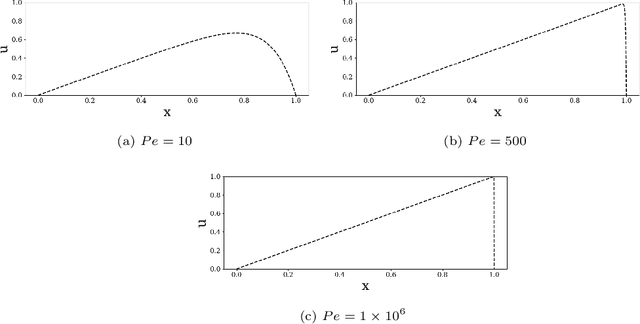
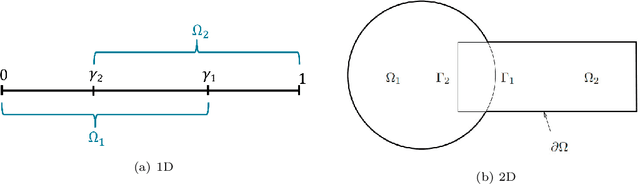
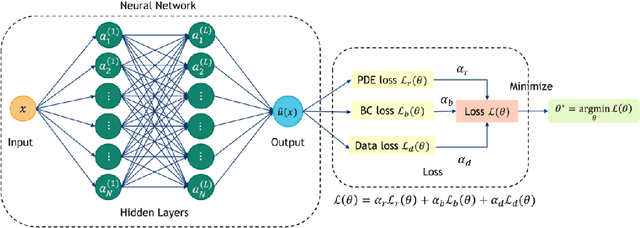
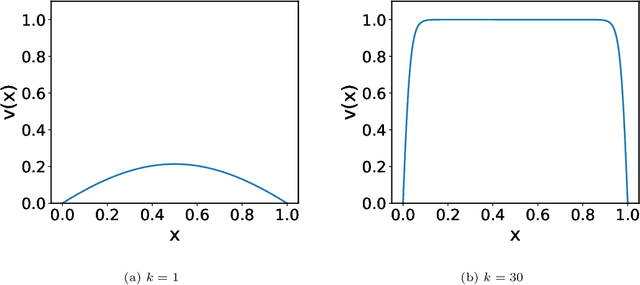
Physics-informed neural networks (PINNs) are appealing data-driven tools for solving and inferring solutions to nonlinear partial differential equations (PDEs). Unlike traditional neural networks (NNs), which train only on solution data, a PINN incorporates a PDE's residual into its loss function and trains to minimize the said residual at a set of collocation points in the solution domain. This paper explores the use of the Schwarz alternating method as a means to couple PINNs with each other and with conventional numerical models (i.e., full order models, or FOMs, obtained via the finite element, finite difference or finite volume methods) following a decomposition of the physical domain. It is well-known that training a PINN can be difficult when the PDE solution has steep gradients. We investigate herein the use of domain decomposition and the Schwarz alternating method as a means to accelerate the PINN training phase. Within this context, we explore different approaches for imposing Dirichlet boundary conditions within each subdomain PINN: weakly through the loss and/or strongly through a solution transformation. As a numerical example, we consider the one-dimensional steady state advection-diffusion equation in the advection-dominated (high Peclet) regime. Our results suggest that the convergence of the Schwarz method is strongly linked to the choice of boundary condition implementation within the PINNs being coupled. Surprisingly, strong enforcement of the Schwarz boundary conditions does not always lead to a faster convergence of the method. While it is not clear from our preliminary study that the PINN-PINN coupling via the Schwarz alternating method accelerates PINN convergence in the advection-dominated regime, it reveals that PINN training can be improved substantially for Peclet numbers as high as 1e6 by performing a PINN-FOM coupling.