 Add to Chrome
 Add to Firefox
 Add to Edge
Waveform Design for 6G ISAC Systems Under Full-Duplex Residual Self-Interference
May 04, 2026
In this paper, the waveform design for 6G integrated sensing and communication (ISAC) systems is investigated, with a particular focus on the practical limitations imposed by imperfect full-duplex radios. Under such imperfections, continuous communication waveforms, such as OFDM, suffer from severe full-duplex residual self-interference (RSI) for radar sensing, which significantly restricts the long-range sensing capabilities required by emerging low-altitude wireless networks (LAWN). To address this challenge, we propose a novel time-division ISAC waveform that integrates a specially developed dual-power phase-coded pulse for sensing into the communication frame under full-duplex RSI. Specifically, the dual-power sensing pulse consists of a high-power sequence followed by a low-power sequence, effectively exploiting imperfect full-duplex operations to achieve reliable long-range sensing while eliminating the detection blind range inherent to conventional half-duplex pulse radars. Furthermore, a complementary and inverse-phase sequence group is designed to ensure perfect autocorrelation and robust cross-correlation sidelobe suppression, so as to enhance multi-target detection capability. As for sensing signal processing, a parameterized mismatched filter is developed and optimized to maximize the detection performance, tailored to the proposed pulse structure. In addition, we design a hierarchical one-dimensional CFAR-CA detector that can exploit the perfect range-domain autocorrelation characteristics of the proposed waveform to further improve the detection performance. Extensive simulations demonstrate that the proposed design significantly improves the maximum detection range and multi-target detection capability compared to existing OFDM and LFM pulse baselines, while effectively covering the blind range for targets with small RCS.

Sensing-Assisted Channel Estimation for OFDM ISAC Systems: Framework, Algorithm, and Analysis
Feb 23, 2025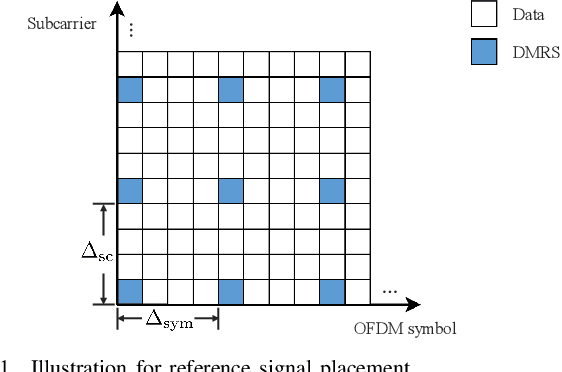
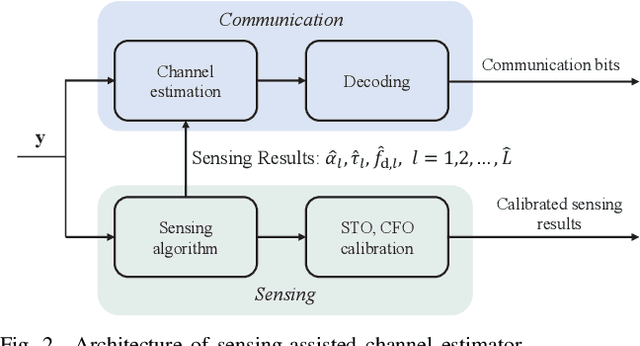
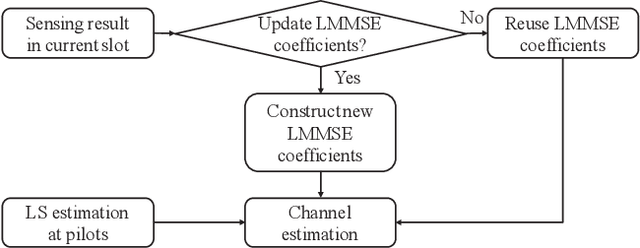
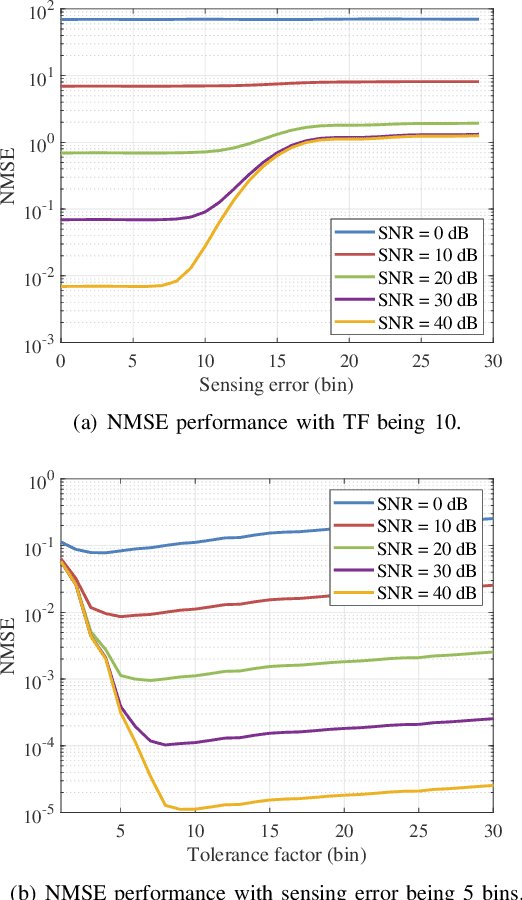
Integrated sensing and communication (ISAC) has garnered significant attention in recent years. In this paper, we delve into the topic of sensing-assisted communication within ISAC systems. More specifically, a novel sensing-assisted channel estimation scheme is proposed for bistatic orthogonal-frequency-division-multiplexing (OFDM) ISAC systems. A framework of sensing-assisted channel estimator is first developed, integrating a tailored low-complexity sensing algorithm to facilitate real-time channel estimation and decoding. To address the potential sensing errors caused by low-complexity sensing algorithms, a sensing-assisted linear minimum mean square error (LMMSE) estimation algorithm is then developed. This algorithm incorporates tolerance factors designed to account for deviations between estimated and true channel parameters, enabling the construction of robust correlation matrices for LMMSE estimation. Additionally, we establish a systematic mechanism for determining these tolerance factors. A comprehensive analysis of the normalized mean square error (NMSE) performance and computational complexity is finally conducted, providing valuable insights into the selection of the estimator's parameters. The effectiveness of our proposed scheme is validated by extensive simulations. Compared to existing methods, our proposed scheme demonstrates superior performance, particularly in high signal-to-noise ratio (SNR) regions or with large bandwidths, while maintaining low computational complexity.