 Add to Chrome
 Add to Firefox
 Add to Edge
A collaborative agent with two lightweight synergistic models for autonomous crystal materials research
Apr 13, 2026
Current large language models require hundreds of billions of parameters yet struggle with domain-specific reasoning and tool coordination in materials science. Here, we present MatBrain, a lightweight collaborative agent system with two synergistic models specialization for crystal materials research. MatBrain employs a dual-model architecture: Mat-R1 (30B parameters) as the analytical model providing expert-level domain reasoning, and Mat-T1 (14B parameters) as the executive model orchestrating tool-based actions. Entropy analysis confirms that this architecture resolves the conflict between tool planning and analytical reasoning by decoupling their distinct entropy dynamics. Enabled by this dual-model architecture and structural efficiency, MatBrain significantly outperforms larger general-purpose models while reducing the hardware deployment barrier by over 95%. MatBrain exhibits versatility across structure generation, property prediction, and synthesis planning tasks. Applied to catalyst design, MatBrain generated 30,000 candidate structures and identified 38 promising materials within 48 hours, achieving approximately 100-fold acceleration over traditional approaches. These results demonstrate the potential of lightweight collaborative intelligence for advancing materials research capabilities.

A Universal Banach--Bregman Framework for Stochastic Iterations: Unifying Stochastic Mirror Descent, Learning and LLM Training
Sep 17, 2025Stochastic optimization powers the scalability of modern artificial intelligence, spanning machine learning, deep learning, reinforcement learning, and large language model training. Yet, existing theory remains largely confined to Hilbert spaces, relying on inner-product frameworks and orthogonality. This paradigm fails to capture non-Euclidean settings, such as mirror descent on simplices, Bregman proximal methods for sparse learning, natural gradient descent in information geometry, or Kullback--Leibler-regularized language model training. Unlike Euclidean-based Hilbert-space methods, this approach embraces general Banach spaces. This work introduces a pioneering Banach--Bregman framework for stochastic iterations, establishing Bregman geometry as a foundation for next-generation optimization. It (i) provides a unified template via Bregman projections and Bregman--Fejer monotonicity, encompassing stochastic approximation, mirror descent, natural gradient, adaptive methods, and mirror-prox; (ii) establishes super-relaxations ($\lambda > 2$) in non-Hilbert settings, enabling flexible geometries and elucidating their acceleration effect; and (iii) delivers convergence theorems spanning almost-sure boundedness to geometric rates, validated on synthetic and real-world tasks. Empirical studies across machine learning (UCI benchmarks), deep learning (e.g., Transformer training), reinforcement learning (actor--critic), and large language models (WikiText-2 with distilGPT-2) show up to 20% faster convergence, reduced variance, and enhanced accuracy over classical baselines. These results position Banach--Bregman geometry as a cornerstone unifying optimization theory and practice across core AI paradigms.
Multi-label feature selection based on binary hashing learning and dynamic graph constraints
Mar 18, 2025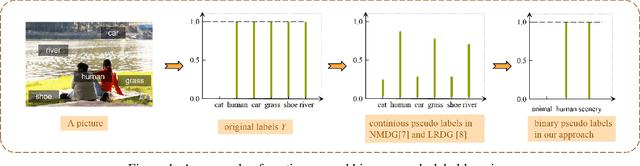
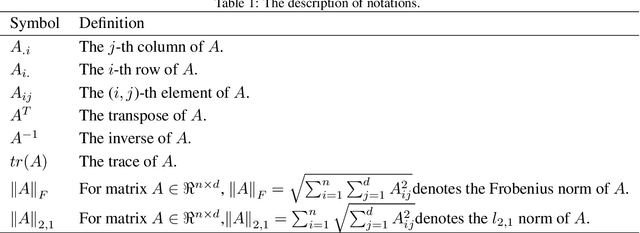
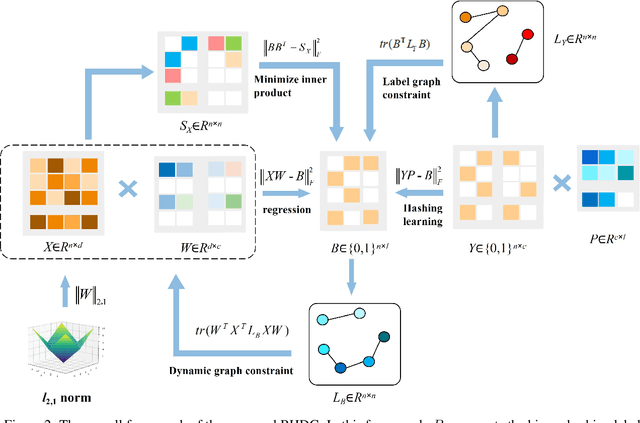
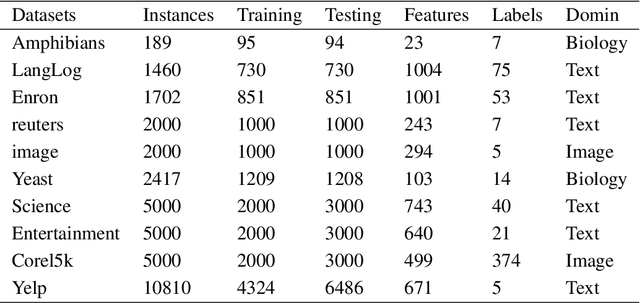
Multi-label learning poses significant challenges in extracting reliable supervisory signals from the label space. Existing approaches often employ continuous pseudo-labels to replace binary labels, improving supervisory information representation. However, these methods can introduce noise from irrelevant labels and lead to unreliable graph structures. To overcome these limitations, this study introduces a novel multi-label feature selection method called Binary Hashing and Dynamic Graph Constraint (BHDG), the first method to integrate binary hashing into multi-label learning. BHDG utilizes low-dimensional binary hashing codes as pseudo-labels to reduce noise and improve representation robustness. A dynamically constrained sample projection space is constructed based on the graph structure of these binary pseudo-labels, enhancing the reliability of the dynamic graph. To further enhance pseudo-label quality, BHDG incorporates label graph constraints and inner product minimization within the sample space. Additionally, an $l_{2,1}$-norm regularization term is added to the objective function to facilitate the feature selection process. The augmented Lagrangian multiplier (ALM) method is employed to optimize binary variables effectively. Comprehensive experiments on 10 benchmark datasets demonstrate that BHDG outperforms ten state-of-the-art methods across six evaluation metrics. BHDG achieves the highest overall performance ranking, surpassing the next-best method by an average of at least 2.7 ranks per metric, underscoring its effectiveness and robustness in multi-label feature selection.