 Add to Chrome
 Add to Firefox
 Add to Edge
MOC-3D: Manifold-Order Consistency for Text-to-3D Generation
May 03, 2026
With the burgeoning development of fields such as the Metaverse, Virtual Reality (VR), and Digital Twins, text-to-3D generation has emerged as a research hotspot in both academia and industry. Currently, optimization methods based on Score Distillation Sampling (SDS) utilizing 2D diffusion priors have become the mainstream technological paradigm in this field. However, due to the view bias of 2D priors and the mode-seeking ambiguity combined with gradient noise induced by high Classifier-Free Guidance (CFG), these methods still suffer from macro-topological inconsistency (e.g., the Janus problem) and micro-geometric discontinuity. To address these challenges, we propose MOC-3D, a text-to-3D generation method based on geometric manifold and semantic view-order consistency. Built upon the ScaleDreamer framework, our method incorporates a Semantic View-Order Constraint Module and a Manifold-based Feature Continuity Module. The former aims to rectify macro-topological inconsistency, while the latter focuses on eliminating micro-geometric discontinuity. Specifically, the Semantic View-Order Constraint Module leverages the prior knowledge of CLIP to impose a Monotonicity Rank Constraint on semantic score representations across different views, thereby providing effective guidance for the global topological structure of 3D objects. Meanwhile, the Manifold-based Feature Continuity Module employs the Riemannian Metric on the Symmetric Positive Definite (SPD) manifold. By measuring the distance of feature statistical distributions in the Riemannian space, it promotes the smooth evolution and continuity of micro-textures across multi-views in a statistical sense. Under the macro-micro synergistic optimization of these two modules, our model can simultaneously improve macro-structural consistency and micro-detail continuity.

SFFNet: Synergistic Feature Fusion Network With Dual-Domain Edge Enhancement for UAV Image Object Detection
Apr 03, 2026Object detection in unmanned aerial vehicle (UAV) images remains a highly challenging task, primarily caused by the complexity of background noise and the imbalance of target scales. Traditional methods easily struggle to effectively separate objects from intricate backgrounds and fail to fully leverage the rich multi-scale information contained within images. To address these issues, we have developed a synergistic feature fusion network (SFFNet) with dual-domain edge enhancement specifically tailored for object detection in UAV images. Firstly, the multi-scale dynamic dual-domain coupling (MDDC) module is designed. This component introduces a dual-driven edge extraction architecture that operates in both the frequency and spatial domains, enabling effective decoupling of multi-scale object edges from background noise. Secondly, to further enhance the representation capability of the model's neck in terms of both geometric and semantic information, a synergistic feature pyramid network (SFPN) is proposed. SFPN leverages linear deformable convolutions to adaptively capture irregular object shapes and establishes long-range contextual associations around targets through the designed wide-area perception module (WPM). Moreover, to adapt to the various applications or resource-constrained scenarios, six detectors of different scales (N/S/M/B/L/X) are designed. Experiments on two challenging aerial datasets (VisDrone and UAVDT) demonstrate the outstanding performance of SFFNet-X, achieving 36.8 AP and 20.6 AP, respectively. The lightweight models (N/S) also maintain a balance between detection accuracy and parameter efficiency. The code will be available at https://github.com/CQNU-ZhangLab/SFFNet.
Beyond Benchmarks of IUGC: Rethinking Requirements of Deep Learning Methods for Intrapartum Ultrasound Biometry from Fetal Ultrasound Videos
Feb 13, 2026A substantial proportion (45\%) of maternal deaths, neonatal deaths, and stillbirths occur during the intrapartum phase, with a particularly high burden in low- and middle-income countries. Intrapartum biometry plays a critical role in monitoring labor progression; however, the routine use of ultrasound in resource-limited settings is hindered by a shortage of trained sonographers. To address this challenge, the Intrapartum Ultrasound Grand Challenge (IUGC), co-hosted with MICCAI 2024, was launched. The IUGC introduces a clinically oriented multi-task automatic measurement framework that integrates standard plane classification, fetal head-pubic symphysis segmentation, and biometry, enabling algorithms to exploit complementary task information for more accurate estimation. Furthermore, the challenge releases the largest multi-center intrapartum ultrasound video dataset to date, comprising 774 videos (68,106 frames) collected from three hospitals, providing a robust foundation for model training and evaluation. In this study, we present a comprehensive overview of the challenge design, review the submissions from eight participating teams, and analyze their methods from five perspectives: preprocessing, data augmentation, learning strategy, model architecture, and post-processing. In addition, we perform a systematic analysis of the benchmark results to identify key bottlenecks, explore potential solutions, and highlight open challenges for future research. Although encouraging performance has been achieved, our findings indicate that the field remains at an early stage, and further in-depth investigation is required before large-scale clinical deployment. All benchmark solutions and the complete dataset have been publicly released to facilitate reproducible research and promote continued advances in automatic intrapartum ultrasound biometry.
SGRU: A High-Performance Structured Gated Recurrent Unit for Traffic Flow Prediction
Apr 18, 2024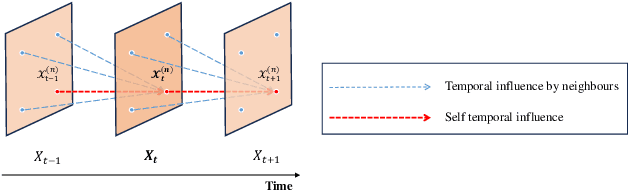
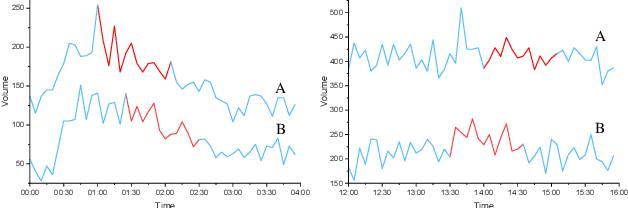
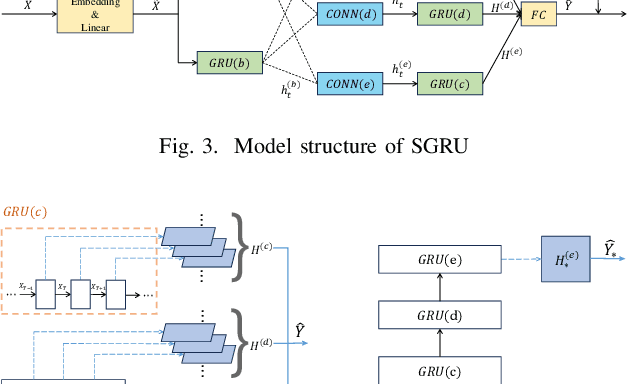
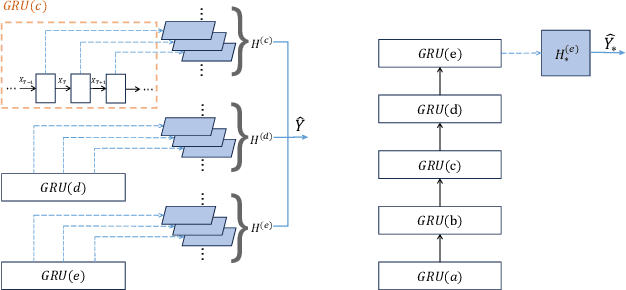
Traffic flow prediction is an essential task in constructing smart cities and is a typical Multivariate Time Series (MTS) Problem. Recent research has abandoned Gated Recurrent Units (GRU) and utilized dilated convolutions or temporal slicing for feature extraction, and they have the following drawbacks: (1) Dilated convolutions fail to capture the features of adjacent time steps, resulting in the loss of crucial transitional data. (2) The connections within the same temporal slice are strong, while the connections between different temporal slices are too loose. In light of these limitations, we emphasize the importance of analyzing a complete time series repeatedly and the crucial role of GRU in MTS. Therefore, we propose SGRU: Structured Gated Recurrent Units, which involve structured GRU layers and non-linear units, along with multiple layers of time embedding to enhance the model's fitting performance. We evaluate our approach on four publicly available California traffic datasets: PeMS03, PeMS04, PeMS07, and PeMS08 for regression prediction. Experimental results demonstrate that our model outperforms baseline models with average improvements of 11.7%, 18.6%, 18.5%, and 12.0% respectively.