 Add to Chrome
 Add to Firefox
 Add to Edge
Autoregressive Models Rival Diffusion Models at ANY-ORDER Generation
Jan 19, 2026
Diffusion language models enable any-order generation and bidirectional conditioning, offering appealing flexibility for tasks such as infilling, rewriting, and self-correction. However, their formulation-predicting one part of a sequence from another within a single-step dependency-limits modeling depth and often yields lower sample quality and stability than autoregressive (AR) models. To address this, we revisit autoregressive modeling as a foundation and reformulate diffusion-style training into a structured multi-group prediction process. We propose Any-order Any-subset Autoregressive modeling (A3), a generalized framework that extends the standard AR factorization to arbitrary token groups and generation orders. A3 preserves the probabilistic rigor and multi-layer dependency modeling of AR while inheriting diffusion models' flexibility for parallel and bidirectional generation. We implement A3 through a two-stream attention architecture and a progressive adaptation strategy that transitions pretrained AR models toward any-order prediction. Experiments on question answering, commonsense reasoning, and story infilling demonstrate that A3 outperforms diffusion-based models while maintaining flexible decoding. This work offers a unified approach for a flexible, efficient, and novel language modeling paradigm.

PIS: A Generalized Physical Inversion Solver for Arbitrary Sparse Observations via Set-Conditioned Diffusion
Dec 14, 2025Estimation of PDE-constrained physical parameters from limited indirect measurements is inherently ill-posed, particularly when observations are sparse, irregular, and constrained by real-world sensor placement. This challenge is ubiquitous in fields such as fluid mechanics, seismic inversion, and structural health monitoring. Existing deep and operator-learning models collapse under these conditions: fixed-grid assumptions fail, reconstruction deteriorates sharply, and inversion becomes unreliable with limited robustness and no uncertainty quantification (UQ).We propose the Physical Inversion Solver (PIS), a set-conditioned diffusion framework enabling inversion from truly arbitrary observation sets. PIS employs a Set Transformer-based encoder to handle measurements of any number or geometry, and a cosine-annealed sparsity curriculum for exceptional robustness. An accompanying information-theoretic analysis provides insight into the limits of inversion under extreme sparsity by revealing how observation entropy varies across physical systems.PIS is evaluated on three challenging PDE inverse problems: Darcy flow, wavefield inversion (Helmholtz), and structural health monitoring (Hooke's Law). Across all tasks and sparsity regimes -- including extreme cases with an observation rate of only $0.29\%$ -- existing operator-learning baselines fail to reconstruct meaningful fields, often diverging or collapsing entirely.In stark contrast, PIS remains stable and accurate, reducing inversion error by $12.28\%$--$88.73\%$ and reliably producing calibrated posterior samples. These samples accurately reflect both data scarcity and intrinsic physical ambiguity. These results position PIS as a powerful, general-purpose, and uniquely sparsity-resilient solution for physical inversion under arbitrary and severely undersampled observations.
A Scoring Method for Driving Safety Credit Using Trajectory Data
Nov 28, 2018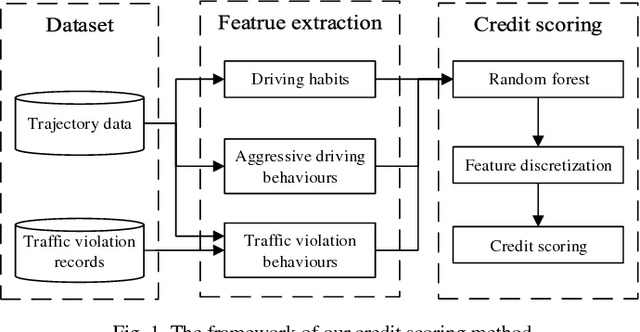
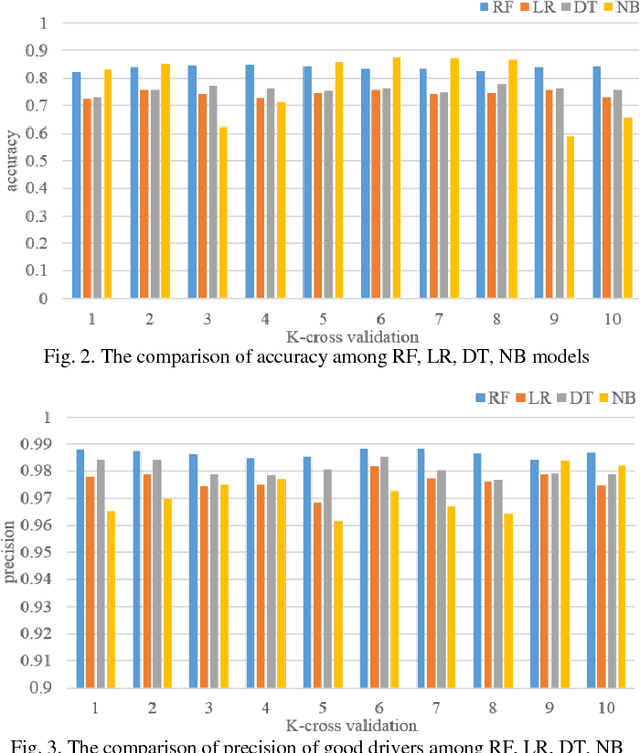
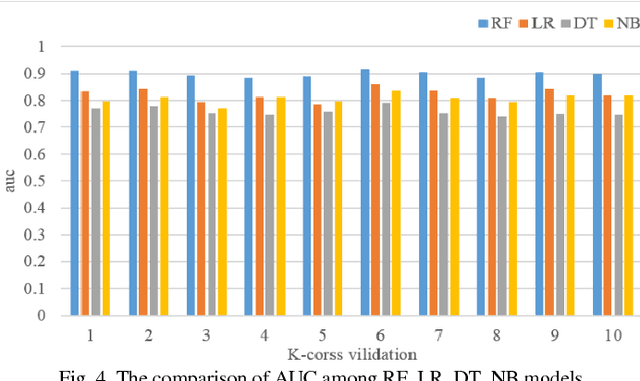
Urban traffic systems worldwide are suffering from severe traffic safety problems. Traffic safety is affected by many complex factors, and heavily related to all drivers' behaviors involved in traffic system. Drivers with aggressive driving behaviors increase the risk of traffic accidents. In order to manage the safety level of traffic system, we propose Driving Safety Credit inspired by credit score in financial security field, and design a scoring method using trajectory data and violation records. First, we extract driving habits, aggressive driving behaviors and traffic violation behaviors from driver's trajectories and traffic violation records. Next, we train a classification model to filtered out irrelevant features. And at last, we score each driver with selected features. We verify our proposed scoring method using 40 days of traffic simulation, and proves the effectiveness of our scoring method.