 Add to Chrome
 Add to Firefox
 Add to Edge
Evaluating the Reliability of Digital Forensic Evidence Discovered by Large Language Model: A Case Study
Feb 22, 2026
The growing reliance on AI-identified digital evidence raises significant concerns about its reliability, particularly as large language models (LLMs) are increasingly integrated into forensic investigations. This paper proposes a structured framework that automates forensic artifact extraction, refines data through LLM-driven analysis, and validates results using a Digital Forensic Knowledge Graph (DFKG). Evaluated on a 13 GB forensic image dataset containing 61 applications, 2,864 databases, and 5,870 tables, the framework ensures artifact traceability and evidentiary consistency through deterministic Unique Identifiers (UIDs) and forensic cross-referencing. We propose this methodology to address challenges in ensuring the credibility and forensic integrity of AI-identified evidence, reducing classification errors, and advancing scalable, auditable methodologies. A comprehensive case study on this dataset demonstrates the framework's effectiveness, achieving over 95 percent accuracy in artifact extraction, strong support of chain-of-custody adherence, and robust contextual consistency in forensic relationships. Key results validate the framework's ability to enhance reliability, reduce errors, and establish a legally sound paradigm for AI-assisted digital forensics.
* 10 pages, 5 figures. Published in the Proceedings of the 2025 IEEE 49th Annual Computers, Software, and Applications Conference (COMPSAC), Toronto, ON, Canada, 8-11 July 2025

RCDM: Enabling Robustness for Conditional Diffusion Model
Aug 05, 2024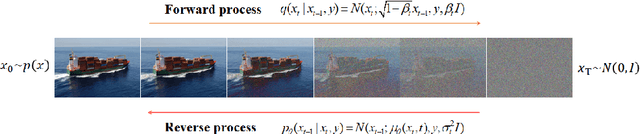
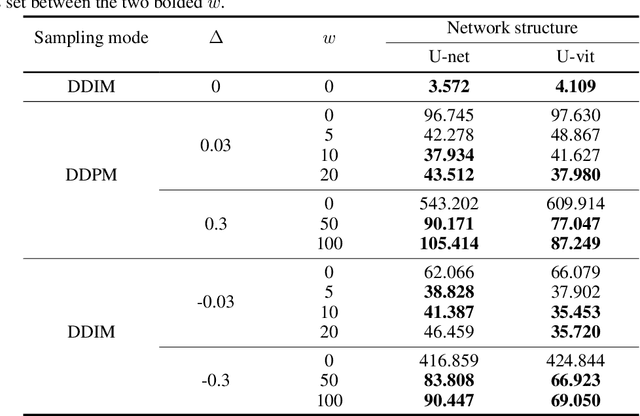
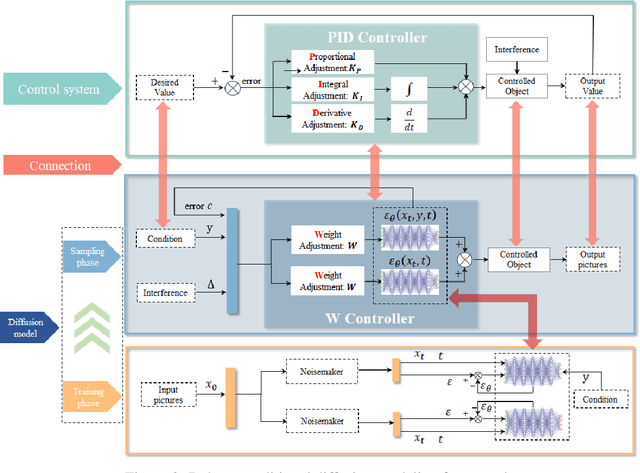
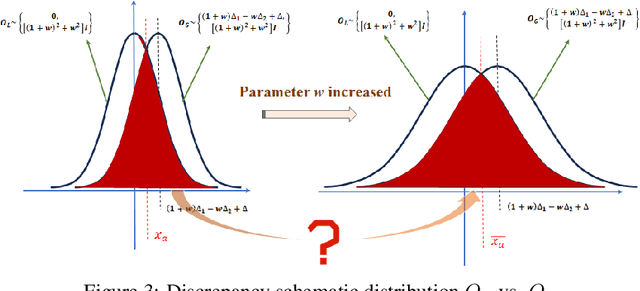
The conditional diffusion model (CDM) enhances the standard diffusion model by providing more control, improving the quality and relevance of the outputs, and making the model adaptable to a wider range of complex tasks. However, inaccurate conditional inputs in the inverse process of CDM can easily lead to generating fixed errors in the neural network, which diminishes the adaptability of a well-trained model. The existing methods like data augmentation, adversarial training, robust optimization can improve the robustness, while they often face challenges such as high computational complexity, limited applicability to unknown perturbations, and increased training difficulty. In this paper, we propose a lightweight solution, the Robust Conditional Diffusion Model (RCDM), based on control theory to dynamically reduce the impact of noise and significantly enhance the model's robustness. RCDM leverages the collaborative interaction between two neural networks, along with optimal control strategies derived from control theory, to optimize the weights of two networks during the sampling process. Unlike conventional techniques, RCDM establishes a mathematical relationship between fixed errors and the weights of the two neural networks without incurring additional computational overhead. Extensive experiments were conducted on MNIST and CIFAR-10 datasets, and the results demonstrate the effectiveness and adaptability of our proposed model.
A Saliency Enhanced Feature Fusion based multiscale RGB-D Salient Object Detection Network
Jan 22, 2024Multiscale convolutional neural network (CNN) has demonstrated remarkable capabilities in solving various vision problems. However, fusing features of different scales alwaysresults in large model sizes, impeding the application of multiscale CNNs in RGB-D saliency detection. In this paper, we propose a customized feature fusion module, called Saliency Enhanced Feature Fusion (SEFF), for RGB-D saliency detection. SEFF utilizes saliency maps of the neighboring scales to enhance the necessary features for fusing, resulting in more representative fused features. Our multiscale RGB-D saliency detector uses SEFF and processes images with three different scales. SEFF is used to fuse the features of RGB and depth images, as well as the features of decoders at different scales. Extensive experiments on five benchmark datasets have demonstrated the superiority of our method over ten SOTA saliency detectors.