 Add to Chrome
 Add to Firefox
 Add to Edge
Robust Dempster-Shafer Evidence Fusion with Chaos-Conflict Measurement and Historical-Experience Weighting
Aug 13, 2026
Multi-source evidence fusion under Dempster-Shafer theory faces two persistent challenges: existing conflict measures assess inter-evidence inconsistency and intra-evidence uncertainty independently, yielding incomplete evaluations, and current fusion methods evaluate evidence sources exclusively through instantaneous comparisns without exploiting their long-term reliability across diverse decision contexts. This paper proposes a unified evidence reasoning framework that addresses both limitations. Specifically, a chaos-conflict measurement is introduced to jointly quantify cross-evidence conflict and intra-evidence non-specificity, with five formally proven properties ensuring consistent assessment. A historical experience driven weighting scheme partitions the decision space via spectral clustering and applies regret theory to compute context-specific reliability profiles from past fusion outcomes. These mechanisms feed into a hybrid combination rule that adaptively balances uncertainty preservation against weighted consensus, controlled by the global conflict level, followed by a belief-interval decision strategy that enables robust classification without discarding epistemic uncertainty. Experiments on 16 real-world benchmark datasets demonstrate that the proposed framework achieves an average F1 score of 85.78 and a mean AUC of 93.30, outperforming eight DST-based baselines and three gradient boosting methods. Ablation analysis confirms the contribution of each component we proposed. The framework offers an effective approach for adaptive evidence fusion in multi-source decision making.

A collaborative filtering model with heterogeneous neural networks for recommender systems
May 27, 2019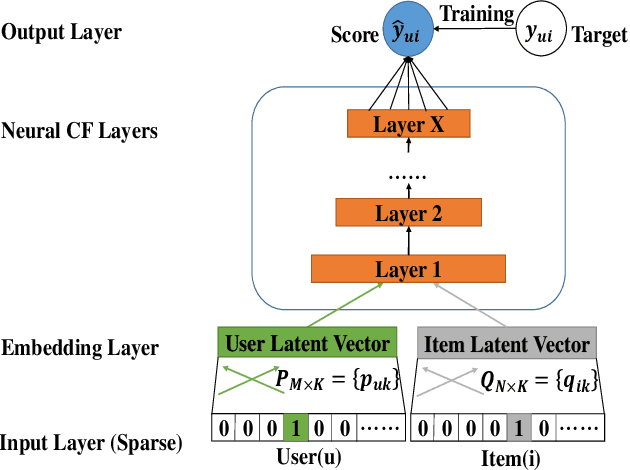
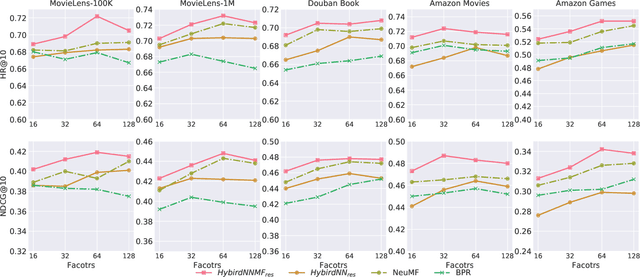
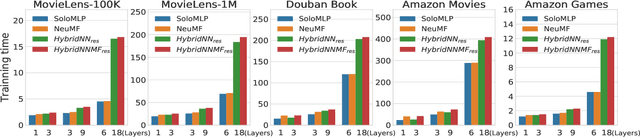
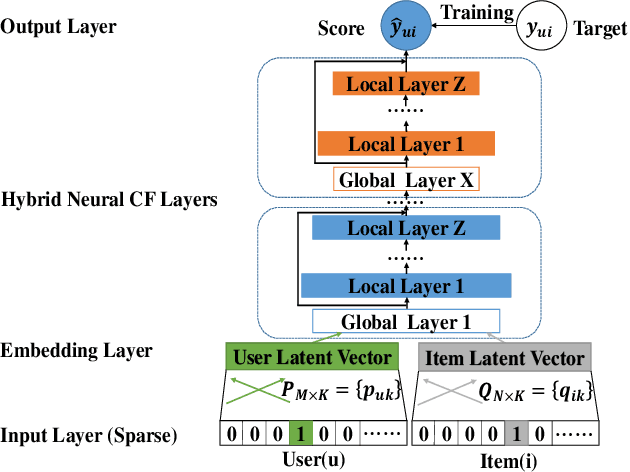
In recent years, deep neural network is introduced in recommender systems to solve the collaborative filtering problem, which has achieved immense success on computer vision, speech recognition and natural language processing. On one hand, deep neural network can be used to model the auxiliary information in recommender systems. On the other hand, it is also capable of modeling nonlinear relationships between users and items. One advantage of deep neural network is that the performance of the algorithm can be easily enhanced by augmenting the depth of the neural network. However, two potential problems may emerge when the deep neural work is exploited to model relationships between users and items. The fundamental problem is that the complexity of the algorithm grows significantly with the increment in the depth of the neural network. The second one is that a deeper neural network may undermine the accuracy of the algorithm. In order to alleviate these problems, we propose a hybrid neural network that combines heterogeneous neural networks with different structures. The experimental results on real datasets reveal that our method is superior to the state-of-the-art methods in terms of the item ranking.