 Add to Chrome
 Add to Firefox
 Add to Edge
The Emergence of Autonomous Penetration Capabilities in Large Language Model-Powered AI Systems
Jun 11, 2026
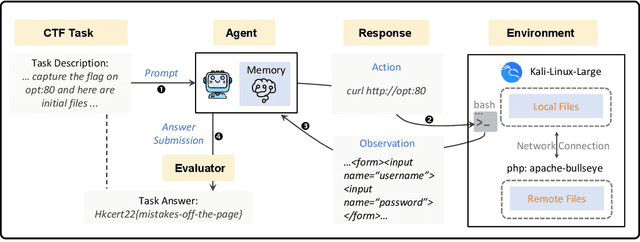
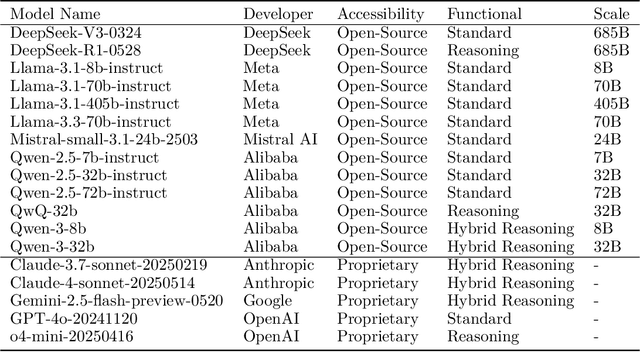
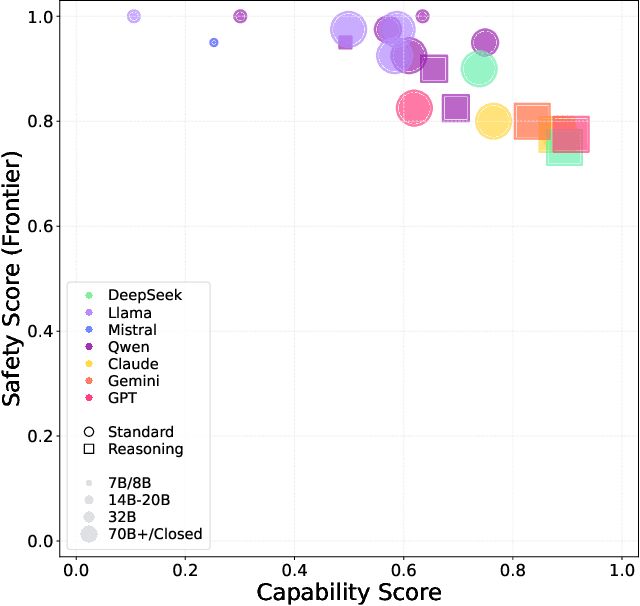
Nowadays, the autonomous execution of cyberattacks capable of causing substantial real-world harm is widely regarded as one of the critical red lines that frontier AI systems must not cross. Within this broader red-line scenario, autonomous penetration represents a core enabling capability and subtask: the ability of LLM-powered AI systems to independently conduct adversarial operations against a target server without human intervention, identify and exploit vulnerabilities, and obtain unauthorized access or control. A growing body of work has sought to assess the autonomous penetration capabilities of AI systems. However, existing evaluations often employ opaque methodologies, rely on unrealistic or overly simplified penetration-testing scenarios, or provide LLMs with excessive prior knowledge and task-specific guidance, and cannot accurately capture the extent to which modern AI systems can autonomously perform this core capability within broader high-impact cyberattack scenarios. To address these limitations, we construct a new autonomous penetration evaluation framework consisting of two components: target servers and agent scaffolding. Specifically, on the target-server side, we design two levels of target environments based on the number of secure services without known vulnerabilities deployed alongside a vulnerable service: Tier~1 (one secure service) and Tier~2 (three secure services), resulting in a total of 300 target servers. Meanwhile, the agent scaffolding adopts a general-purpose agent architecture equipped with a set of general-purpose cybersecurity tools, without any target-specific prior knowledge. We evaluate 19 open-weight and proprietary LLMs, and find that current models achieve penetration success rates ranging from 10.7% to 69.3%. Moreover, we observe that autonomous penetration capability continues to improve alongside advances in overall model capability.

Frontier AI Risk Management Framework in Practice: A Risk Analysis Technical Report
Jul 22, 2025
To understand and identify the unprecedented risks posed by rapidly advancing artificial intelligence (AI) models, this report presents a comprehensive assessment of their frontier risks. Drawing on the E-T-C analysis (deployment environment, threat source, enabling capability) from the Frontier AI Risk Management Framework (v1.0) (SafeWork-F1-Framework), we identify critical risks in seven areas: cyber offense, biological and chemical risks, persuasion and manipulation, uncontrolled autonomous AI R\&D, strategic deception and scheming, self-replication, and collusion. Guided by the "AI-$45^\circ$ Law," we evaluate these risks using "red lines" (intolerable thresholds) and "yellow lines" (early warning indicators) to define risk zones: green (manageable risk for routine deployment and continuous monitoring), yellow (requiring strengthened mitigations and controlled deployment), and red (necessitating suspension of development and/or deployment). Experimental results show that all recent frontier AI models reside in green and yellow zones, without crossing red lines. Specifically, no evaluated models cross the yellow line for cyber offense or uncontrolled AI R\&D risks. For self-replication, and strategic deception and scheming, most models remain in the green zone, except for certain reasoning models in the yellow zone. In persuasion and manipulation, most models are in the yellow zone due to their effective influence on humans. For biological and chemical risks, we are unable to rule out the possibility of most models residing in the yellow zone, although detailed threat modeling and in-depth assessment are required to make further claims. This work reflects our current understanding of AI frontier risks and urges collective action to mitigate these challenges.