 Add to Chrome
 Add to Firefox
 Add to Edge
On the Energy Efficiency of THz-NOMA enhanced UAV Cooperative Network with SWIPT
Sep 25, 2023
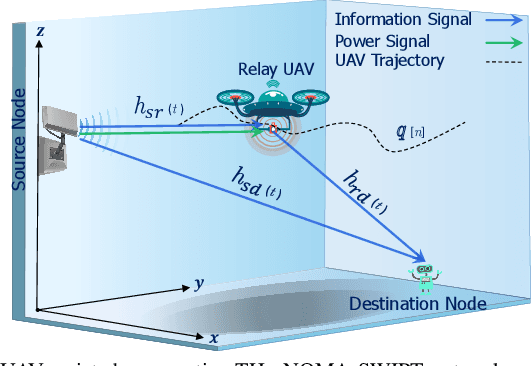

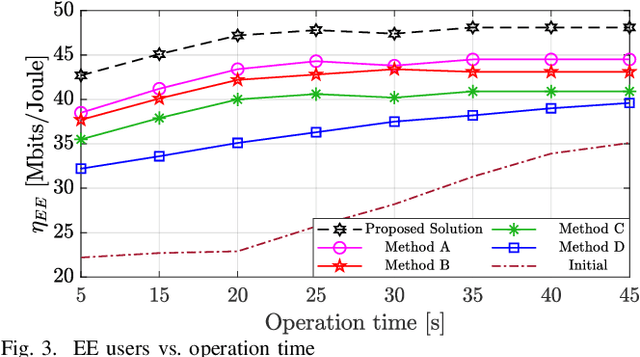
This paper considers the energy efficiency (EE) maximization of a simultaneous wireless information and power transfer (SWIPT)-assisted unmanned aerial vehicles (UAV) cooperative network operating at TeraHertz (THz) frequencies. The source performs SWIPT enabling the UAV to receive both power and information while also transmitting the information to a designated destination node. Subsequently, the UAV utilizes the harvested energy to relay the data to the intended destination node effectively. Specifically, we maximize EE by optimizing the non-orthogonal multiple access (NOMA) power allocation coefficients, SWIPT power splitting (PS) ratio, and UAV trajectory. The main problem is broken down into a two-stage optimization problem and solved using an alternating optimization approach. In the first stage, optimization of the PS ratio and trajectory is performed by employing successive convex approximation using a lower bound on the exponential factor in the THz channel model. In the second phase, the NOMA power coefficients are optimized using a quadratic transform approach. Numerical results demonstrate the effectiveness of our proposed resource allocation algorithm compared to the baselines where there is no trajectory optimization or no NOMA power or PS optimization.

Causal Reasoning: Charting a Revolutionary Course for Next-Generation AI-Native Wireless Networks
Sep 23, 2023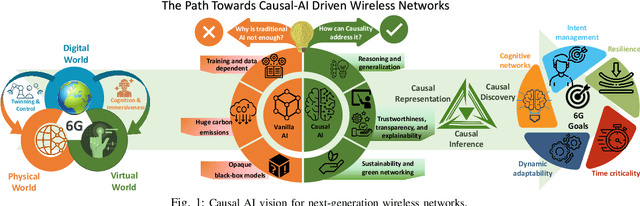
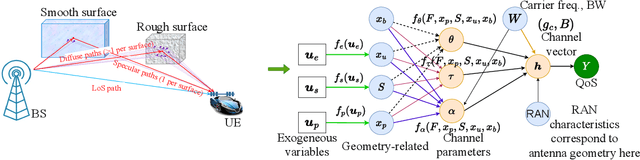
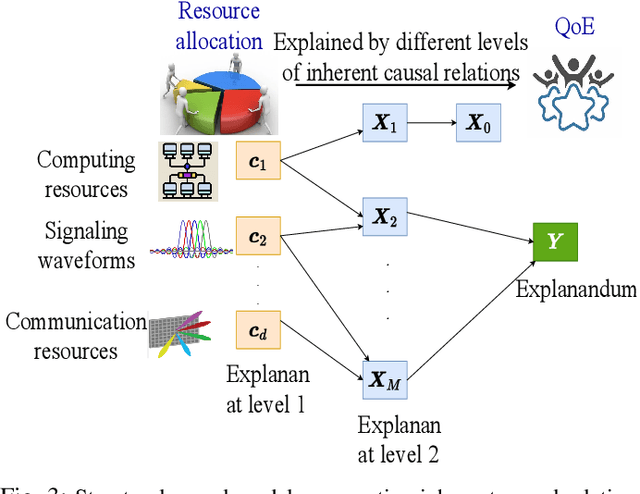
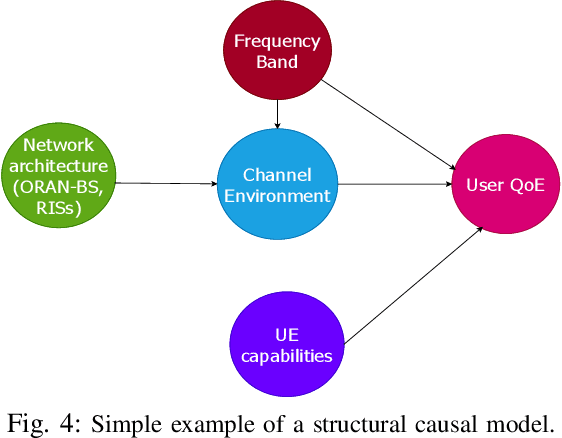
Despite the basic premise that next-generation wireless networks (e.g., 6G) will be artificial intelligence (AI)-native, to date, most existing efforts remain either qualitative or incremental extensions to existing ``AI for wireless'' paradigms. Indeed, creating AI-native wireless networks faces significant technical challenges due to the limitations of data-driven, training-intensive AI. These limitations include the black-box nature of the AI models, their curve-fitting nature, which can limit their ability to reason and adapt, their reliance on large amounts of training data, and the energy inefficiency of large neural networks. In response to these limitations, this article presents a comprehensive, forward-looking vision that addresses these shortcomings by introducing a novel framework for building AI-native wireless networks; grounded in the emerging field of causal reasoning. Causal reasoning, founded on causal discovery, causal representation learning, and causal inference, can help build explainable, reasoning-aware, and sustainable wireless networks. Towards fulfilling this vision, we first highlight several wireless networking challenges that can be addressed by causal discovery and representation, including ultra-reliable beamforming for terahertz (THz) systems, near-accurate physical twin modeling for digital twins, training data augmentation, and semantic communication. We showcase how incorporating causal discovery can assist in achieving dynamic adaptability, resilience, and cognition in addressing these challenges. Furthermore, we outline potential frameworks that leverage causal inference to achieve the overarching objectives of future-generation networks, including intent management, dynamic adaptability, human-level cognition, reasoning, and the critical element of time sensitivity.
Decentralized Online Learning in Task Assignment Games for Mobile Crowdsensing
Sep 19, 2023The problem of coordinated data collection is studied for a mobile crowdsensing (MCS) system. A mobile crowdsensing platform (MCSP) sequentially publishes sensing tasks to the available mobile units (MUs) that signal their willingness to participate in a task by sending sensing offers back to the MCSP. From the received offers, the MCSP decides the task assignment. A stable task assignment must address two challenges: the MCSP's and MUs' conflicting goals, and the uncertainty about the MUs' required efforts and preferences. To overcome these challenges a novel decentralized approach combining matching theory and online learning, called collision-avoidance multi-armed bandit with strategic free sensing (CA-MAB-SFS), is proposed. The task assignment problem is modeled as a matching game considering the MCSP's and MUs' individual goals while the MUs learn their efforts online. Our innovative "free-sensing" mechanism significantly improves the MU's learning process while reducing collisions during task allocation. The stable regret of CA-MAB-SFS, i.e., the loss of learning, is analytically shown to be bounded by a sublinear function, ensuring the convergence to a stable optimal solution. Simulation results show that CA-MAB-SFS increases the MUs' and the MCSP's satisfaction compared to state-of-the-art methods while reducing the average task completion time by at least 16%.
Analysis of the Memorization and Generalization Capabilities of AI Agents: Are Continual Learners Robust?
Sep 18, 2023In continual learning (CL), an AI agent (e.g., autonomous vehicles or robotics) learns from non-stationary data streams under dynamic environments. For the practical deployment of such applications, it is important to guarantee robustness to unseen environments while maintaining past experiences. In this paper, a novel CL framework is proposed to achieve robust generalization to dynamic environments while retaining past knowledge. The considered CL agent uses a capacity-limited memory to save previously observed environmental information to mitigate forgetting issues. Then, data points are sampled from the memory to estimate the distribution of risks over environmental change so as to obtain predictors that are robust with unseen changes. The generalization and memorization performance of the proposed framework are theoretically analyzed. This analysis showcases the tradeoff between memorization and generalization with the memory size. Experiments show that the proposed algorithm outperforms memory-based CL baselines across all environments while significantly improving the generalization performance on unseen target environments.
SpaceRIS: LEO Satellite Coverage Maximization in 6G Sub-THz Networks by MAPPO DRL and Whale Optimization
Jul 28, 2023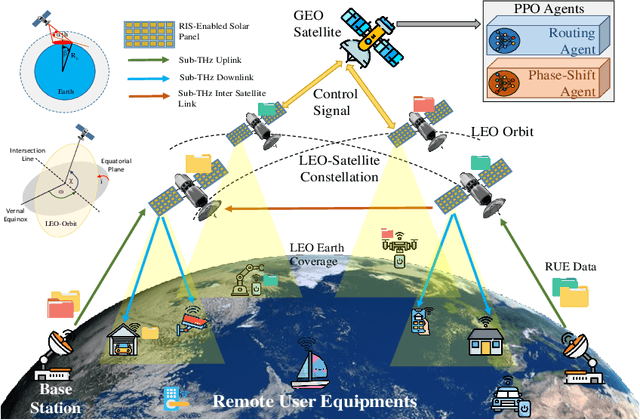
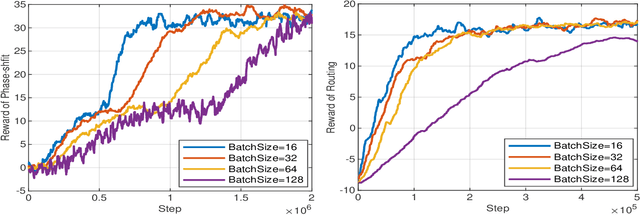
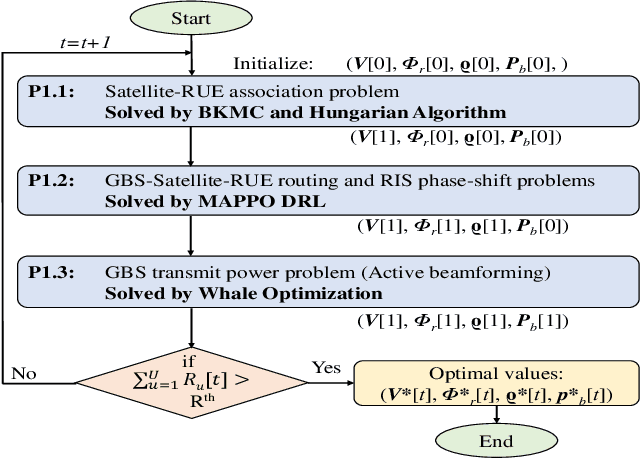
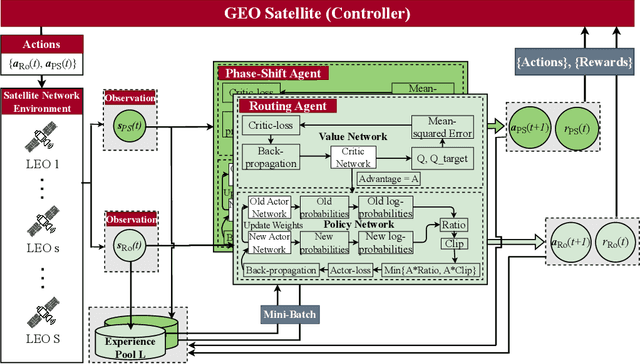
Satellite systems face a significant challenge in effectively utilizing limited communication resources to meet the demands of ground network traffic, characterized by asymmetrical spatial distribution and time-varying characteristics. Moreover, the coverage range and signal transmission distance of low Earth orbit (LEO) satellites are restricted by notable propagation attenuation, molecular absorption, and space losses in sub-terahertz (THz) frequencies. This paper introduces a novel approach to maximize LEO satellite coverage by leveraging reconfigurable intelligent surfaces (RISs) within 6G sub-THz networks. The optimization objectives encompass enhancing the end-to-end data rate, optimizing satellite-remote user equipment (RUE) associations, data packet routing within satellite constellations, RIS phase shift, and ground base station (GBS) transmit power (i.e., active beamforming). The formulated joint optimization problem poses significant challenges owing to its time-varying environment, non-convex characteristics, and NP-hard complexity. To address these challenges, we propose a block coordinate descent (BCD) algorithm that integrates balanced K-means clustering, multi-agent proximal policy optimization (MAPPO) deep reinforcement learning (DRL), and whale optimization (WOA) techniques. The performance of the proposed approach is demonstrated through comprehensive simulation results, exhibiting its superiority over existing baseline methods in the literature.
Convergence of Communications, Control, and Machine Learning for Secure and Autonomous Vehicle Navigation
Jul 05, 2023Connected and autonomous vehicles (CAVs) can reduce human errors in traffic accidents, increase road efficiency, and execute various tasks ranging from delivery to smart city surveillance. Reaping these benefits requires CAVs to autonomously navigate to target destinations. To this end, each CAV's navigation controller must leverage the information collected by sensors and wireless systems for decision-making on longitudinal and lateral movements. However, enabling autonomous navigation for CAVs requires a convergent integration of communication, control, and learning systems. The goal of this article is to explicitly expose the challenges related to this convergence and propose solutions to address them in two major use cases: Uncoordinated and coordinated CAVs. In particular, challenges related to the navigation of uncoordinated CAVs include stable path tracking, robust control against cyber-physical attacks, and adaptive navigation controller design. Meanwhile, when multiple CAVs coordinate their movements during navigation, fundamental problems such as stable formation, fast collaborative learning, and distributed intrusion detection are analyzed. For both cases, solutions using the convergence of communication theory, control theory, and machine learning are proposed to enable effective and secure CAV navigation. Preliminary simulation results are provided to show the merits of proposed solutions.
Reasoning over the Air: A Reasoning-based Implicit Semantic-Aware Communication Framework
Jun 20, 2023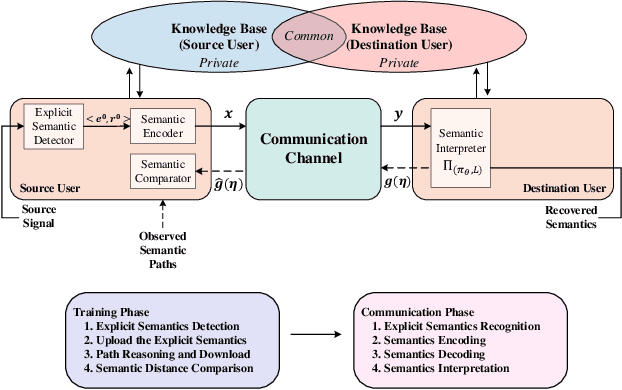
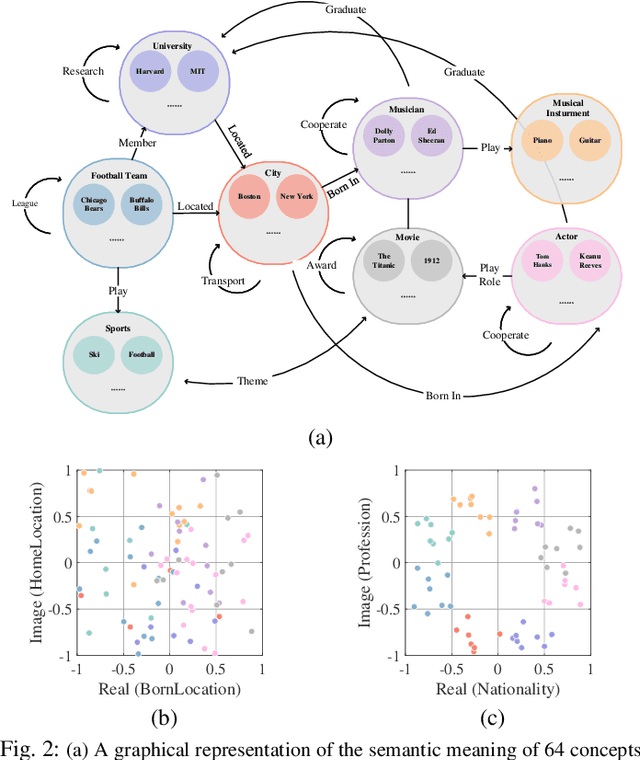
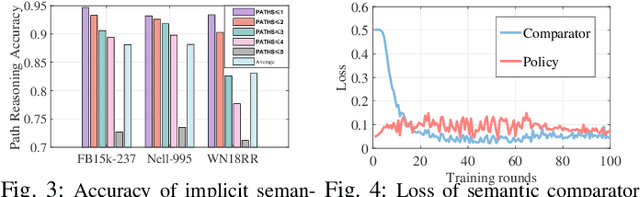
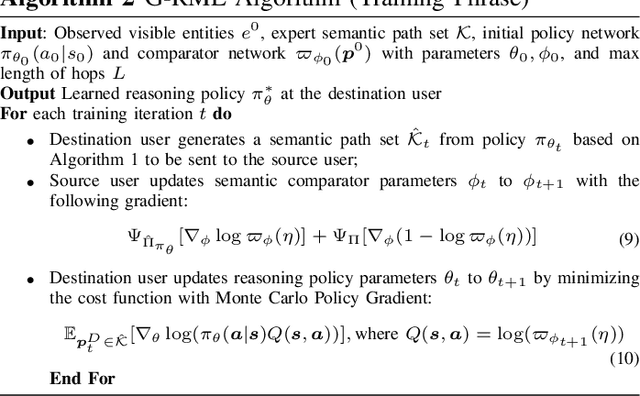
Semantic-aware communication is a novel paradigm that draws inspiration from human communication focusing on the delivery of the meaning of messages. It has attracted significant interest recently due to its potential to improve the efficiency and reliability of communication and enhance users' QoE. Most existing works focus on transmitting and delivering the explicit semantic meaning that can be directly identified from the source signal. This paper investigates the implicit semantic-aware communication in which the hidden information that cannot be directly observed from the source signal must be recognized and interpreted by the intended users. To this end, a novel implicit semantic-aware communication (iSAC) architecture is proposed for representing, communicating, and interpreting the implicit semantic meaning between source and destination users. A projection-based semantic encoder is proposed to convert the high-dimensional graphical representation of explicit semantics into a low-dimensional semantic constellation space for efficient physical channel transmission. To enable the destination user to learn and imitate the implicit semantic reasoning process of source user, a generative adversarial imitation learning-based solution, called G-RML, is proposed. Different from existing communication solutions, the source user in G-RML does not focus only on sending as much of the useful messages as possible; but, instead, it tries to guide the destination user to learn a reasoning mechanism to map any observed explicit semantics to the corresponding implicit semantics that are most relevant to the semantic meaning. Compared to the existing solutions, our proposed G-RML requires much less communication and computational resources and scales well to the scenarios involving the communication of rich semantic meanings consisting of a large number of concepts and relations.
Catch Me If You Can: Deep Meta-RL for Search-and-Rescue using LoRa UAV Networks
Jun 12, 2023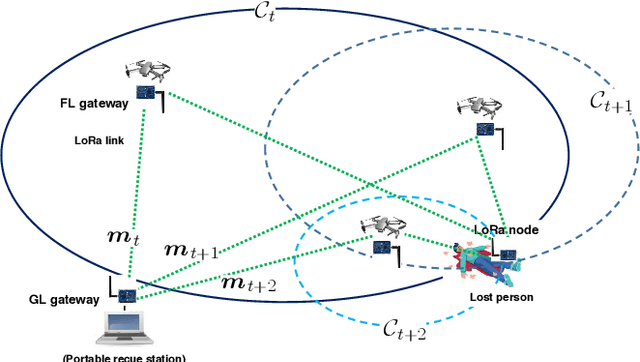
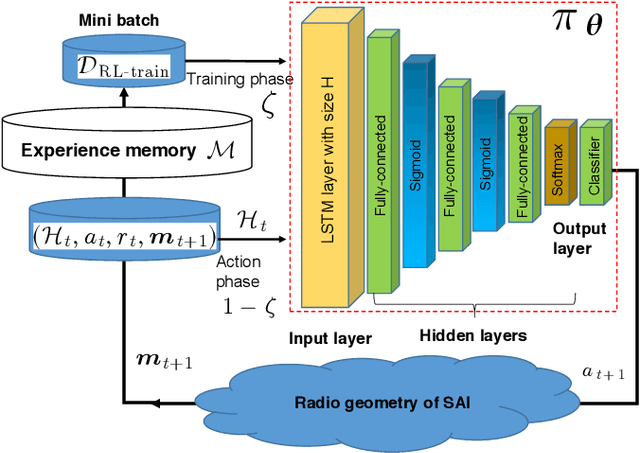
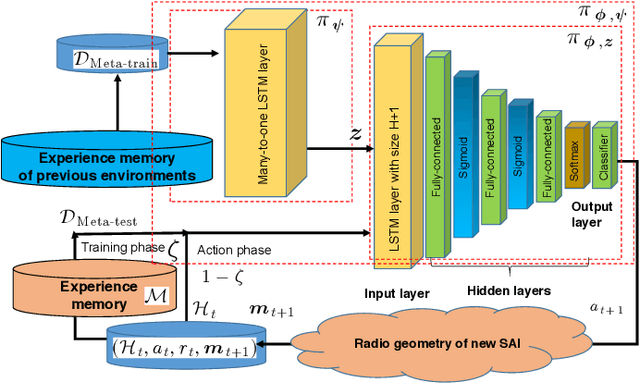
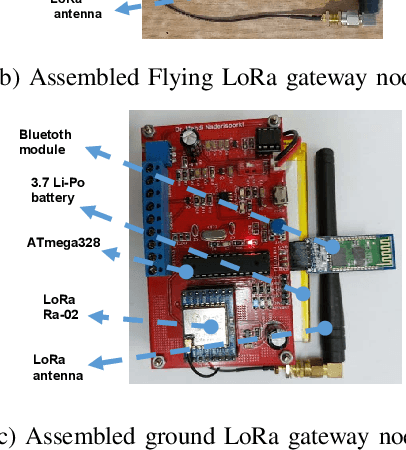
Long range (LoRa) wireless networks have been widely proposed as a efficient wireless access networks for the battery-constrained Internet of Things (IoT) devices. In many practical search-and-rescue (SAR) operations, one challenging problem is finding the location of devices carried by a lost person. However, using a LoRa-based IoT network for SAR operations will have a limited coverage caused by high signal attenuation due to the terrestrial blockages especially in highly remote areas. To overcome this challenge, the use of unmanned aerial vehicles (UAVs) as a flying LoRa gateway to transfer messages from ground LoRa nodes to the ground rescue station can be a promising solution. In this paper, the problem of the flying LoRa (FL) gateway control in the search-and-rescue system using the UAV-assisted LoRa network is modeled as a partially observable Markov decision process. Then, a deep meta-RL-based policy is proposed to control the FL gateway trajectory during SAR operation. For initialization of proposed deep meta-RL-based policy, first, a deep RL-based policy is designed to determine the adaptive FL gateway trajectory in a fixed search environment including a fixed radio geometry. Then, as a general solution, a deep meta-RL framework is used for SAR in any new and unknown environments to integrate the prior FL gateway experience with information collected from the other search environments and rapidly adapt the SAR policy model for SAR operation in a new environment. The proposed UAV-assisted LoRa network is then experimentally designed and implemented. Practical evaluation results show that if the deep meta-RL based control policy is applied instead of the deep RL-based one, the number of SAR time slots decreases from 141 to 50.
Deep Reinforcement Learning for Interference Management in UAV-based 3D Networks: Potentials and Challenges
May 11, 2023Modern cellular networks are multi-cell and use universal frequency reuse to maximize spectral efficiency. This results in high inter-cell interference. This problem is growing as cellular networks become three-dimensional with the adoption of unmanned aerial vehicles (UAVs). This is because the strength and number of interference links rapidly increase due to the line-of-sight channels in UAV communications. Existing interference management solutions need each transmitter to know the channel information of interfering signals, rendering them impractical due to excessive signaling overhead. In this paper, we propose leveraging deep reinforcement learning for interference management to tackle this shortcoming. In particular, we show that interference can still be effectively mitigated even without knowing its channel information. We then discuss novel approaches to scale the algorithms with linear/sublinear complexity and decentralize them using multi-agent reinforcement learning. By harnessing interference, the proposed solutions enable the continued growth of civilian UAVs.
Joint Sensing, Communication, and AI: A Trifecta for Resilient THz User Experiences
Apr 29, 2023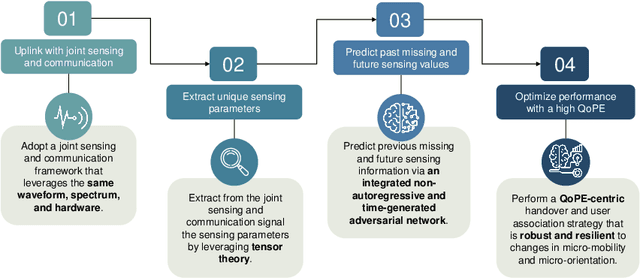
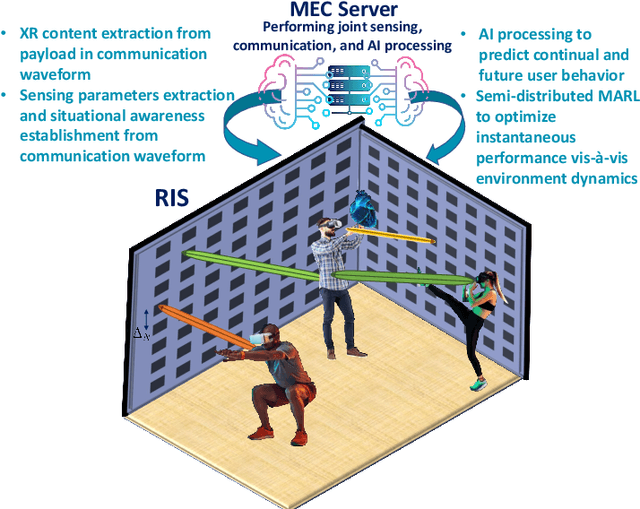
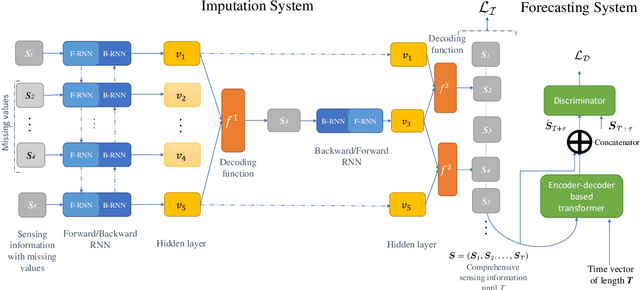
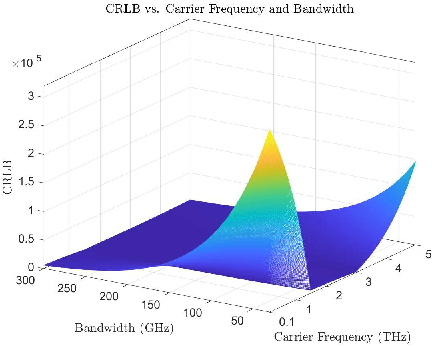
In this paper a novel joint sensing, communication, and artificial intelligence (AI) framework is proposed so as to optimize extended reality (XR) experiences over terahertz (THz) wireless systems. The proposed framework consists of three main components. First, a tensor decomposition framework is proposed to extract unique sensing parameters for XR users and their environment by exploiting then THz channel sparsity. Essentially, THz band's quasi-opticality is exploited and the sensing parameters are extracted from the uplink communication signal, thereby allowing for the use of the same waveform, spectrum, and hardware for both communication and sensing functionalities. Then, the Cramer-Rao lower bound is derived to assess the accuracy of the estimated sensing parameters. Second, a non-autoregressive multi-resolution generative artificial intelligence (AI) framework integrated with an adversarial transformer is proposed to predict missing and future sensing information. The proposed framework offers robust and comprehensive historical sensing information and anticipatory forecasts of future environmental changes, which are generalizable to fluctuations in both known and unforeseen user behaviors and environmental conditions. Third, a multi-agent deep recurrent hysteretic Q-neural network is developed to control the handover policy of reconfigurable intelligent surface (RIS) subarrays, leveraging the informative nature of sensing information to minimize handover cost, maximize the individual quality of personal experiences (QoPEs), and improve the robustness and resilience of THz links. Simulation results show a high generalizability of the proposed unsupervised generative AI framework to fluctuations in user behavior and velocity, leading to a 61 % improvement in instantaneous reliability compared to schemes with known channel state information.